Swan Swam Over the Sea
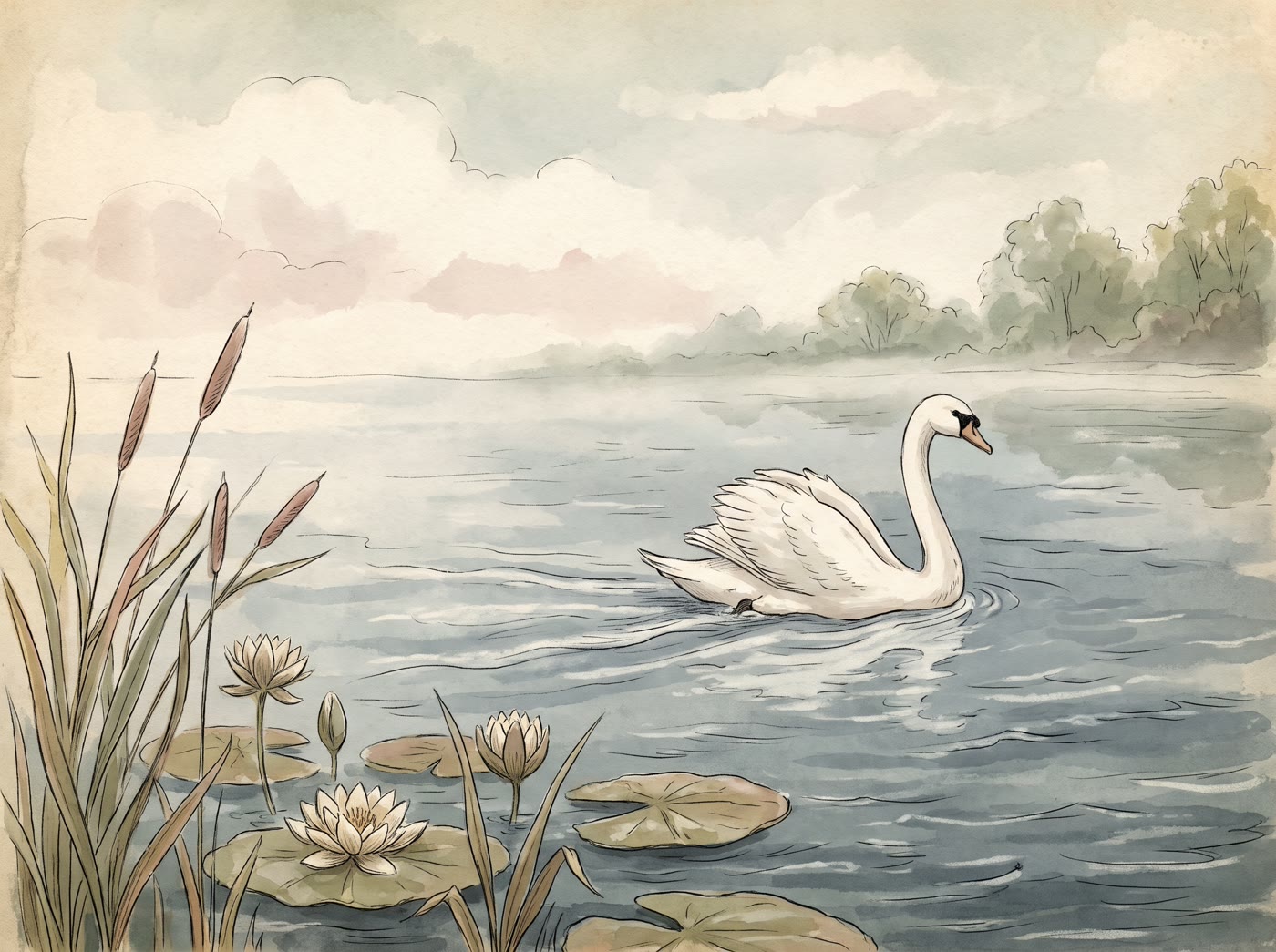
Swan swam over the sea,
Swim, swan, swim!
Swan swam back again,
Well swum, swan!
Where the rhyme comes from
The honest answer is that nobody knows how old it is. The earliest printing we can point to is The Real Mother Goose, the American anthology illustrated by Blanche Fisher Wright and dated 1916, where it appears under the plain title “Swan.” The date of the rhyme itself, and its author, are not known. Earlier printings are sometimes reported, but we could not confirm any of them ourselves, and we would rather say so than repeat them as fact.
That 1916 version is not quite the one most people say today. It reads “Swan, swan, over the sea; / Swim, swan, swim! / Swan, swan, back again; / Well swum, swan!” — the swan is addressed twice, rather than doing the swimming. The now-familiar “Swan swam over the sea” is the common modern wording, and it is the version usually given as a tongue twister. Punctuation varies from book to book, and a few corrupted versions are around (“Swim, swam, swim!” is one), which is what tends to happen to a rhyme passed on by ear. It was probably spoken in schoolrooms and nurseries long before it was printed, but that is a likelihood, not a fact we can document.
What does it mean?
Nothing hidden. A swan swims out over the sea, is urged on, swims back, and is congratulated. No one has proposed a secret meaning for it, and none is needed.
The grammar joke. What the rhyme does have is a neat lesson in verbs. Swim, swam and swum are the present, past and past participle of a single verb, and the rhyme uses all three in four short lines. “Well swum” is built like “well played” or “well done”: an adverb followed by a past participle. The trap, and part of the fun, is that swan sounds like a fourth form of the verb, though it is simply the bird.
Why it trips the tongue. Most of the stressed words begin with sw, so the mouth has to glide from a hissing s to a rounded w again and again. The vowels do not help: the a in swan is a rounded sound that rhymes with “gone,” while the a in swam rhymes with “ham.” Swan and swam look like twins and sound quite different.
Sharing it with children
Begin with the four key words on their own — swim, swam, swum, swan — said slowly, so the child can hear how one vowel changes. Then take the rhyme one line at a time at half speed. Once the lines come easily, say the whole thing three times through without a stumble; any slip sends you back to the start.
Add actions. Sweep both arms through long breaststroke movements on “Swim, swan, swim!”, glide a flat hand out to sea on the first line and back again on the third, then finish with a cheer or a round of applause for “Well swum, swan!” Make it faster with each round, and let a child be the swan while the grown-up is the audience. Whispering it is harder than it sounds.
For older children it makes a quick tenses game: “Today I swim, yesterday I swam, and I have swum.” Ask them to find other verbs that change the same way, and to swap in other animals and see which versions are hardest to say.
Extra verses to sing
These verses aren’t traditional — they’re ours. Try them once the first four lines come easily.
Swan swam under the bridge,
Sweep, swan, sweep!
Swan swam round the reeds,
Sweetly sung, swan!
Duck dived down in the dam,
Dive, duck, dive!
Duck dived up again,
Well dived, duck!