One, Two, Three, Four, Five
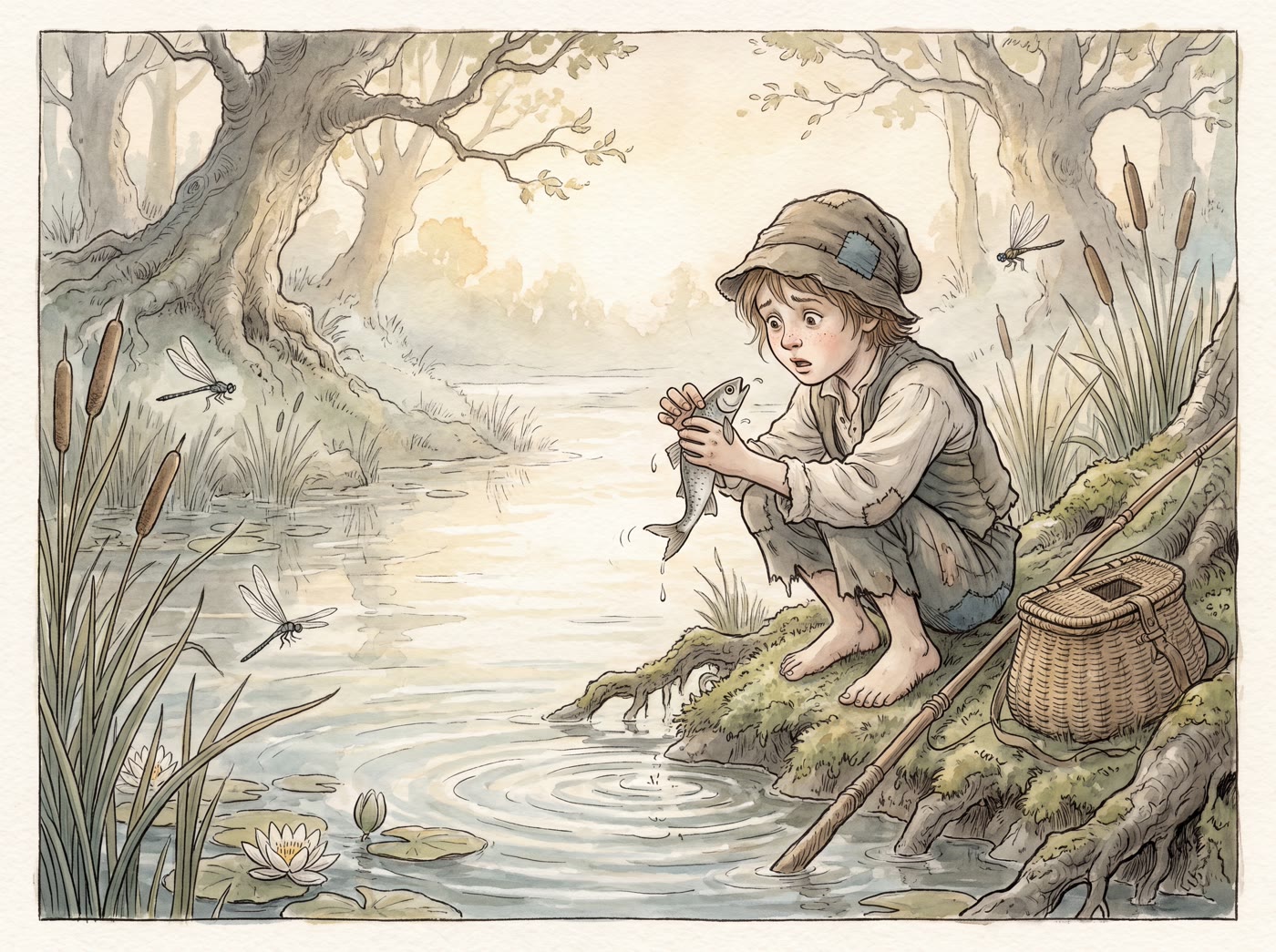
One, two, three, four, five,
Once I caught a fish alive,
Six, seven, eight, nine, ten,
Then I let it go again.
Why did you let it go?
Because it bit my finger so.
Which finger did it bite?
This little finger on the right.
Where the rhyme comes from
The oldest printed ancestor of this rhyme appears in Mother Goose’s Melody, published in London by John Newbery’s firm around 1765. There the creature is not a fish at all but a hare: “One, two, three, four and five, I caught a hare alive; six, seven, eight, nine and ten, I let him go again.” James Orchard Halliwell recorded much the same hare version in his 1842 collection of English nursery rhymes.
The fish — and the question-and-answer lines about the bitten finger — belong to the later 19th century. The American folklorist Henry Carrington Bolton printed variants with a fish in The Counting-Out Rhymes of Children (1888), which is the date often quoted as the rhyme’s “first publication”; strictly, 1888 marks the arrival of the version we sing today, not the rhyme itself. A neighbouring variant, “Catching fishes all alive”, was still being printed as late as The Little Mother Goose (1912).
What does it mean?
Unlike many old rhymes, this one has attracted very little in the way of hidden-history theory, and that is probably because there is nothing hidden in it. It is a counting rhyme, plain and simple: ten numbers, one for each finger, wrapped in a tiny story so that a child has a reason to say them in order.
Where explanations are offered, they are best treated as folklore rather than fact. Some writers suggest the older hare version carries a memory of poaching, in which a caught hare was quietly released if a gamekeeper came near; there is no contemporary evidence for this, and the change from hare to fish looks much more like ordinary oral drift than coded history. The second stanza — the bite and the little finger — reads as a piece of nursery playfulness added to give the game a punchline and an excuse to wiggle one last finger.
Sharing it with children
This is one of the best first counting rhymes there is, because the whole of it happens on a child’s hands. Start with both fists closed. Unfurl one finger of the left hand for each number as you count to five, then the right hand for six to ten, so that by “ten” every finger is standing up. On “then I let it go again” open both palms wide and let the fish swim away.
For the second stanza, swap voices: you ask “Why did you let it go?” and the child answers. Shake the bitten hand, and on the last line hold up the right-hand little finger alone — a lovely, easy way to introduce left and right as well as the numbers. Older children enjoy counting backwards from ten as the fish swims off, or catching ten paper fish with a magnet and a string and counting them into a bucket.
Extra verses to sing
These verses aren’t traditional — they’re ours. Sing them when ten fingers aren’t enough.
One, two, three, four, five,
Once I caught a crab alive,
Six, seven, eight, nine, ten,
Then I put him back again.
Why did you put him back?
Because he pinched me, snip and snap!
Which thumb did he nip?
This little thumb upon my grip.