Thirty Days Hath September
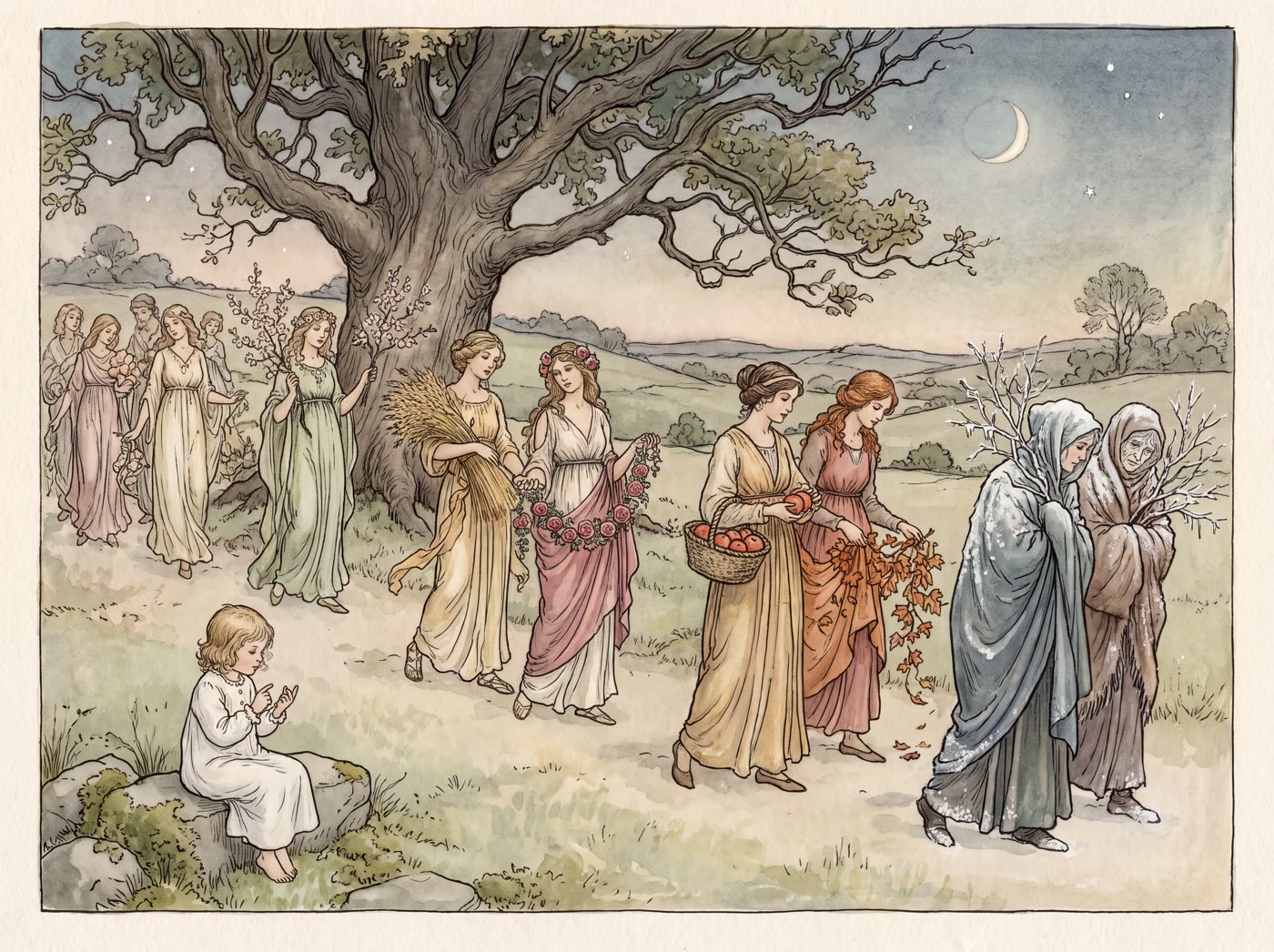
Thirty days hath September,
April, June and November,
All the rest have thirty-one,
Excepting February alone.
Which has but twenty-eight days clear,
And twenty-nine in each leap year.
Where the rhyme comes from
This is one of the oldest rhymes in the English language — and almost certainly the most used. In 2011 the Welsh writer Roger Bryan found an English version of the verse scribbled at the foot of a page of saints’ days in a Latin manuscript in the British Library’s Harleian collection. He dated the hand to about 1425, give or take twenty years, which makes the rhyme some six centuries old. That early version began “Thirti dayes hath Novembir, April, June and Septembir”.
The swap is easy to explain: “September” and “November” share the same rhythm and the same rhyme, so they can trade places without damaging a single line. Older versions tended to favour November, and it was still recorded as the commoner opening in parts of the United States as late as 1891.
In print, the verse appears in Richard Grafton’s Abridgement of the Chronicles of England (1562) under the wonderfully plain heading “A Rule to Know How Many Dayes Euery Moneth in the Yere Hath”, and again in William Harrison’s Description of England (1577), prefixed to Holinshed’s Chronicles. Harrison’s ends: “But in the leape you must adde one.” The archaic hath is the fossil that gives the rhyme away as Tudor in its printed form and medieval in its roots.
What does it mean?
Unusually among old rhymes, this one hides nothing. It is not a riddle, a satire or a coded political complaint — it is a mnemonic, pure and simple, and it means exactly what it says. The lengths of our months are the untidy leftovers of the Roman calendar, and no pattern in them is easy to hold in the head. A rhyme was the medieval answer: put the awkward facts into metre and rhyme, and the memory keeps them safe.
Rhymes of this kind were common in medieval Europe, where versified calendars helped clerks and clergy recall feast days and month lengths. This one simply outlived all its rivals.
You will sometimes see the rhyme credited to Mother Goose, or claimed as the work of a named poet. Neither attribution holds up: the verse arose in oral tradition and exists in dozens of variants, and no single author can be identified. Its usefulness has also been gently mocked — an early twentieth-century parody runs, “Thirty days hath September, but all the rest I can’t remember.” Groucho Marx, on the other hand, called it his favourite poem, “because it actually means something.”
Sharing it with children
This is a counting rhyme with a job to do, so let children do the counting. Chant it slowly and hold up fingers for the four short months as they arrive — September, April, June, November — then show four fingers again at the end and ask which months you missed.
A wall calendar makes the rhyme click. Turn the pages together and count the squares in each month, checking the verse as you go; children love catching February out. Older children can learn the knuckle trick alongside it: run a finger across your closed fists, knuckle for thirty-one days, dip between knuckles for thirty, and see that the rhyme and the hand agree. And a leap year is a lovely thing to look forward to — work out together when the next twenty-ninth of February falls, and how old everybody will be.
Extra verses to sing
These verses aren’t traditional — they’re ours. Sing them if you would like the calendar to carry on a little longer.
Count them out upon your hand,
Twelve good months across the land:
Some are short and some are long,
All of them fit in the song.
February, small and shy,
Watches all the others by;
Then in every fourth bright year
Takes one extra day of cheer.