Two Little Dicky Birds
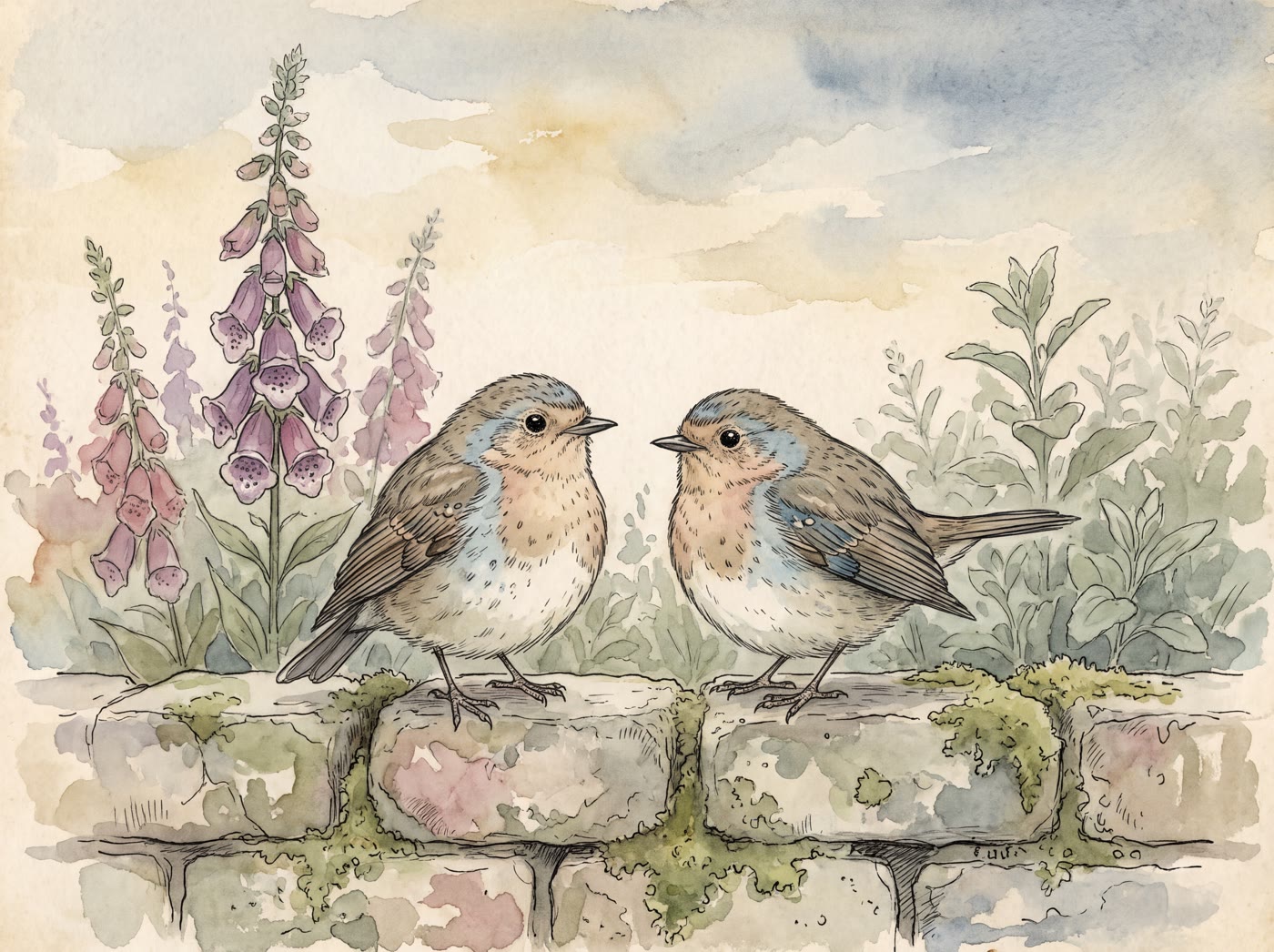
Two little dicky birds
Sitting on a wall.
One named Peter,
One named Paul.
Fly away, Peter.
Fly away, Paul.
Come back, Peter.
Come back, Paul.
Where the rhyme comes from
The rhyme dates from the late eighteenth century, but not in the form above. The earliest copy we have been able to check is the 1791 edition of Mother Goose’s Melody, printed in London for Francis Power, grandson of the publisher John Newbery. There the rhyme has no title, and it is about blackbirds on a hill:
There were two blackbirds
Sat upon a hill,
The one was nam’d Jack,
The other nam’d Gill;
Fly away Jack,
Fly away Gill,
Come again Jack,
Come again Gill.
The book prints it beside the proverb “A bird in the hand is worth two in the bush”. Its Jack and Gill share their names with the pair who went up another hill in a more famous rhyme, and we have found nothing to say which, if either, borrowed from the other.
You will often read that Mother Goose’s Melody was first printed in 1765. That date is a scholar’s conjecture, based on the style of the book; the 1791 title page names no edition, and the earlier editions that probably existed have not survived. So the safest account is that the rhyme is from the late eighteenth century, and that 1791 is the earliest copy we can point to. The Opies suggest that Peter and Paul replaced Jack and Gill during the nineteenth century, and we have found no firmer date for the change. An American version, “Two Little Blackbirds”, keeps the older names, spelled Jack and Jill.
What does it mean?
Nothing hidden, as far as anyone has found. A “dicky bird” is a nursery word for a small bird, from the pet name Dicky plus “bird”; the Oxford English Dictionary records it from 1744. The Cockney rhyming slang “not a dicky bird”, meaning not a word, is a separate use and has nothing to do with the rhyme’s origin.
We have found no reading of the rhyme as code or history, and we will not invent one. It is a game of appearing and disappearing — two, then none, then two again — which is why it sits among the counting rhymes.
Sharing it with children
The vanishing birds. This is the trick the rhyme exists for. Stick a small paper dot or sticker on the nail of one index finger, and another on the nail of the middle finger of your other hand. Make two loose fists with those fingers pointing out: these are Peter and Paul. Wiggle each one as you say its name. On “Fly away, Peter” whisk that hand behind your back, fold the marked finger down, put out the unmarked finger beside it, and bring the hand back — the bird has gone. Do the same for Paul, then reverse it for “Come back”.
A game of “Jack and Jill” played with two bits of paper on the fingers is recorded in the later eighteenth century, in a remembered remark about Oliver Goldsmith. The remark does not say which rhyme it was, so it may be this one, or it may not.
Counting. Count the birds aloud: one, two. After the first “fly away” there is one left; after the second, none. Then count them back, one and two, as they return. With the youngest children, simply repeat it, changing your speed and the loudness of your voice. Toddlers can take turns doing the actions.
Swapping the names. Older children enjoy putting in their own names, or those of a friend or the family pets. They can change the birds themselves: two little caterpillars on a leaf, say, or two little frogs on a log.
Extra verses to sing
These verses aren’t traditional — they’re ours. Sing them when the birds have more to do than sit on a wall.
Two little dicky birds
Sitting on a gate.
One was early,
One was late.
Fly away, early.
Fly away, late.
Come back, early.
Come back, late.
Two little dicky birds
Sitting in a tree.
One named Mummy,
One named Me.
Fly away, Mummy.
Fly away, Me.
Come back, Mummy.
Come back, Me.