Hector Protector
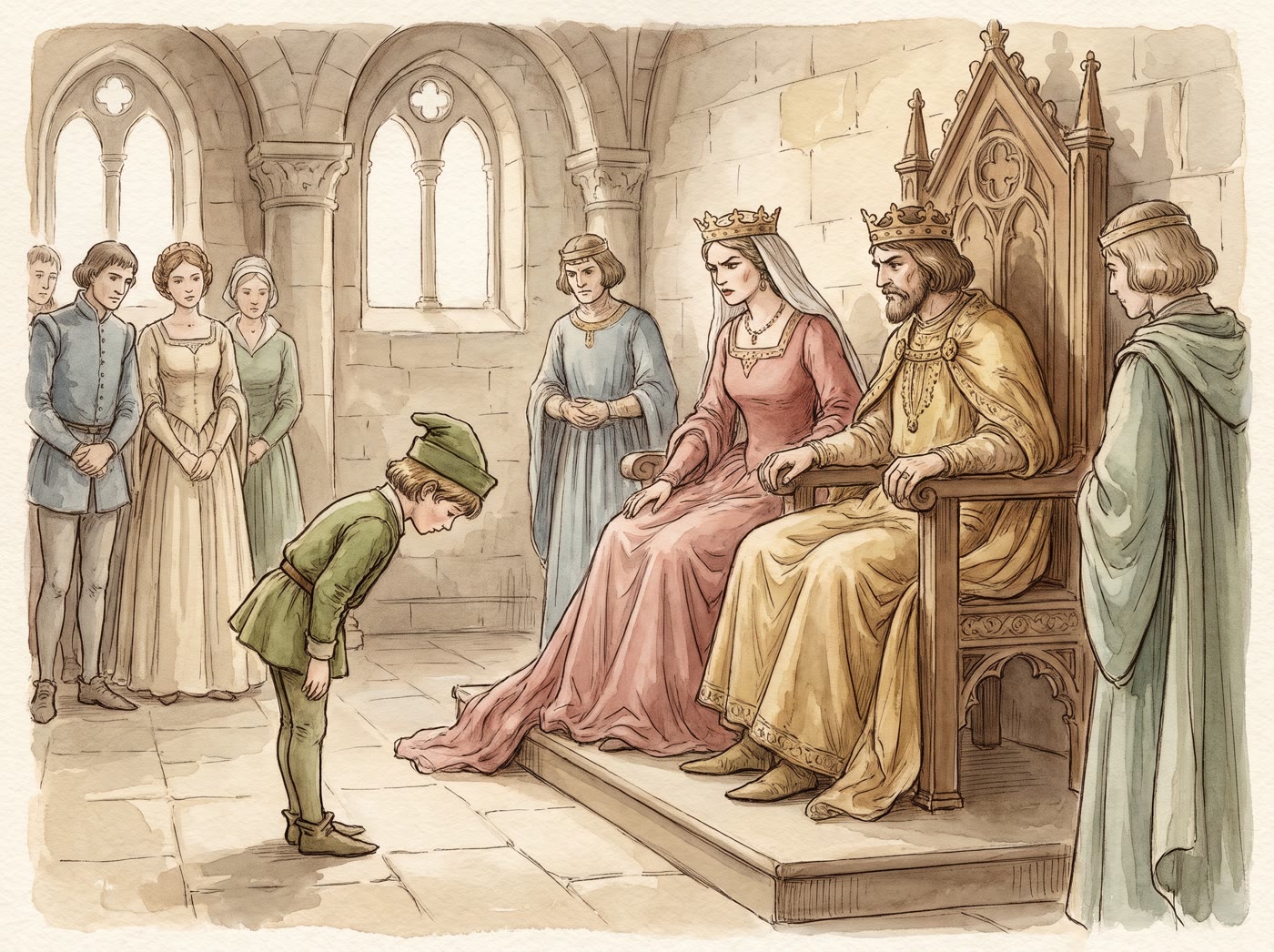
Hector Protector was dressed all in green;
Hector Protector was sent to the Queen.
The Queen did not like him,
Nor more did the King:
So Hector Protector was sent back again.
Where the rhyme comes from
Hector Protector is a short rhyme with a long list of unanswered questions. It turns up in nineteenth-century collections, among them James Orchard Halliwell’s The Nursery Rhymes of England — the words above are those of the fifth edition, published in 1886. In that edition Halliwell placed it in the opening section, the one he called “Historical”, and printed it bare, with no note saying who Hector was or what the story referred to.
When the rhyme was first printed is not established. We can say that it was in circulation by the nineteenth century; we cannot responsibly give an earlier year, and the dates quoted for it on some websites cannot be traced to any printing. The wording also varies a little from book to book: some versions have “No more did the King” in place of “Nor more”, and some spell “dressed” with an apostrophe.
The rhyme has had a modern afterlife, too. In 1965 Maurice Sendak illustrated it in Hector Protector and As I Went Over the Water, a picture book pairing this rhyme with another.
What does it mean?
The honest answer is that the meaning is unknown. Halliwell printed it without comment, and no source we have found explains the name, the green clothes, or why the Queen and King took against the boy.
Richard, Duke of York. A popular guess, repeated on several rhyme websites, links Hector to Richard, Duke of York, who is said to have served as Protector in the 1450s while Henry VI was ill. There is no evidence for it. It is speculation fitted to the word “Protector”, and no text connects the rhyme to him.
No explanation at all. Read plainly, it is a tiny comic story: a boy in a smart green outfit is sent to court, fails to please, and is sent home again. That is our reading, not a finding — but it is all the words actually say, and it is why the rhyme works so well with small children, who know very well what it is to be unwanted for five minutes.
Sharing it with children
The story is simple enough to act out. Choose one child to be Hector, one to be the Queen and one the King, and let the court sit on cushions. Hector walks across the room on the first two lines, the royal pair fold their arms and shake their heads for the third and fourth, and Hector marches back for the last line.
Because the rhyme begins with a colour, it also makes an easy dressing-up game. Lay out scarves, hats and socks, and ask each child to find something green to wear before they are “sent to the Queen”. Then change the colour and sing it again. For very small children, try thumbs up and thumbs down: thumbs down for “did not like him”, thumbs up again when Hector gets home. Say the lines slowly first and let the children join in on “green” and “Queen”, the rhyme words that carry the verse.
Extra verses to sing
These verses aren’t traditional — they’re ours. Sing them to try the same game with other colours, or to give Hector a kinder welcome.
Hector Protector was dressed all in blue;
Hector Protector was sent to the Queen, too.
The Queen gave a frown,
And the King gave a sigh,
So Hector Protector waved them goodbye.
Hector Protector was dressed all in red;
Hector Protector bowed low his head.
The Queen gave a smile,
And the King gave a cheer,
So Hector Protector stayed all the year.