To Market, To Market
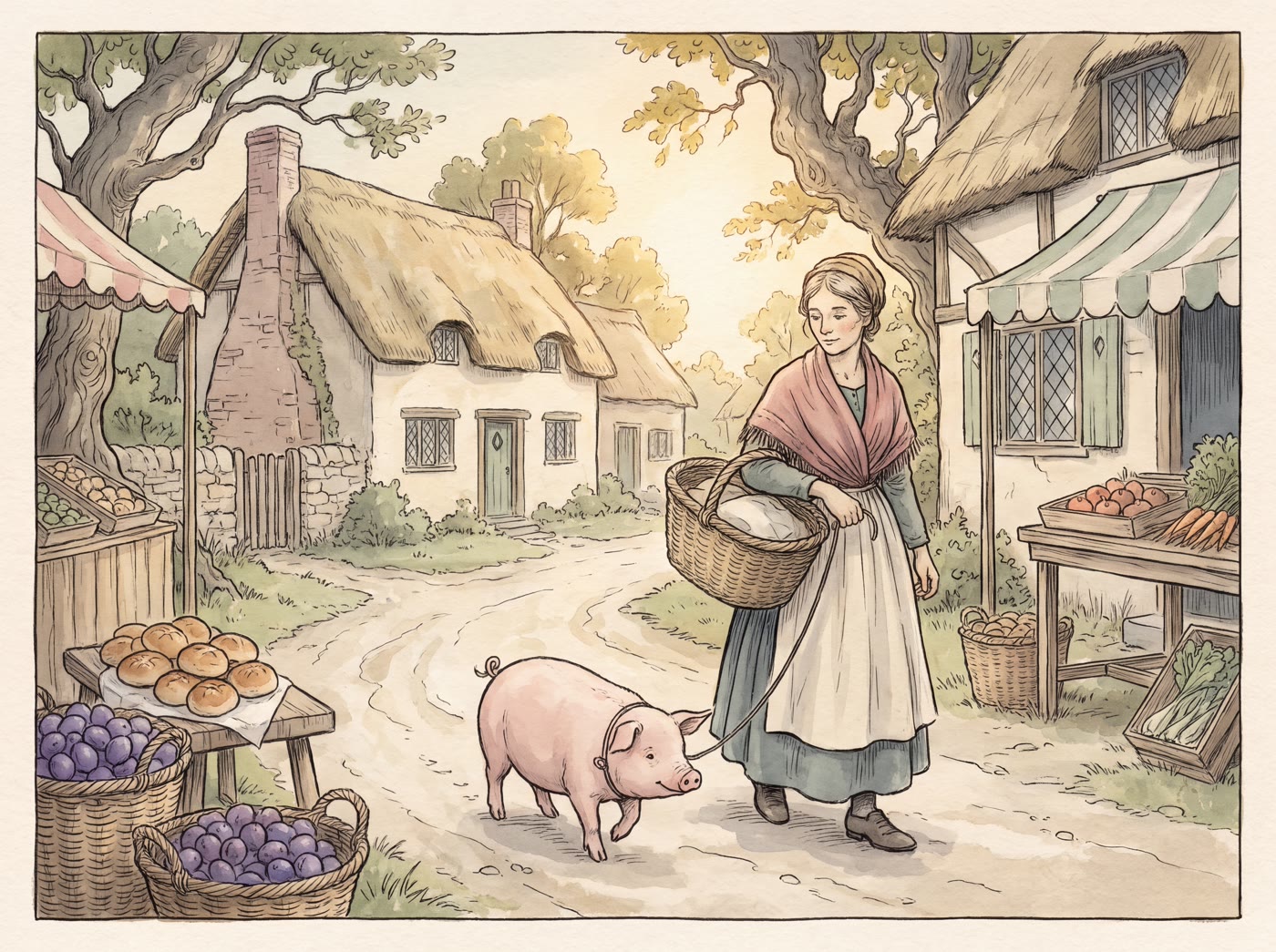
To market, to market, to buy a fat pig,
Home again, home again, jiggety-jig.
To market, to market, to buy a fat hog,
Home again, home again, jiggety-jog.
To market, to market, to buy a plum cake,
Home again, home again, market is late.
To market, to market, to buy a plum bun,
Home again, home again, market is done.
Where the rhyme comes from
The oldest trace is not a rhyme at all. In John Florio’s dictionary of 1611, Queen Anna’s New World of Words, the entry for abomba explains the word as the place where children hide in a game, and also a man’s home, and adds: “Also as we vse to say: Home againe home againe, market is done.” That is a saying, quoted in passing. There is no pig in it, no “to market, to market”, and Florio does not call it a rhyme.
The first full printing usually cited is Songs for the Nursery, published in London in 1805. As the standard reference works report it, that version went “To market, to market, to buy a penny bun” — and had no pig. We have not seen the 1805 book itself, so that wording comes second-hand. The fat pig and fat hog verses and the plum cake verse are the ones most often sung now, but when they first appeared in print is not known.
What is clear is that the words have been reworked more than once. A Victorian version in Extraordinary Nursery Rhymes and Tales: New Yet Old (1876) turns the pig into a project: “Stuff it till Christmas and make a fat hog, / Then at Smithfield Show win a prize, jiggety jog!” It is a different rhyme in spirit, and not the traditional text. Modern versions also add further animals — a dog, a chick — whose dates are likewise unknown.
What does it mean?
Nothing hidden has ever been shown. The rhyme describes what it says: a trip to market and a return home with the shopping. No political reading, secret history or darker story is attached to it in any source we could find, and we have not invented one.
“Jiggety-jig”. The likeliest reading is that it imitates the jogging, bumpy rhythm of the journey home, with jig and jog as close cousins of the dance and the trot. That is a reasonable guess rather than a documented fact: no source we could find explains the words.
A word on a near neighbour: This Little Piggy also goes to market, but it is a different rhyme, played on the toes, and we do not claim any shared origin.
Sharing it with children
Today it is commonly played as a knee-bounce. Sit the child facing you, held firmly, and bounce steadily through “To market, to market”. On “jiggety-jig” sway from side to side or quicken the pace, and on the last line let your knees open for a gentle dip, always with a hand ready to catch. With a baby under about six months, hold them close against you and keep the bouncing very small, so that the head stays supported.
The verses invite play of their own. Snuffle on the pig and grunt on the hog; whisper “market is late” and shout “market is done”. Give an older child a basket and some toy foods and let them decide what to buy, then ask which animal or cake should star in the next verse.
You may meet the plum cake verse half-remembered, sometimes spelt “plumb cake” or with “jiggity” for “jiggety”. Spellings vary; the words above are the common ones.
Extra verses to sing
These verses aren’t traditional — they’re ours. Add them when the shopping basket needs filling.
To market, to market, to buy a ripe pear,
Home again, home again, juice everywhere.
To market, to market, to buy a round cheese,
Home again, home again, crackers, please.