A Tutor Who Tooted the Flute
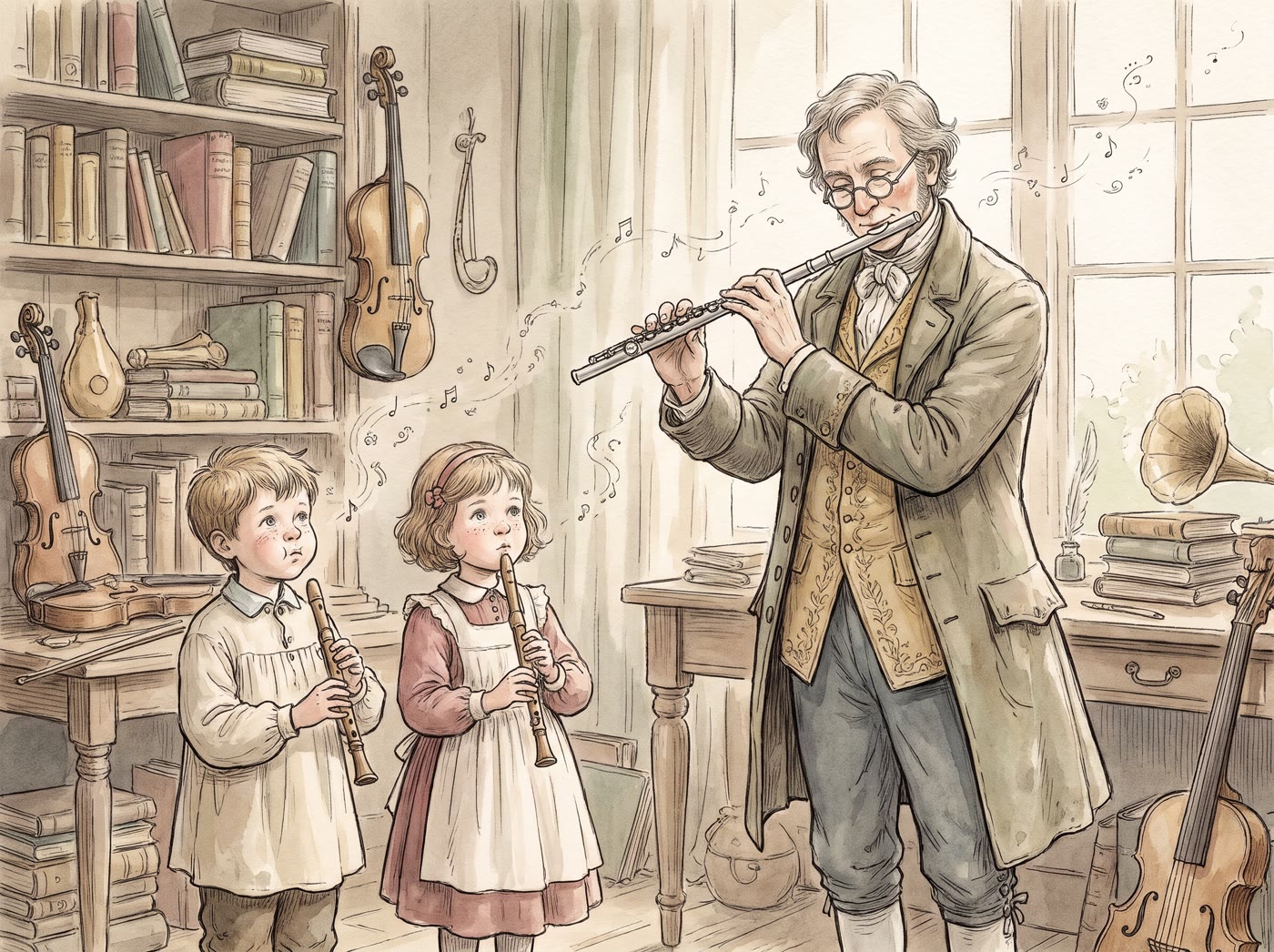
A tutor who tooted the flute
Tried to teach two young tooters to toot.
Said the two to the tutor,
“Is it harder to toot, or
To tutor two tooters to toot?”
Where the rhyme comes from
This twister has an author. The verse was written by the American writer Carolyn Wells (1862–1942), and the earliest printing we have traced is in her book The Jingle Book, published by Macmillan in New York in 1899. It appears there under the title “The Tutor”, as the book’s frontispiece — the picture and verse that face the title page — and the book was reprinted within the year.
We have not searched every magazine of the 1890s, so we do not claim it was the first time the lines were ever printed; only that this is the earliest copy we have found. What can be said is that this is an authored verse that passed into the spoken twister repertoire, rather than an anonymous folk rhyme handed down by word of mouth. It is long out of copyright, which is why we can print Wells’s own words above.
Those words differ a little from the version most people recite today. Common variants have “a flute” for “the flute”, “tried to tutor” for “tried to teach”, and “tougher” for “harder”, and the whole thing is often run together as a single sentence. Wells’s wording is the one given here, with the odd line break after “or” that gives the verse its limerick-like shape: two long lines, two short ones, and a long closer.
What does it mean?
There is no hidden story, only a joke about sounds. To toot is to blow a flute or horn; a tutor is a teacher; and a tooter is someone who toots. So the tutor is a flute teacher with two young pupils, and the pupils turn the lesson on him with a riddle: which is harder, playing the flute or teaching two people to play it?
The verse never answers. The real punchline is that the question is itself almost impossible to say, so anyone asking it aloud has already half answered it. The sounds do the work: t and the long oo come round again and again, in tutor, toot, tooter, two and to, so the tongue tip keeps tapping the same spot and the words blur into one another.
Sharing it with children
Begin slowly. Say one line at a time and let the child echo it back, giving every t a crisp tap. Once the lines are steady, try the whole verse at walking pace, then a little faster, then as fast as you dare. The last two lines are the hard part, so it is worth practising them on their own.
For a clapping game, clap once on every t sound and see who can keep the beat while speeding up. For a call-and-response, play the tutor: hold an imaginary flute, say the first two lines, and let the children, as the two young tooters, answer with the last three. A real recorder, or simply a finger pipe and a good puffed-out “toot”, makes it more fun, and a child who has just played a note will enjoy knowing exactly what is being asked.
Extra verses to sing
These verses aren’t traditional — they’re ours. They borrow Wells’s shape, so try them once the original comes easily.
A tutor who tooted a tune
Asked two tooters to toot it by noon.
Said the two to the tutor,
“Is it truer to toot, or
To tutor two tooters in tune?”