Rubber Baby Buggy Bumpers
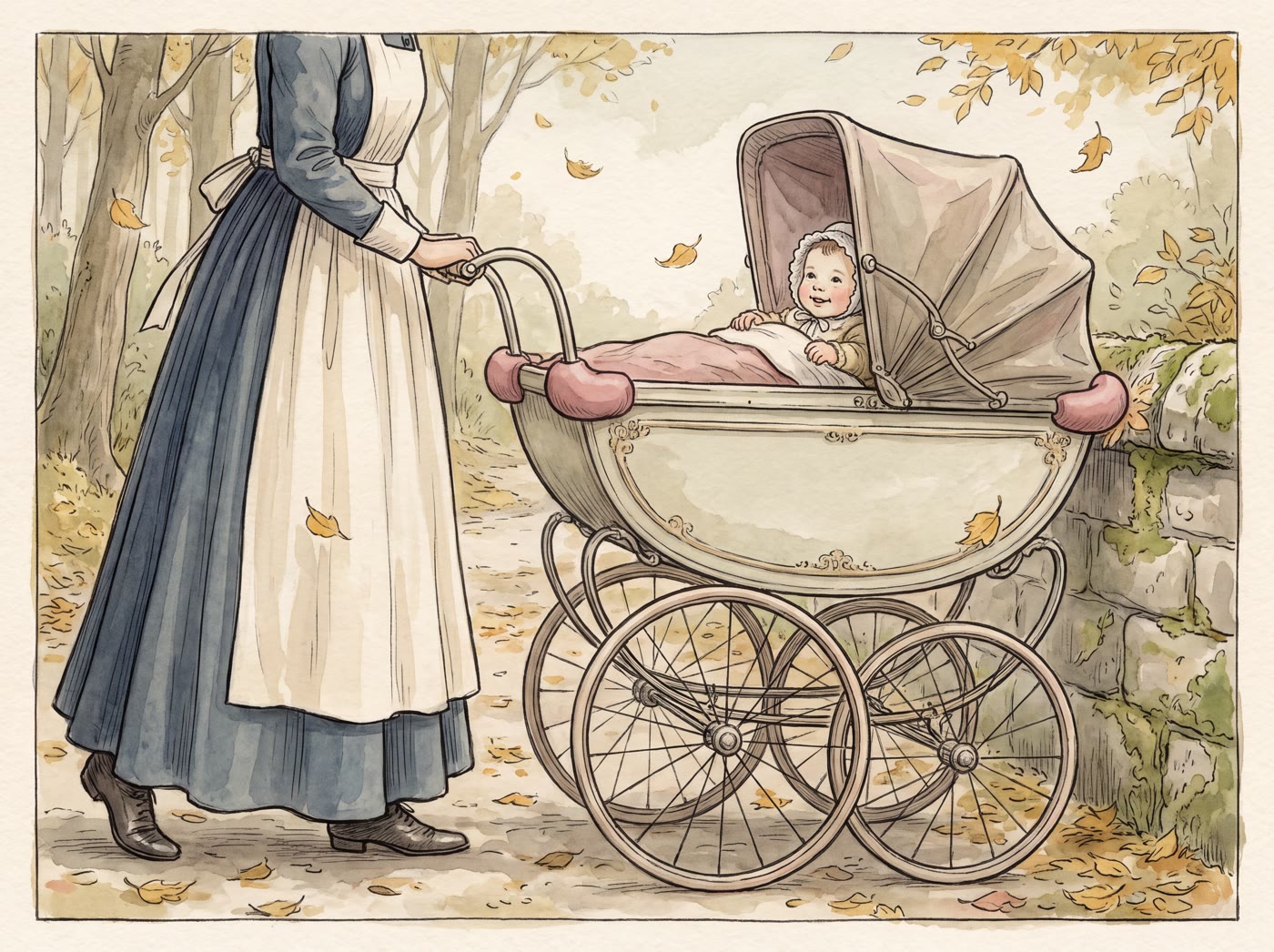
Rubber baby buggy bumpers,
Rubber baby buggy bumpers,
Rubber baby buggy bumpers.
Where the rhyme comes from
The earliest printing we can point to is in February 1955, in the American magazine American Heritage (volume 6, number 2). There Duncan Emrich, Chief of the Folklore Section at the Library of Congress, published “The Ancient Game of Tongue-twisters”, a gathering of twisters sent in by listeners to the NBC radio programme Weekend. Among them is a grimmer, longer form of the phrase: “There’s blood on the rubber baby buggy bumpers”. Emrich presents twisters like this one as hand-me-down family items, passed from parents to children.
That is as far back as the evidence goes. Emrich traces some of the other twisters on his list to nineteenth-century elocution books — J. W. Shoemaker’s Practical Elocution of 1878, for one — but he gives no earlier source for this one. The honest summary is that it was in circulation by the early 1950s and its author is unknown. Some sources date it to the 1960s without offering any evidence, a claim the 1955 printing contradicts.
Today the four words usually stand alone and are simply repeated, faster and faster. A cheerier variant, “Red rubber baby buggy bumpers bounce”, turns up on modern lists of twisters; it is a pleasant alternative, but it carries no date and tells us nothing about where the phrase began.
The phrase has also had a long afterlife on screen. Many people remember it from a race scene in the Tom Slick cartoon, which viewers place in the late 1960s or early 1970s — though that rests on fond recollection, and the exact episode has not been pinned down. If you are wondering what film it comes from, the answer is Last Action Hero (1993), in which Arnold Schwarzenegger’s character Jack Slater says, “listen to this one: Rubber baby buggy bumpers!”
What does it mean?
Exactly what it says. There is no code to crack. A “baby buggy” is the American name for a pram or pushchair. A bumper is a protective guard, like the one on a car, and the big old-fashioned prams had bumpers made of rubber to soften any knocks. So rubber baby buggy bumpers are the rubber bumpers on a baby’s pram. The phrase is a heap of nouns stacked one on another, each describing the next — which is why it puzzles people who meet it cold, and why more than one online discussion exists purely to unpick its grammar.
Why it trips you up. The difficulty is in the sounds. Five bs arrive in quick succession, with an r wedged between them and the vowels switching back and forth — the short u of rubber, buggy and bumpers against the a of baby. At speed the mouth gives up and blurs them together, and “rubber baby” comes out as something like “rubba bubby”.
Sharing it with children
Start with the picture: show or describe an old-fashioned pram with its rubber bumpers, so the words have something to hang on. Then build the phrase one word at a time: “rubber”, then “rubber baby”, then “rubber baby buggy”, and finally the whole thing. Saying each step slowly and clearly before adding the next is far more useful than one rushed attempt.
Make it physical. Push an imaginary pram around the room in time with the words, or bounce the bs — a clap on every b, which makes the five beats easy to hear and quickly shows where the tongue slips. Once it is steady, race a sibling or a friend: the winner is the first to manage three clean repetitions in a row, not the fastest single gabble. The tangles are the fun of it, so laugh at the “rubba bubbies” along the way.
Extra verses to sing
These verses aren’t traditional — they’re ours. Try them once the four words come out cleanly.
Rubber baby buggy bumpers
Bounce the buggy off the bench;
Bouncing baby, bumpy buggy,
Bumping by the baker’s fence.
Brother Bobby bought a buggy,
Big and blue with bumpers round;
Rubber baby buggy bumpers
Keep the baby safe and sound.