How Much Wood
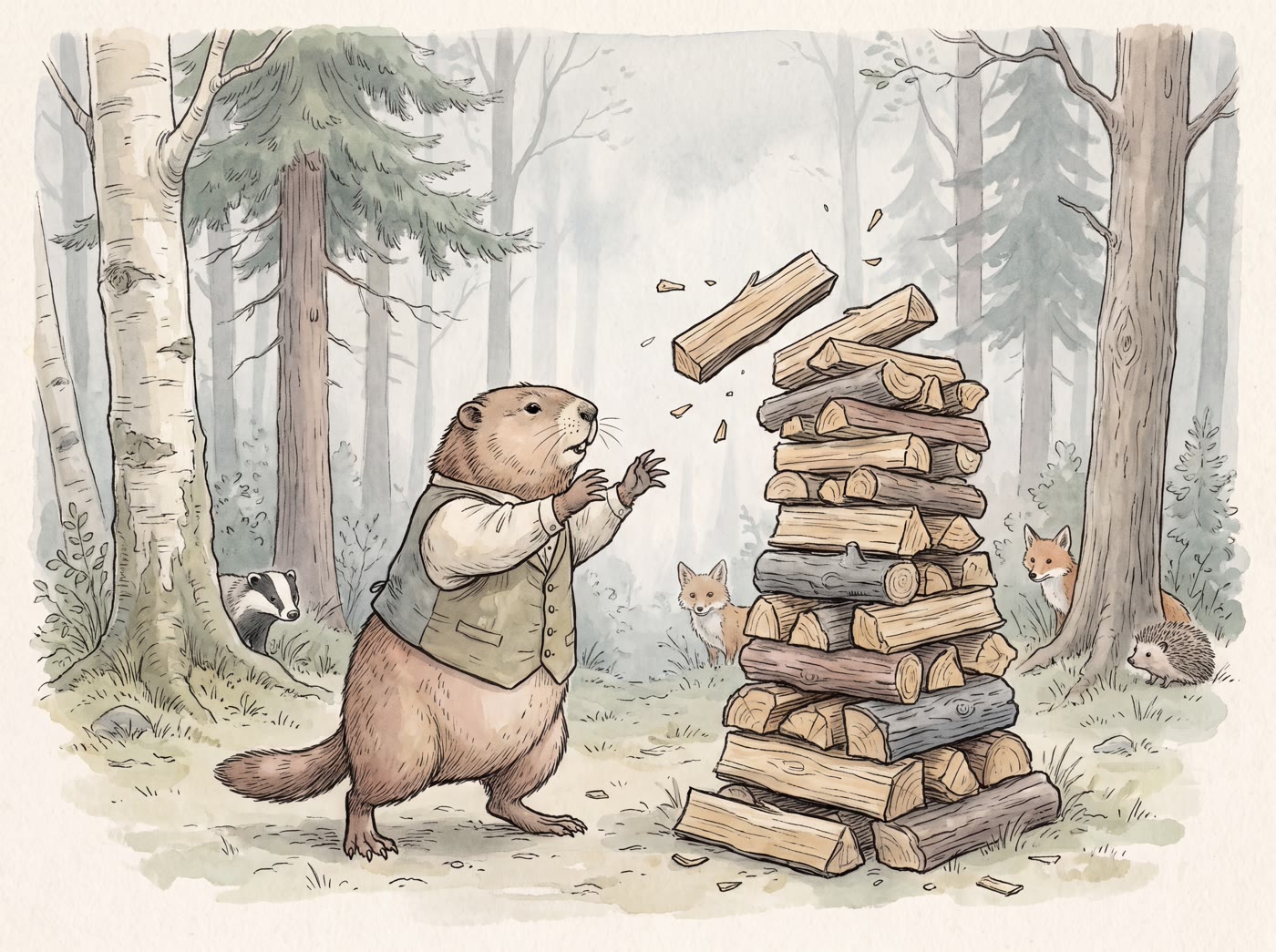
How much wood could a woodchuck chuck,
If a woodchuck could chuck wood?
A woodchuck could chuck as much wood
As a woodchuck would chuck,
If a woodchuck could chuck wood.
Where the rhyme comes from
Unlike most nursery rhymes, this one has a traceable birthday. The woodchuck question comes from “The Woodchuck Song”, written by the American journalist and songwriter Robert Hobart Davis for the singer Fay Templeton in the musical The Runaways, which played at the Casino Theatre in New York. The Tammany Times reported in 1902 that Miss Templeton was “trying the song on Casino audiences” and making it one of the hits of the season — quoting the refrain, “How much wood would a woodchuck chuck, if a woodchuck would chuck wood?”
A second version by the composer Theodore F. Morse followed in 1904 and was recorded by the popular tenor Bob Roberts (“Ragtime Roberts”), which carried the words far beyond the theatre. From there the refrain slipped loose of its tune altogether and became what it is today: a playground dare passed on by ear. That is why it is so often collected as folklore — it was written down as a piece of oral tradition in Michigan as early as 1972 — even though we know exactly who wrote it.
The animal itself is real enough. A woodchuck is a marmot, better known in America as a groundhog, and its name has nothing to do with timber at all: it comes from an Algonquian word, often given as wuchak or wejack, that English speakers reshaped into two familiar-sounding words.
What does it mean?
Strictly speaking, nothing — and that is the joke. The line is a piece of nonsense built entirely out of sound. Five “w” sounds are threaded through five “ch” sounds and a run of “ood” endings, so the mouth has to keep switching between the rounded w and the hard ch at speed. The answering lines are deliberately circular: they use a great many words to say absolutely nothing.
The mock-scientific answers. The question has attracted joke research for decades. In 1988 a New York wildlife technician, Richard Thomas, reasoned that although woodchucks do not throw wood, they do shift a great deal of earth when digging, and arrived at a much-repeated figure of around 700 pounds. Another tongue-in-cheek study read “chuck” as the opposite of upchucking and worked out how much wood a woodchuck could eat. Both are affectionate jokes rather than findings — the Associated Press once called the question “a riddle which beats the Sphinx, since it’s still unanswered”.
Would or could? You will hear both. Davis’s 1902 refrain used “would”; Morse’s 1904 chorus popularised “could”, and the two have been swapping places ever since. Neither is wrong — say whichever your family says.
Sharing it with children
This is a speed challenge, so start slowly. Say the first line on its own until a child can manage it cleanly, then add a line at a time; the mistake most children make is racing before the mouth knows the route. Exaggerate the shapes as you go — a big round woo, a crisp ch — because slow and clear always gets faster, while fast and mushy never gets clearer.
Then make a game of it. Count how many clean repetitions each person manages before the words collapse, and keep a family record on the fridge. Try it as a relay, one line each round the table, so a stumble passes the turn along. Add actions for younger children — a digging motion for the woodchuck, a two-handed toss for “chuck” — which anchors the rhythm and turns a tricky sentence into something the whole body remembers. Laughing at the tangles is the point: the wrong words are half the fun.
Extra verses to sing
These verses aren’t traditional — they’re ours. Try them once the first one is easy.
How much ground could a groundhog grind,
If a groundhog could grind ground?
A groundhog could grind as much ground
As a groundhog would grind,
If a groundhog could grind ground.
How much bark could a bark-chucker chuck,
If a bark-chucker chucked bark?
He’d chuck all the bark he could chuck
Till the chuckable bark was gone,
And then he’d chuck wood till dark.