The Sixth Sick Sheik’s Sixth Sheep’s Sick
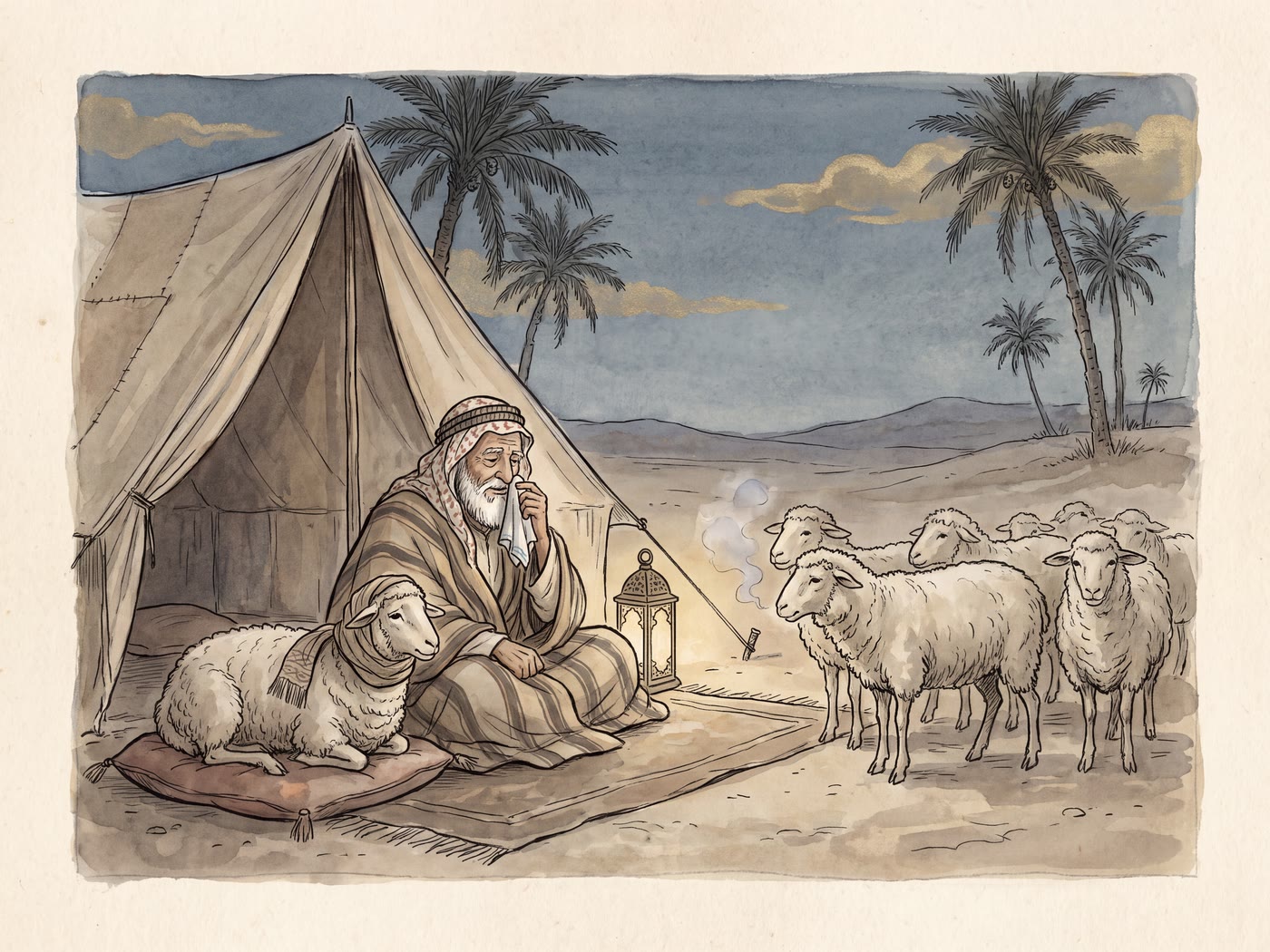
The sixth sick sheik’s sixth sheep’s sick.
Where the rhyme comes from
Nobody knows who first said it, and the line has no early printing that we have been able to find: searches of the old twister collections on Project Gutenberg and archive.org turn up nothing datable, and we have not found it in the Opies’ Oxford Dictionary of Nursery Rhymes. The honest summary is twentieth century, author unknown.
Its fame, though, can be traced quite precisely. In March 2020 Guinness World Records’ own account on X explained that “our 1974 book featured this as the most difficult tongue twister in the English language, as cited by the author of the Anthology of British Tongue-Twisters, Ken Parkin.” So the claim is real — but it was Parkin’s judgement, carried in the 1974 edition, and we have not yet inspected the 1974 page itself. Nor is it a standing record: in the same reply Guinness added that “it’s no longer a category we monitor.” At the time, the same thread notes, the hardest twister in the world was deemed to be a Xhosa sentence meaning “the skunk rolled down and ruptured its larynx”, whose last word contains three clicks.
Most people meet the line second-hand, as a “did you know” — it has done the rounds of Reddit’s Today I Learned forum several times since 2011, and NPR gave it an outing with a dialect coach on International Tongue Twister Day in 2021. Retellings almost always say simply “according to Guinness”, with no edition and no mention of Parkin. The spelling wobbles too: sheik and sheikh both appear, sometimes on the same page, and in casual repetition the words drift into “the sixth sheik’s sixth sheep’s sick” or “six sick sheik’s sixth sick sheep”. The version above is the one Guinness quotes.
What does it mean?
Nothing more than it says: a sheik — the sixth sick one, apparently — has a sixth sheep, and it is poorly. There is no hidden history to decode. The sentence exists to make the mouth jump between s, sh and the awkward ksth at the end of “sixth”, seven words in a row, with almost nowhere to rest.
How to pronounce it. The only genuine question is the vowel in “sheik”. Some people rhyme it with shake, others with sheep, and both are commonly heard; we wouldn’t call either one wrong. It does change the difficulty, though. Said as “sheek”, the word sits so close to “sheep” that the two blur together. Whether the twister is really hard is argued over in online comment threads, where some Arabic speakers say it’s easy because they don’t anglicise the vowel.
Is it the hardest tongue twister in English? Only in the sense that one 1974 reference book said so. In December 2013 Stefanie Shattuck-Hufnagel, an MIT psychologist who studies speech errors, presented a quite different candidate — “pad kid poured curd pulled cod” — to the Acoustical Society of America in San Francisco; many of her volunteers could not get through it at all. That was a separate phrase tested by a separate method, and neither MIT nor Guinness has ever compared the two. There is no reigning champion.
Sharing it with children
Because it is a single line, this is a twister for speed rounds. Explain the trap first: for s the tongue tip sits forward and the lips relax; for sh the tongue draws back and the lips push out; and “sixth” asks the tongue to dart between the teeth for the th straight after a ks. Small mouths find those switches hard at speed, so let children say “six”, then “sixth”, slowly, and feel the difference.
Then build it up a sheep at a time, from the end backwards: “sheep’s sick”, “sixth sheep’s sick”, “sheik’s sixth sheep’s sick”, and so on until the whole line is there — slowly first, then faster, counting a finger for each round. The classic challenge is three times in a row without a slip; a stumble sends you back to one. Try a whispered round, too: without the voice to hide behind, every s and sh is laid bare, and many find it surprisingly harder.
Extra verses to sing
These verses aren’t traditional — they’re ours. Add them once the first line comes out cleanly three times.
The sixth sick sheik’s sixth sheep’s sick,
So the sheik seeks soup for his sixth sheep, quick.
The sixth sheep sips, and the sixth sheep’s strong —
Now six sheep sit by the sick sheik all night long.