Three Grey Geese
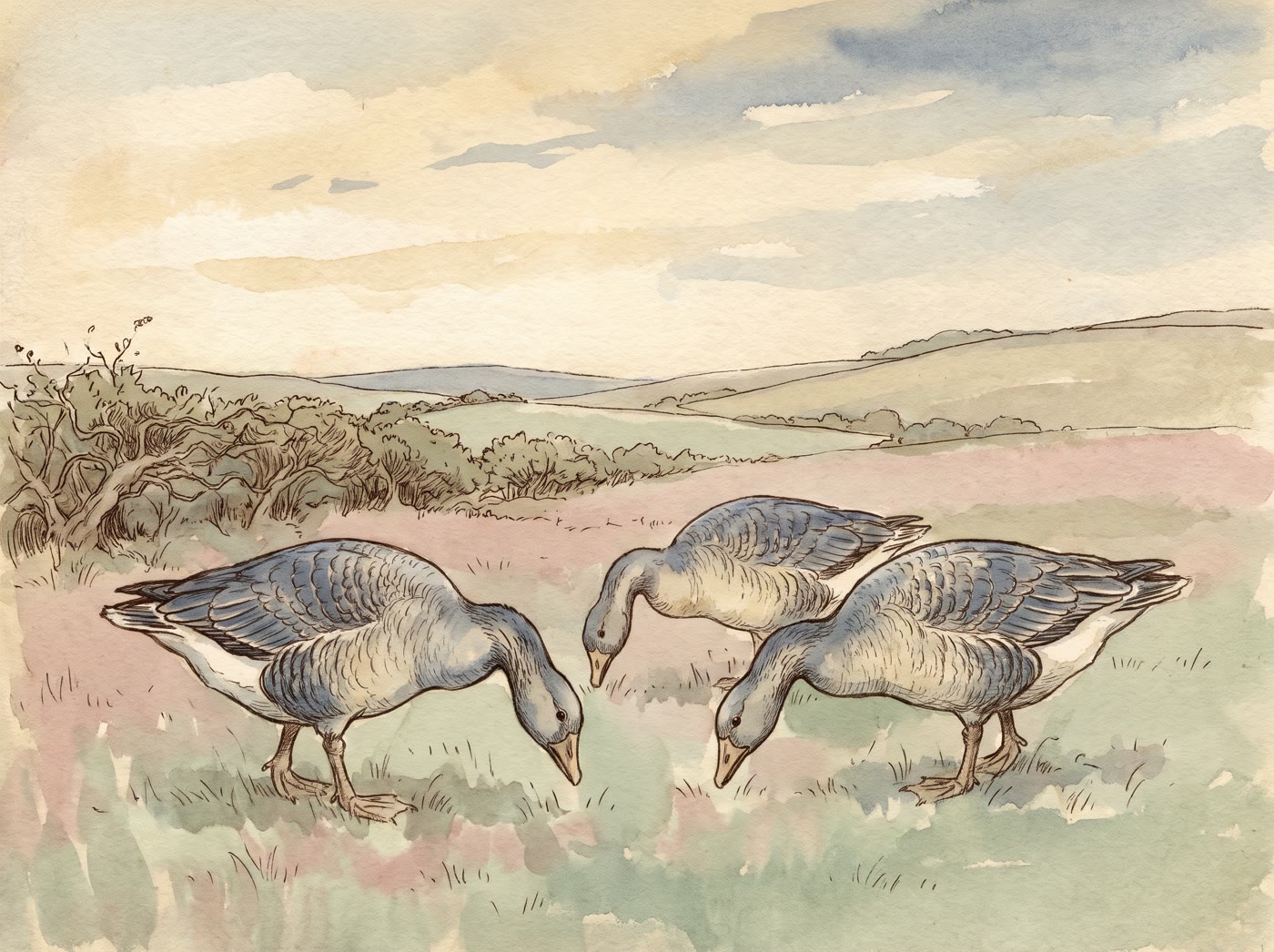
Three grey geese
In a green field grazing,
Grey were the geese
And green was the grazing.
Where the rhyme comes from
Nobody knows who made this twister, and nobody knows how old it is. The earliest printings we have found are from 1905, when it turned up in lists of tongue twisters in British magazines — The 1d Pictorial Magazine and The Scholar’s Magazine both gave it in the same company as “She sells sea shells” and “The sea ceaseth and it sufficeth us”. It was in print again in 1914, in Mrs Thomas Concannon’s A Garden of Girls.
Iona and Peter Opie, in The Lore and Language of Schoolchildren (1959), counted it among the twisters that “continue to be favourites as they were fifty years ago”. So it is certainly a long-lived playground piece, not a modern invention. “In print by 1905” is a statement about where our search stopped, not about where the rhyme began: an earlier printing may well exist, and we have not found an author.
The rhyme is sometimes filed as Irish — Mama Lisa’s World lists it among its Irish children’s songs — but a filing is not evidence of origin, and we have found nothing that shows where it began. A different, modern poem borrows its opening line; that poem is a separate work and is not given here.
The words vary a little. American versions spell it “gray”, and some run “Three gray geese in the green grass grazing / Gray were the geese and green was the grass”. One Ulster childhood memoir of 1983 has “Grey were the geese but green was the grazing”, and longer tongue-twisting versions add lines such as “The grey geese grazed in the green grass”.
What does it mean?
There is no hidden meaning. It is a little picture — geese in a meadow — and a sound game, and it needs no decoding.
Why it trips the tongue. This is our own observation rather than a sourced finding. The verse keeps switching between gr (grey, green, grazing) and a plain g (geese). “Grey” and “green” differ only in the vowel after the gr, and “geese” and “green” share both their first sound and their long ee. The last two lines then swap the same words round, so the tongue is always liable to slide into “green geese” where it should say “grey geese”.
Sharing it with children
Begin with counting. Hold up one finger for each goose as you say “three grey geese”, then wiggle all three fingers like heads bobbing for grass on “grazing”.
Then try a goose walk. Everyone strolls around the room with arms folded behind them, bending forward to peck at the carpet on each “grey” and “green”, and standing tall again on “geese”. Moving to the beat keeps the rhythm steady, which is what makes speed possible later.
For the twister itself, say it slowly first, exaggerating the r in “grey” and “green” so the two words stay distinct. Then go round again, a little faster each time, until someone mixes up the colours — the laughter at “green geese in a grey field” is half the fun. Children who master the four lines can try the longer variants above, or swap “grey” for the American “gray” and see whether it changes how it feels in the mouth.
Extra verses to sing
These verses aren’t traditional — they’re ours. Try them once the first four lines come easily.
Three grey geese
In a grey sky going,
Green was the field
And grey was the going.