How Now Brown Cow
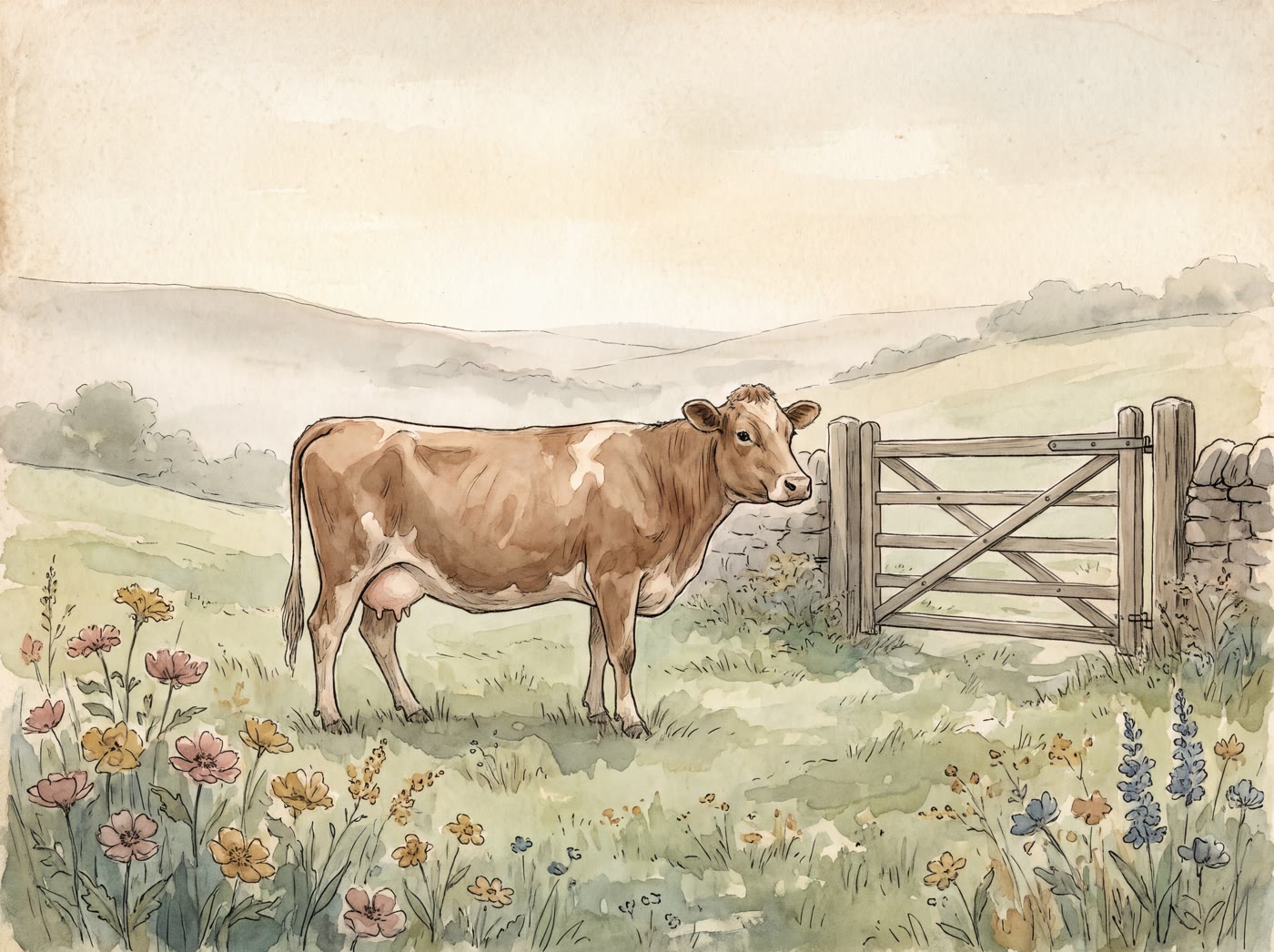
How now, brown cow?
Where the rhyme comes from
It is a short phrase, and an honest account of it has to be short too. Nobody knows who coined “How now, brown cow” or when. It is not a traditional rhyme with verses and a collector’s note; it is a four-word drill used by elocution teachers to show off a single vowel, the ow of “cow”, which turns up in every one of its words.
The earliest dated evidence of the drill in use is a US newspaper report from February 1942. The Capital, of Maryland, told how the coach Belle Kennedy had made the actor Laird Cregar declaim “How, Now, Brown Cow?” — together with “The rain in Spain still stains” — over and over, to make his voice carry at the Pasadena Community Playhouse. Wikipedia’s short entry on the phrase dates its use in elocution teaching to at least 1926, citing a book called Elocution Do’s and Don’ts; we have not seen the phrase on the page of that book ourselves, so we pass the date on as a claim and no more. Because the drill is simply a phrase passed from teacher to pupil, an earlier printing could turn up at any time.
No older, longer version of the rhyme is known to us. The longer “how now brown cow” songs and chants you may find online are modern, so we have not reproduced them.
What does it mean?
As a whole, nothing at all: it is a nonsense phrase, chosen for its sound. But the words do have a past, and it helps to keep three strands apart.
“How now”. This is an old exclamation from the English of Shakespeare’s time, and it turns up in his plays. It is not a polite “how are you?” so much as a brisk cry of surprise or enquiry, roughly “what is this?” or “well?” In Hamlet comes the cry “How now! a rat? Dead, for a ducat, dead!”, and in Henry IV Part 2 a character demands “How now Sir John, what are you brawling here?” Said to a cow, it is a mock-grand question — part of the fun.
The beer-barrel theory. Separately, phrase dictionaries record “brown cow” as an old jocular Scots name for a beer barrel. They cite Allan Ramsay’s pastoral comedy The Gentle Shepherd (1725), where the old folk think it best “with the brown cow to clear their een”. It is often claimed online that this makes “how now, brown cow” a Scottish greeting, or a call for another round. That is a theory and no more: we found no evidence connecting the barrel with the elocution drill, and the phrase dictionaries that record the barrel show none either.
The vowel drill. This is the one use we can document. Each word holds the gliding vowel sound of “ow”. Say it slowly and you may feel the mouth start wide and close towards a small round shape — that is our practical description rather than a phonetics lesson, but it makes the sound easy to watch for. Some people wonder whether the phrase is offensive; we have found nothing to suggest it is — it is a vowel exercise with no hidden meaning.
Sharing it with children
It is filed under tongue twisters, but it is not really hard to say quickly. Treat it instead as an elocution exercise: the aim is a clear, round sound, not speed.
Say it slowly together, stretching each vowel, then speed up in stages until the words run together. Sit side by side at a mirror and watch your mouths: wide for the start of the sound, then rounded at the end. Exaggerate the shapes, and let the giggles come — a cow-sized “moo” makes a good warm-up. Try it in a whisper, in a deep “grand” voice, and in the voice of a very surprised Shakespearean actor.
Then go hunting for other “ow” words: now, down, town, crown, house, mouse, cloud, shout, owl. See how many you can fit into a single sentence, and whether anyone can make one that sounds sensible.
Extra verses to sing
These verses aren’t traditional — they’re ours. They are simply more “ow” sounds, to say once the original comes easily.
Now, down in the town, a brown hound found a crown,
And proudly he wore it around.
How now, wise owl, why the howl?
Out of the house comes the mouse, no doubt.