Moses Supposes His Toeses Are Roses
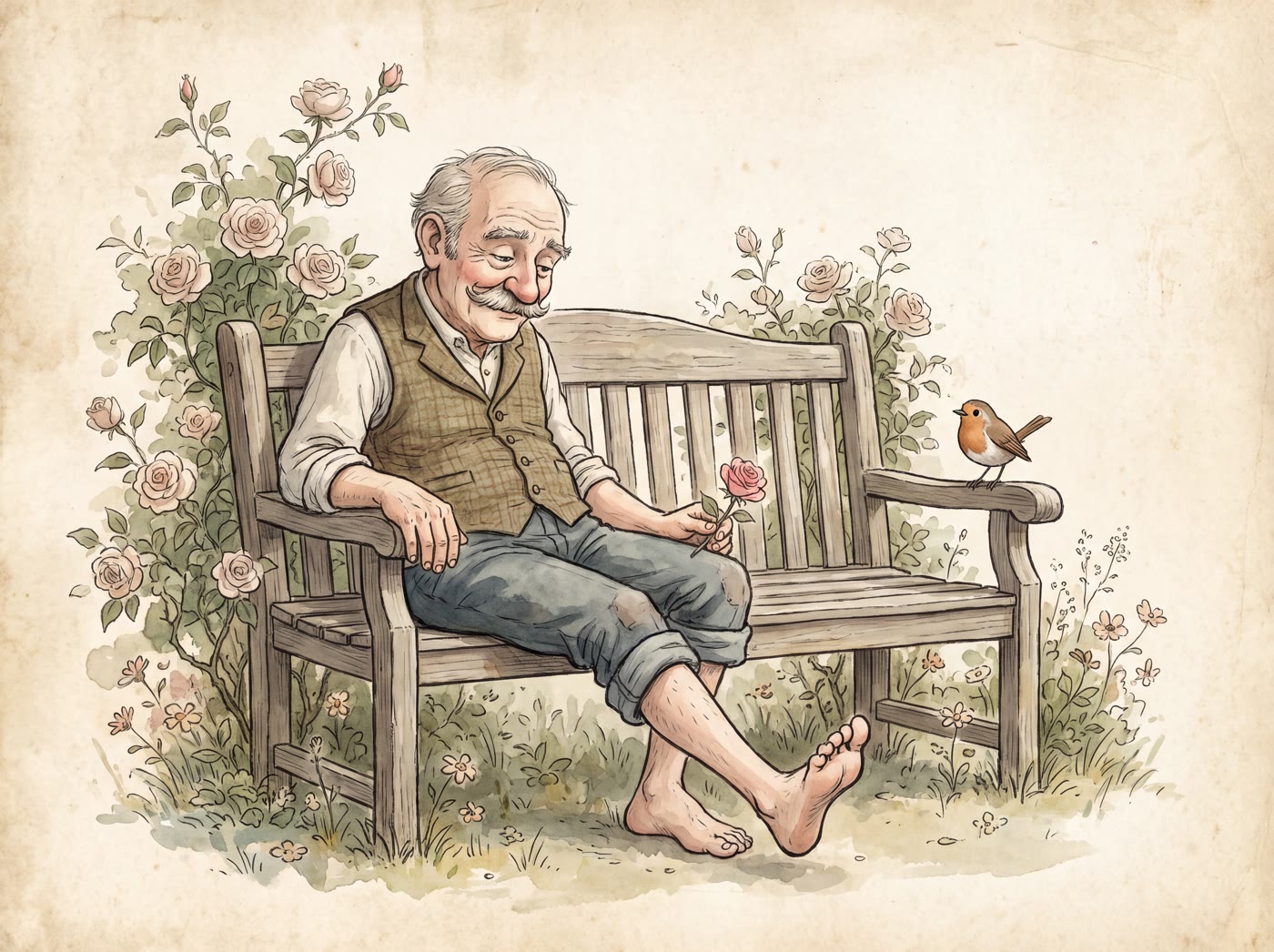
Moses supposes his toeses are roses;
Moses supposes erroneously,
For nobody’s toeses are roses or posies,
As Moses supposes his toeses to be.
Where the rhyme comes from
Moses Supposes is a tongue twister — and a much older one than most people realise. Many of us first hear it sung by Gene Kelly and Donald O’Connor, but the four lines above were in print long before anyone in Hollywood set them to music. Who first wrote them, and when, is not known.
The earliest dated printing yet found is in a Minnesota newspaper, the Mower County Transcript of Austin, on 22 August 1888 — the wording given above. That is a lower limit, not a birthday: how much earlier the verse was in circulation is not known. Seven years later it appears in Precious Nonsense, an anonymous collection published in New York in 1895, with a slightly different shape: “If Moses supposes his toeses are roses, / Then Moses supposes erroneously; / For nobody’s toeses are posies or roses, / As Moses supposes his toeses to be.” The roses and the posies have swapped places, and the whole thing has become an argument.
A third version, printed in the News-Herald of Hutchinson, Kansas, on 8 October 1944, changes the ending. Instead of the general rule that nobody’s toes are flowers, Moses himself now “knowses his toeses aren’t roses” — which makes him rather less foolish and the line rather harder to say. It is this form, the one most familiar today, that the film number later built upon.
That number is “Moses Supposes”, from the 1952 MGM musical Singin’ in the Rain, with music by Roger Edens and lyrics by Betty Comden and Adolph Green. It was one of only two wholly new songs written for the film, and Gene Kelly and Donald O’Connor perform it in a scene set during a diction lesson — a fitting home for a tongue twister. The song takes the old twister as its starting point and spins it out with wordplay of its own. Those added lyrics belong to the film and its writers, so we have not reproduced them here; the traditional four lines, more than sixty years older, are free for anyone to say.
What does it mean?
Nothing at all, and that is the honest answer. This is nonsense verse: there is no hidden history, no evidence of a real Moses, and no legend to untangle. A man believes his toes are flowers, and he is wrong. A posy, for anyone wondering, is a small bunch of flowers.
Why it twists. The whole verse hangs on one sound, the “-oses” ending, chained through Moses, supposes, toeses, roses and posies, with an echo in the middle of erroneously. Notice that most of those “s” letters are actually spoken as a buzzing z, while the s at the start of supposes is a true hiss. The tongue barely moves between the two — only the voice switches on and off — and at speed the switch is easy to miss. Then there is toeses, a plural that does not exist: the real word is toes, and the extra syllable was invented purely to keep the rhyme and the buzzing going — a word that is wrong on purpose, which is half the pleasure of saying it.
Sharing it with children
Begin slowly, one line at a time, letting every z buzz. Once the words are secure, say the whole verse at a walking pace, then a trot, then a gallop, and see where it falls apart — usually somewhere around “supposes erroneously”. It works well as a two-player challenge: one person says it, the other has to say it faster, and so on until someone trips.
For toddlers it makes a lovely toe rhyme. Take off socks, and wiggle a toe on each “toeses”; on “erroneously”, shake your head in mock disappointment; on the last line, hold up a bare foot and inspect it closely for petals. Children a little older can play swap-the-flower: keep the verse but replace roses with daisies or tulips, and discover how much of the fun depended on the rhyme. School-age children can then invent their own “-oses” words, in the spirit of toeses: what would you call more than one nose, or one hose, or one bow?
Extra verses to sing
These verses aren’t traditional — they’re ours, and nothing to do with the film either. Try them once Moses is behaving himself.
Rosie supposes her toeses grow roses,
And Rosie waters them carefully;
But nobody’s toeses grow roses or posies,
However well watered the toeses may be.
Moses supposes his noses are hoses
(He only has one, but he counts it as three);
But nobody’s noses are hoses for roses,
So Moses has borrowed a can from me.