Unique New York
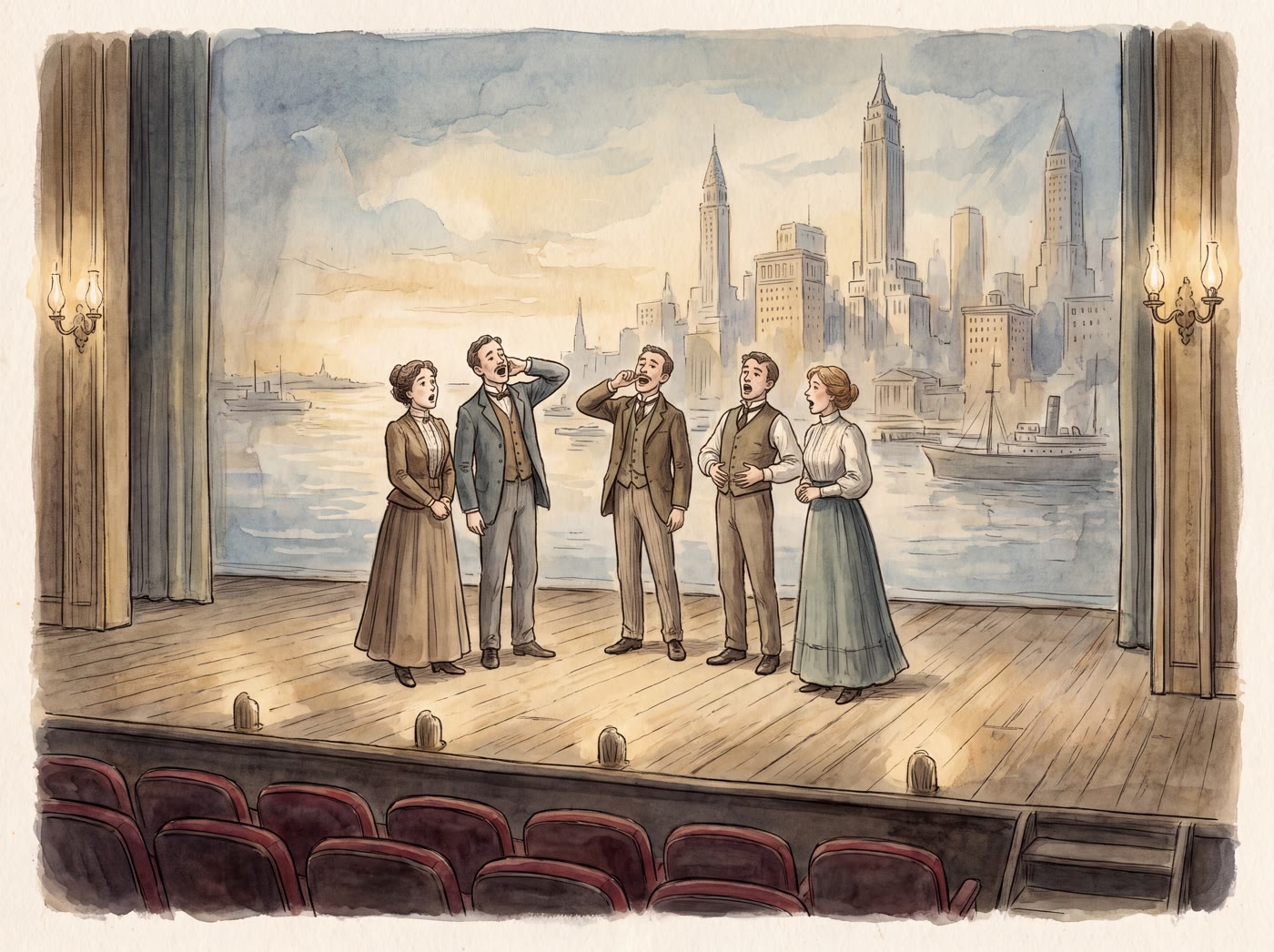
Unique New York,
unique New York,
unique New York.
Unique New York, unique New York,
you know you need unique New York.
You know New York,
you need New York,
you know you need unique New York.
Where the rhyme comes from
It looks absurdly easy — three words, one of them a place everybody knows — and it trips almost everyone, which is the whole charm of the Unique New York tongue twister. The verse above sets out the three forms you are likely to meet, in order of difficulty. The first is the bare kernel, said three times over, as it appears in voice-acting enunciation exercises. The second is the version most often given as the full text, with “you know you need” tacked on the end. The third is the longer ladder, which climbs through “you know New York, you need New York” before arriving at the phrase itself. Rehearsal rooms improvise, too: one drama-club recollection gives “Unique New York, uniquely New York”, which is best treated as a local variation rather than a canonical form.
Where it lives is clear enough. It is a diction warm-up, passed around among actors, broadcasters and singers, and it turns up on lists of standard high-school drama warm-ups and in pronunciation practice for learners of English. Where it came from is not. We have found no named author, no first printing and no datable appearance in a drama manual or newspaper, and one tongue-twister collection says plainly that it has no known publication date or attributed author. Stories that place its birth in mid-century American theatre training are repeated online without any source behind them, and we would rather not pass them on as fact.
The one faint clue is a 1973 linguistics paper by Lawrence Schourup on tongue-twister errors, whose index entry appears to quote the phrase three times over. We have not been able to read the paper itself, so we offer it as a hint that the words were circulating by then — not as a date. The honest answer is: author unknown, origin unknown.
What does it mean?
Nothing beyond the sound. There is no story behind it — no known author and no occasion — just a city praised for being one of a kind, said again and again. The interest lies in why such a short phrase is so slippery.
The collision at the join. Unique ends on a hard k, made with the back of the tongue against the soft palate. New begins with n, made with the tip of the tongue just behind the top teeth. Every repetition asks the tongue to leap from back to front at speed.
The echoing “yoo”. Unique and New share the same gliding “yoo” sound, so it recurs right across the word boundary and blurs where one word stops and the next begins. Hence “unique New York” sliding into “unique Nyork” and worse.
The second time round. The first repetition is usually clean. It is the second where people slip, once the mouth stops articulating each sound and starts predicting the next one. That is our plain description of what happens rather than a scientific finding — but anyone who has tried it will recognise the moment. It is also tempting to think the city was chosen for that repeating “yoo”; it is a plausible explanation, though with no known author nobody can say what anyone intended.
Sharing it with children
Begin with the slow-to-fast ladder. Say “unique New York” once, deliberately, and let the child echo it. Say it twice, then three times, nudging the pace up only while the words stay clean. The moment it turns to mush, drop back a rung. Then climb the longer version the same way, one line at a time.
Next, try it on one breath. Take a big breath and see how many times the phrase will fit before the air runs out — counting aloud for each other is half the fun, and a mangled repetition doesn’t count.
Singers use it as a warm-up, so try it sung on a single note: pick a comfortable pitch, hum it, then sing the whole phrase on that one note. Without a tune to lean on, every consonant has to be crisp. Move the note up or down a step and go again.
Finally, swap the city. Invite the child to invent their own version from a place they know — “Lovely Little Leeds”, perhaps — and then decide together whose is hardest to say three times fast. Children quickly discover that the trickiest ones repeat a sound or make the tongue jump.
Extra verses to sing
These verses aren’t traditional — they’re ours. Try them once the original comes out clean.
Unique New York, unique New York,
you need a knack to know New York.
You knew New York, you knew you knew,
you knew you knew unique New York.