When a Twister a-Twisting
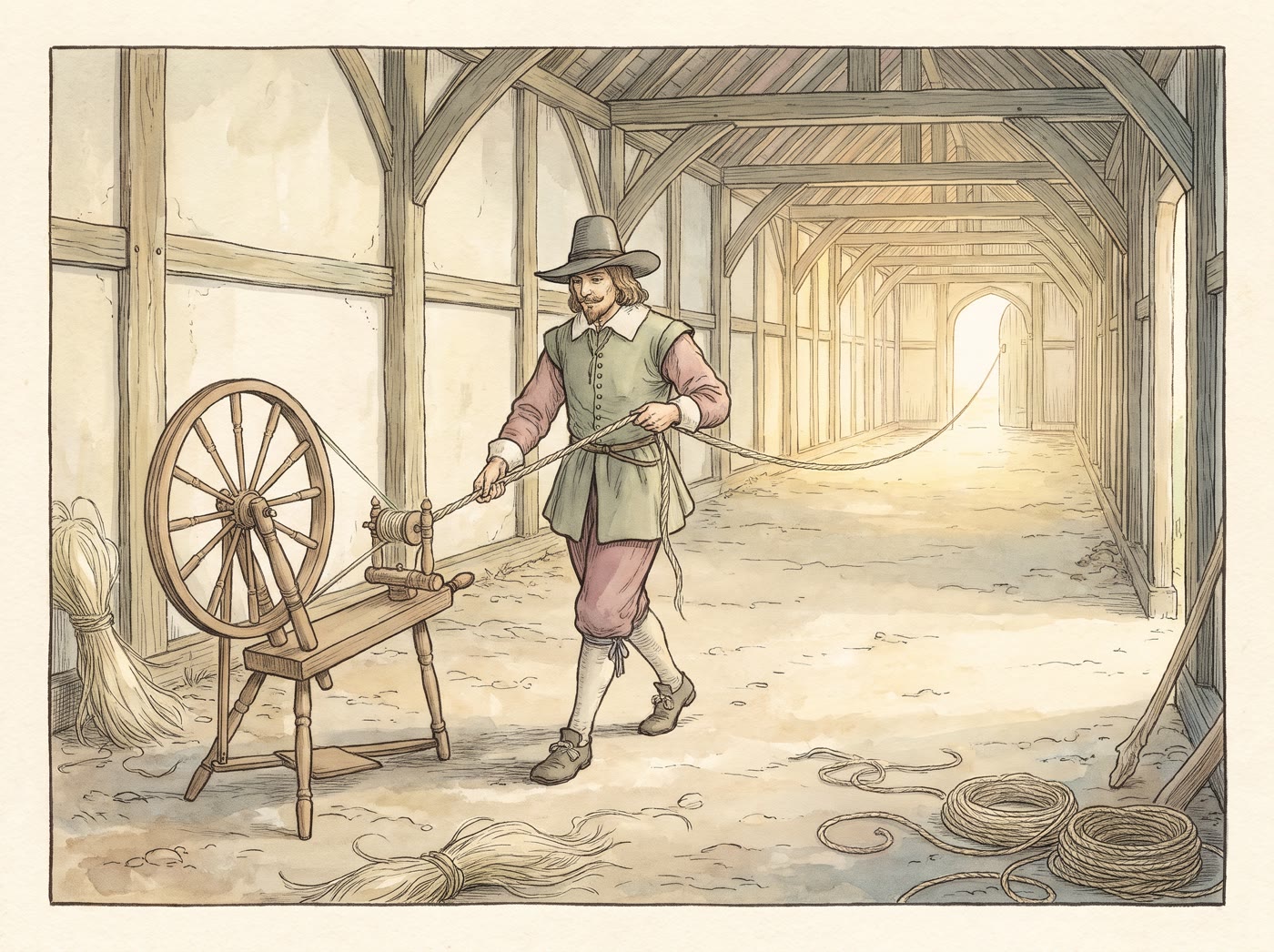
When a twister a-twisting will twist him a twist;
For the twisting of his twist, he three times doth intwist;
But if one of the twines of the twist do untwist,
The twine that untwisteth, untwisteth the twist.
Untwirling the twine that untwisteth between,
He twirls, with the twister, the two in a twine;
Then twice having twisted the twines of the twine,
He twisteth the twine he had twined in twain.
The twain that, in twining, before in the twine,
As twines were intwisted, he now doth untwine;
’Twixt the twain inter-twisting a twine more between,
He, twirling his twister, makes a twist of the twine.
Where the rhyme comes from
This is a seventeenth-century verse, and one anthology of twisters, A Twister of Twists, A Tangler of Tongues, counts it among the oldest in the English language. It is often traced to John Wallis, whose Grammatica Linguae Anglicanae — a grammar of English written in Latin, first published in 1653 — includes it. The edition usually cited is the fourth, of 1674: James Orchard Halliwell, who gathered the verse into his Nursery Rhymes of England, gives the source as “Dr. Wallis’s Grammatica Linguae Anglicanae, 12mo, Oxon. 1674, p. 164.” We have not seen a page of the 1653 first edition, so we cannot say the verse was there from the start; the 1674 printing is the firm date.
The words above are the three stanzas as Halliwell gave them, with the spelling and punctuation lightly modernised. Most websites print only the first stanza, and in a bewildering range of wordings: “he three times doth intwist” becomes “he three twines will entwist” in one version, while a simplified modern form begins “When a twister twisting twists him a twist.” A verse that has been reprinted, and recalled by ear, for more than three centuries drifts, and variant wordings are legitimate.
The Opies’ Oxford Dictionary of Nursery Rhymes is reported to say that the verse was originally French, and that Wallis had it from a Frenchman. We have only seen that second-hand, so treat it as reported rather than confirmed. A French twister about a ropemaker does exist — it opens Quand un cordier cordant veut corder une corde — and it plays the same game with corder, to twist into rope. How much older than Wallis the verse may be is not known.
What does it mean?
Unusually for a tongue twister, this one makes sense once you know the trade. A twister, in this sense, is someone who twists strands of thread or rope together; the verse also uses the word for the tool he twirls (“He, twirling his twister, makes a twist of the twine”). In the verse, a twine is one of the strands, and the twist is the cord made by twisting them together. Read slowly, the first stanza describes the work: he twists three strands into a cord, and if one strand comes undone, it unravels the whole twist. The later stanzas follow the twisting and untwisting of the strands.
The hiccup charm. Halliwell filed the verse among the “charms”, noting that it and the verses after it are said to be certain cures for hiccups if repeated in one breath. That is an old folk remedy, not medical advice — but it explains why anyone once bothered to say it all in one breath.
A shorter, later-sounding twister, A twister of twists once twisted a twist, circulates separately. We have found no early source for it.
Sharing it with children
Start with one line at a time, at half speed. The difficulty is the repeated tw at the start of word after word, with twist, twine and untwist changing places just when your tongue has settled. Begin with the first stanza alone and keep the other two for older children and adults.
Better still, do what the verse describes. Give each child two or three lengths of wool and let them twist the strands into a cord, one turn for each “twist” they say. Then let one strand go and watch the cord untwist, which is exactly the third line of the verse.
For a listening game, ask children to raise a hand on every twist and lower it on every twine. Or run the usual slow-to-fast challenge: say the first stanza once at walking pace, then a little faster each lap round the circle, and see whose tongue gives out first. For the old charm, see who can manage a whole stanza in a single breath.
Extra verses to sing
These verses aren’t traditional — they’re ours. Try them once the first stanza comes easily.
When a twister a-twirling will twirl him a thread,
For the twirling of his thread, three fine strands are spread;
But if one of the strands should unwind from the thread,
The strand that unwindeth unwindeth the thread.
When a tangler a-tangling will tangle a tongue,
For the tangling of his tongue, three tales are sung;
But if one of the tales should be tangled and wrung,
The tale that is tangled tangles the tongue.