Ip Dip
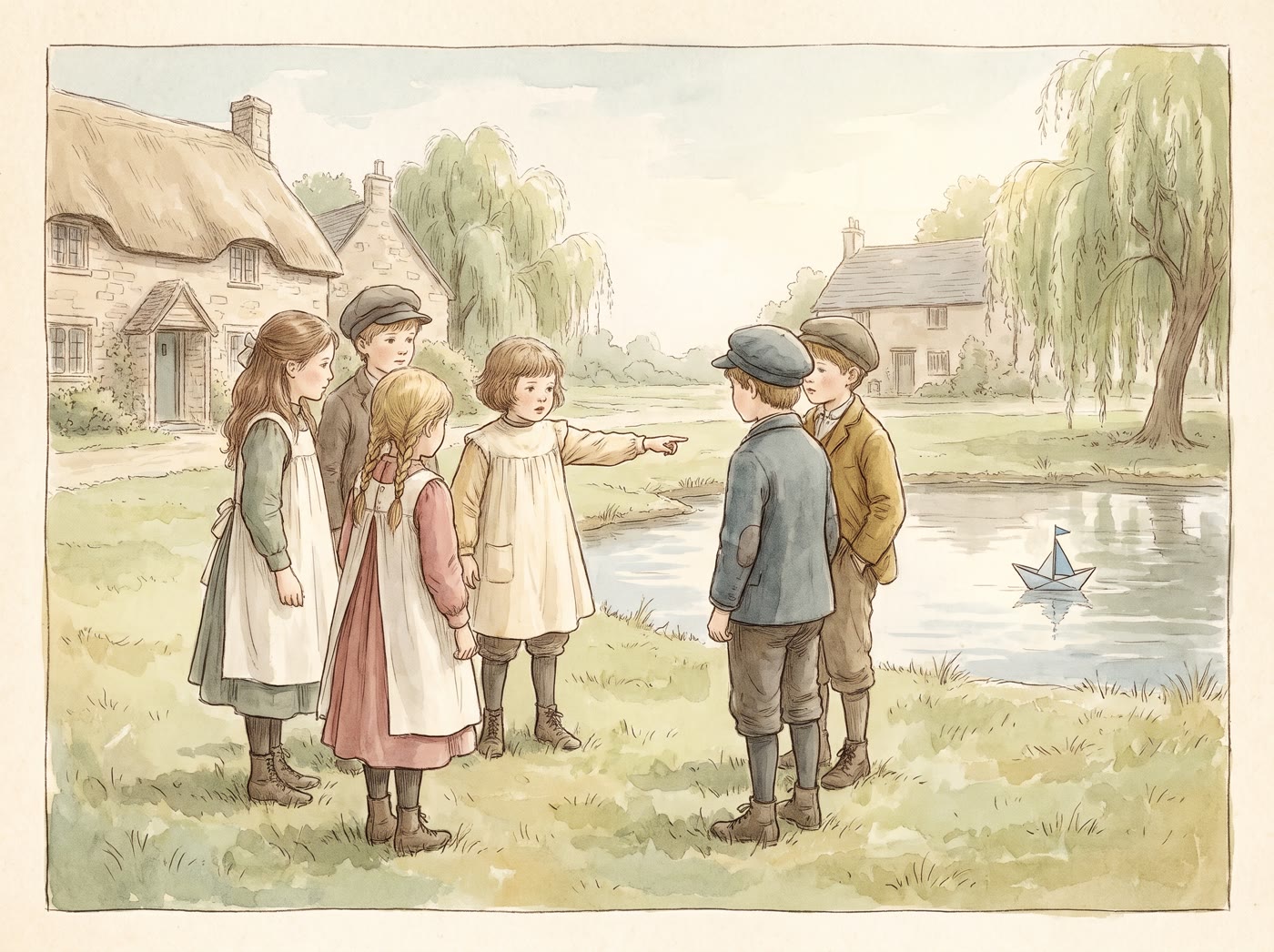
Ip dip sky blue,
Who’s it? Not you!
Ip dip sky blue,
Who’s it, not you!
Not because you’re dirty,
Not because you’re clean,
My mum says you’re the fairy queen!
Ip dip doo,
The cat’s got the flu,
The dog’s got the chickenpox,
So out goes you.
Ip dip dip,
My blue ship,
Sailing on the water,
Like a cup and saucer,
But you are not in it.
Where the rhyme comes from
Ip dip is a counting-out rhyme: a chant used to pick one child from a group, usually to decide who is “it” or who goes first. It has been a familiar sound in British playgrounds for a long time, and there is no single text. The four above are among the clean wordings children are known to use, and every school and street seems to have its own middle and its own ending.
How old it is, nobody can say with confidence. We have not found a first printed appearance of “ip dip”, no named collector, and no dated chapbook, so we will not give a year. You will see the rhyme described online as a nineteenth-century game, but that claim comes without a source and we have left it out. These are words that have been passed on by word of mouth, usually from one child to another, rather than written down by an author.
The ship version is recorded as Welsh, though plenty of people in England remember it too, so it is safest not to claim it for any one place. The “cat’s got the flu” wording is recorded too, and the “fairy queen” lines turn up as “my mum says” or “my mother says”. None of these is the correct one.
Counting-out itself is better documented. Iona and Peter Opie, who spent years studying schoolchildren’s lore, noted that children call it “dipping”, and that a rhyme brought by a newly arrived child is listened to eagerly and, if it is amusing, may be added to the local stock and push out an older one. That is a good explanation for why one rhyme comes in so many forms. Cheekier versions exist too, as every playground knows; we leave those to the children.
What does it mean?
The meaning of “ip dip” is unknown, and so is why the sky should be blue. They may be nothing more than good sounds to chant. Nothing we can source ties them to ships, sailing or anything else, and we would rather say so than guess.
Divination by lots. About counting-out in general, the collector Henry Carrington Bolton, in Counting Out Rhymes of Children (1888), suggested that the custom began in superstitious ways of foretelling or choosing by lot. This is a theory, offered long ago, and it says nothing in particular about ip dip.
The mechanics are easier to explain than the history. The chanter points at a different child on each beat, and whoever is pointed at on the final beat is chosen. The point of a long, rambling rhyme is probably to make the chanter lose count, so that nobody can tell in advance where it will land. In theory the result is fixed by where you start, so it is only random-seeming as long as no one has worked out the number of words first. Children know this perfectly well, which is why they argue about who starts.
Sharing it with children
Counting out in a circle. Stand everyone in a circle and point to one child on each beat, including yourself. Agree one rule before you begin: either the last child pointed at is “it”, or that child is out and the chant starts again until one is left. With the second rule, a rhyme with the ending “out goes you” does the work nicely.
Two feet in. Every child puts both feet into the ring, and each time the rhyme ends the chosen child takes one foot out. The first with both feet out is chosen.
Take turns to chant. Let a different child chant each round, so the starting point changes and nobody can fix the result. Clap or tap the beat first: a steady pulse makes the pointing fair.
Compare wordings. Ask the group which middle each child knows, and where they learnt it. Then join two rhymes together and ask whether that is cheating, since it makes the count harder to predict.
Extra verses to sing
These verses aren’t traditional — they’re ours. Use them as spare rhymes for choosing, in the same short beat.
Ip dip sky blue,
Count them, one, two, three,
Round the ring and back again,
Out goes you, not me.
Ip dip apple tree,
Who will the next one be?
Round the garden, round the green,
Out goes one, and that is she.