One I Love, Two I Love
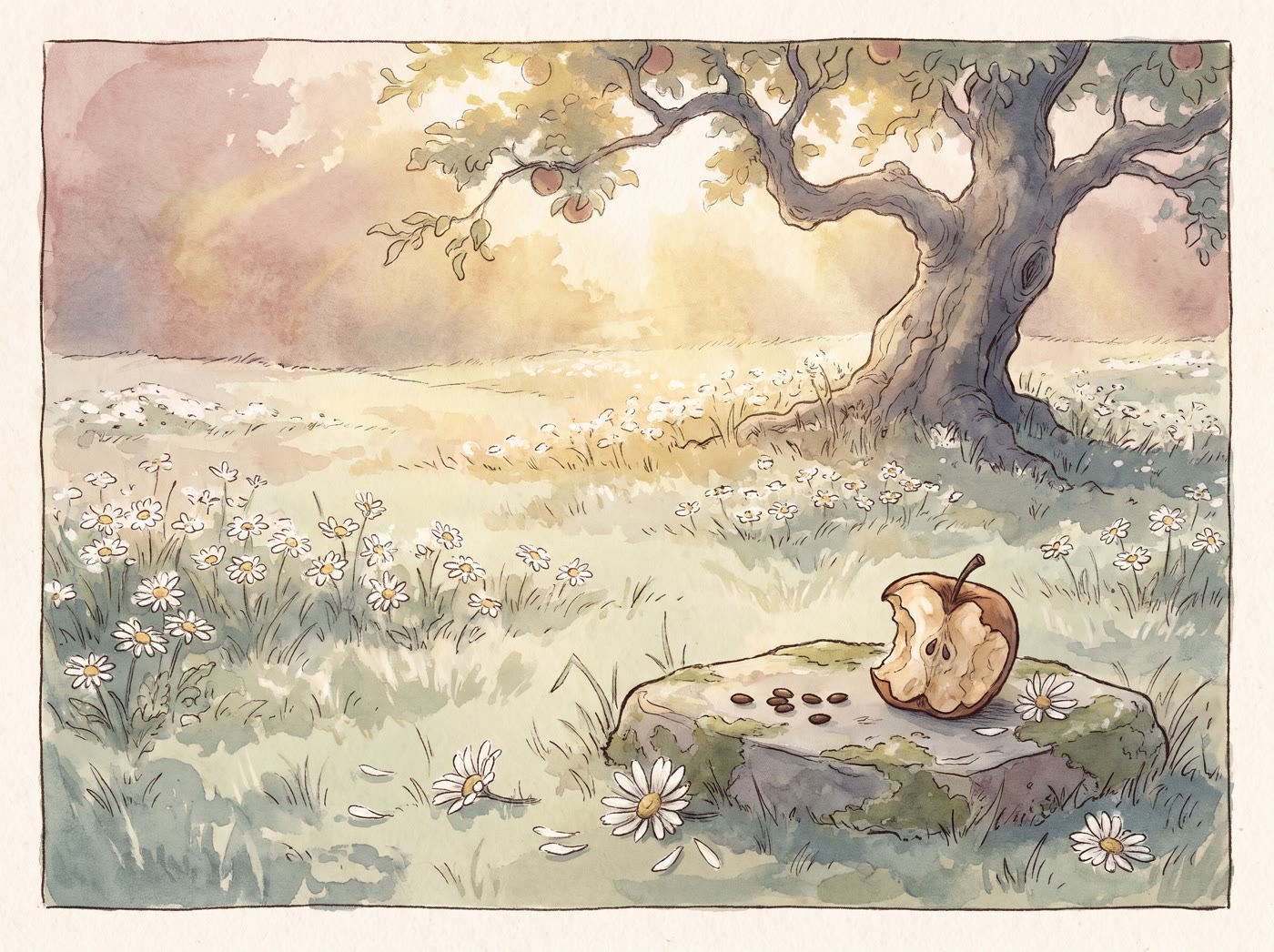
One I love, two I love,
Three I love, I say;
Four I love with all my heart,
And five I cast away.
Six he loves, seven she loves,
Eight they both love;
Nine he comes, ten he tarries,
Eleven he courts, twelve he marries.
Where the rhyme comes from
The earliest printing we have found is in William Wells Newell’s Games and Songs of American Children (1883), where it has its own entry under the heading “Counting Apple-seeds”. A fuller account follows in Bolton’s The Counting-out Rhymes of Children (1888), which prints the words in his section on counting petals and apple seeds. That is only the earliest we have found, not proof of a first appearance: we have not located any earlier printing, but that is not the same as showing that none exists.
Who made the rhyme, and when, is not known. No origin story is attached to it that we could trace. What the books do show is that by the 1880s it was recorded in English-speaking children’s play on both sides of the Atlantic.
The wording varies a little. Bolton gives “Eight, both love”; Clifton Johnson, writing about apple-seed fortunes in What They Say in New England, and Mary Blain, in Games for Hallow-e’en (1912), have “they both love”, which is the form we print. Lines are also broken differently from one book to the next.
What does it mean?
It is a fortune-telling count. Each number is a line of the rhyme, and the number that lands on the last seed gives the answer. The first five lines are the counter’s own feelings, ending with “five I cast away”. Lines six to twelve are the outcomes: he loves, she loves, they both love, then a little story of a suitor who comes, tarries (lingers), courts (woos) and marries.
In Bolton’s account, children of both sexes counted the seeds taken from an apple core. Johnson describes the apple being named for a sweetheart first, with the sign that goes with the final seed deciding the fortune. Blain’s party version uses exactly twelve seeds and twelve paper slips, each with a friend’s name face down: the seeds are placed on the slips one line at a time, and the slip is turned over to reveal the name of one loved or cast away.
Bolton also notes that children rarely took such fortunes seriously, and “perfectly appreciate[d] their absurdity and folly”. It belongs to the same family of fortune-telling counts as Tinker, Tailor, Soldier, Sailor, which Bolton groups with it under the practice of counting buttons, cherry stones and seeds to find a future lot.
Divination by lots. Bolton argued, about counting-out rhymes in general, that they descend from ancient divination by lots. That is one scholar’s theory, not evidence about this particular rhyme.
A note on names: this is the traditional counting rhyme. Modern children’s songs with similar titles are different things, and nothing here comes from them.
Sharing it with children
For a small child the romance is beside the point; what matters is the counting and the beat. Set out twelve buttons, pebbles, grapes or counters in a row and touch one for each line, so that the number and the words arrive together. Then ask which line the last one landed on.
Daisy petals work in the same way: pick a daisy, pull the petals one at a time and see where the rhyme stops. Cherry stones and apple seeds do too, if you have them to hand. Twelve is a useful number to practise — an egg box has twelve cups, a clock face has twelve numbers, and the year has twelve months.
The count can also settle small decisions, as other counting-out rhymes do: who goes first, or which colour of cup to take. Count forwards through the rhyme, then backwards from twelve to one for a harder game. Children who are not ready for the later lines can stop at five, where the first stanza ends.
Extra verses to sing
These verses aren’t traditional — they’re ours. They keep the counting and swap the sweethearts for snacks and animals.
One I like, two I like,
Three I like, I say;
Four I like with all my heart,
And five I give away.
Six is jam and seven is bread,
Eight is buttered toast;
Nine is a duck and ten is a hen,
Eleven is the one I like most.