Young Lady Named Rose
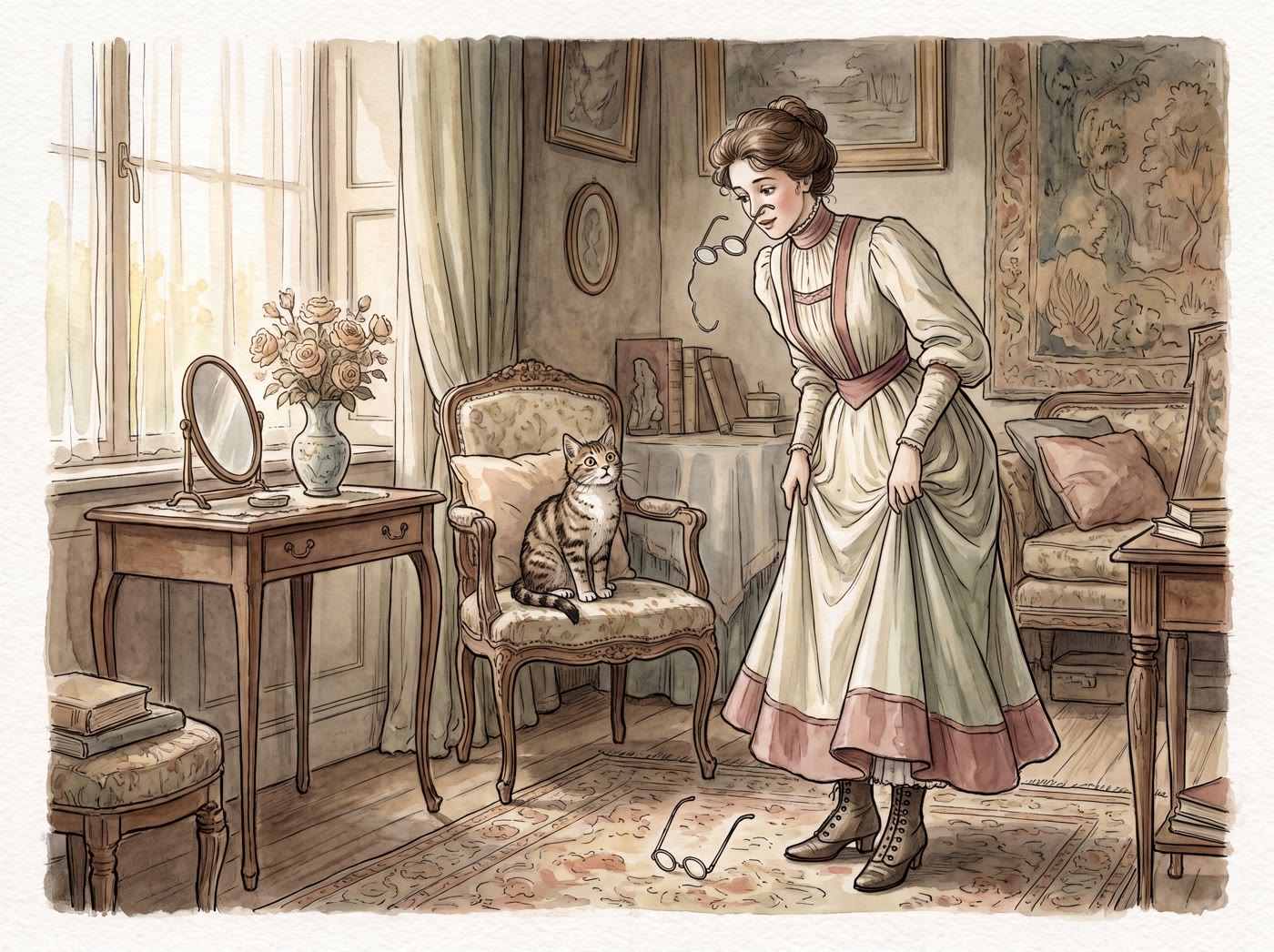
There was a young lady named Rose
Who had a large wart on her nose.
When she had it removed
Her appearance improved,
But her glasses slipped down to her toes.
Where the rhyme comes from
This limerick is anonymous, and no author has ever been traced for it. It belongs to the very large family of “There was a young lady of…” verses that have circulated in joke books, school readers, party recitations and, more recently, internet collections. Its earliest appearance in print has not been established: it turns up in twentieth-century anthologies of clean comic limericks with no attribution and no date, which is the normal fate of a verse that travels by word of mouth long before anyone bothers to write it down. Anyone who tells you confidently who wrote it, or when, is guessing.
The form itself has a much clearer history. The first English collections of these five-line comic verses appeared around 1820, in little books such as The History of Sixteen Wonderful Old Women (1821) and Anecdotes and Adventures of Fifteen Gentlemen (c. 1822). Edward Lear read the latter, borrowed its shape for A Book of Nonsense in 1846, and illustrated every verse himself — and it was that book which made the form famous. Lear never used the word “limerick”; he called his poems “nonsenses”, and the name is not recorded for this kind of verse until the 1890s, after his death.
Why the Irish city of Limerick lent its name to the form is genuinely uncertain. The story most often repeated is that at Irish drinking parties guests improvised verses in turn while the company sang the refrain “Will you come up to Limerick?” between them. It is a charming account, but it has never been documented, and scholars treat it as tradition rather than established fact.
What does it mean?
There is no hidden history here, and no buried politics — this is a joke, and the whole joke sits in the last line. Rose has a wart on her nose; the wart is removed; and for two lines the poem lets you believe this is a straightforward story about improvement. Then the final line pulls the rug away: the wart, it turns out, had been doing an important job, and without it her spectacles have nothing to sit on.
The comic trick is the one limerick writers love best — a logical consequence nobody saw coming. It is also a joke that gets kinder the more you look at it. Rose is not mocked for how she looked; the laugh is at the way solving one problem cheerfully creates another, which is about as universal an idea as a five-line poem can carry. Occasionally people claim such verses satirise Victorian vanity or the Edwardian craze for beauty treatments, but there is no evidence for that at all — it is simply a nonsense verse, and reading a moral into it is a modern theory rather than anything the rhyme itself supports.
The craft is in the shape: five lines rhyming AABBA, with the long first, second and fifth lines carrying a bouncing da-da-DUM anapaestic beat, and the two short middle lines (“When she had it removed / Her appearance improved”) quickening the pace and making you wait for the punchline. Notice too how hard the poem works its one rhyme sound — Rose, nose, toes — travelling neatly down the body from top to bottom as the joke lands.
Sharing it with children
Limericks live on timing, so say this one aloud rather than reading it silently. Take the first two lines at a steady jog, run the two short lines quickly together, then stop dead for a beat before delivering “but her glasses slipped down to her toes” slowly and with a completely straight face. That pause is what gets the laugh, every time. Let children tap the da-da-DUM beat on their knees to feel why the rhythm is so catchy, and count how the short lines have fewer taps than the long ones.
Then play with it. Ask children to guess the last line before you say it — their wrong answers are usually funnier than the poem. A pair of oversized paper spectacles that really do slide down makes a lovely prop, and drawing Rose “before” and “after” turns the joke into a two-picture cartoon. Older children can write their own: give them a first line ending in an easy name, remind them of the AABBA pattern and the two short lines, and set the rule that the last line must surprise everybody. Names that rhyme easily — Rose, Kate, Bill, Lou — make the best starting points.
Extra verses to recite
These verses aren’t traditional — they’re ours. Add them if the story deserves a proper ending.
So Rose bought a bonnet of bows,
And ribbons to fasten her clothes;
She knotted some string,
She tied on a ring,
But the spectacles slid to her toes.
At last a kind optician arose:
“Dear madam, I’ve mended worse woes —
two hooks for the ears,
and in less than two years
you’ll have quite forgotten the nose.”