Little Bo Peep
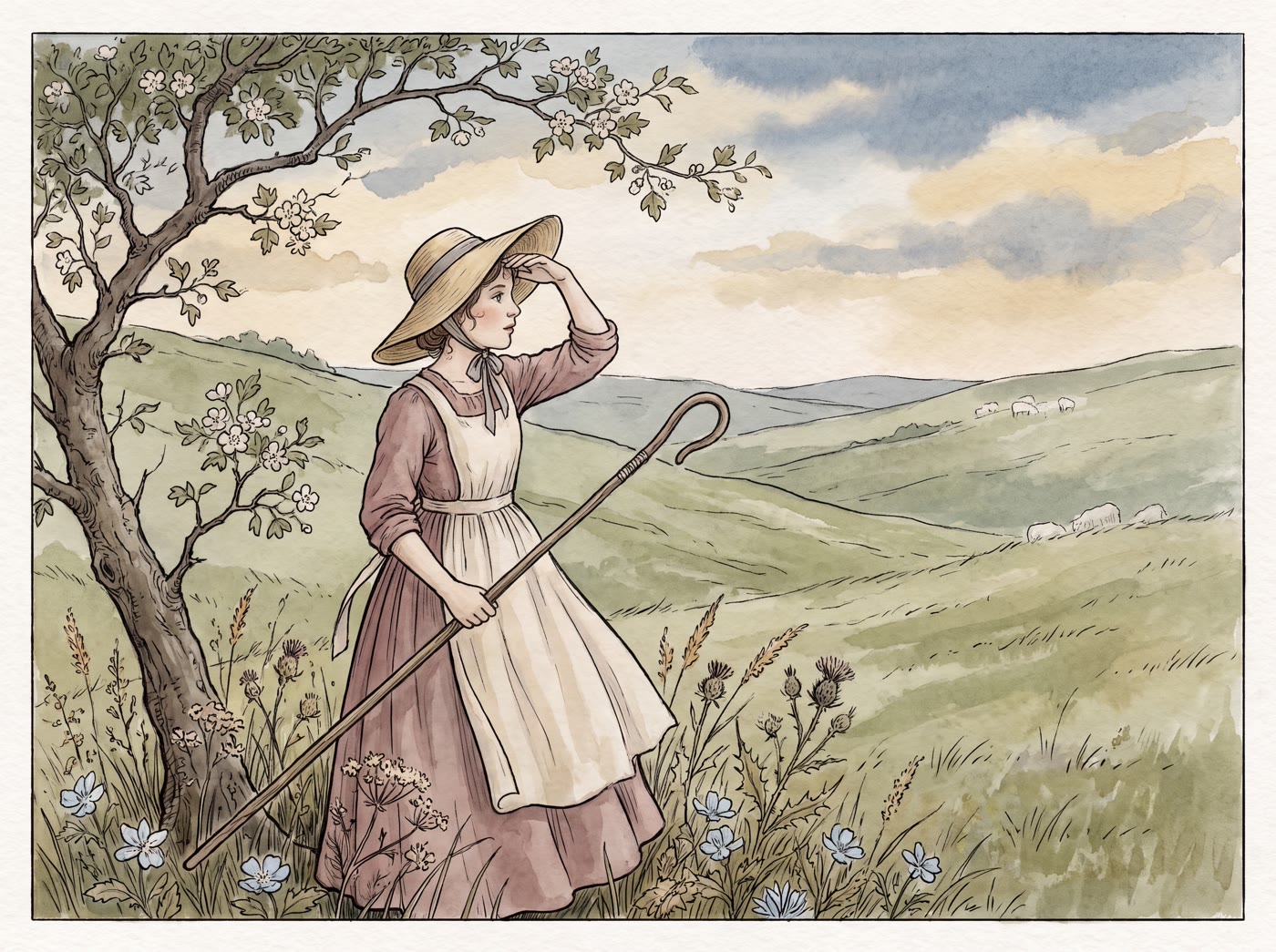
Little Bo Peep,
Has lost her sheep,
And doesn’t know where to find them,
Leave them alone,
And they’ll come home,
Bringing their tails behind them.
Where the rhyme comes from
The earliest known record of Little Bo Peep is a manuscript of about 1805, which contains only the opening verse we still sing today. The longer version — with Bo Peep falling asleep, dreaming she hears her sheep bleating, and finally discovering their tails hung on a tree to dry — first appeared in print in Gammer Gurton’s Garland, or The Nursery Parnassus, published in London in 1810. The tune most people know was written down much later, by the composer and collector James William Elliott in his National Nursery Rhymes and Nursery Songs of 1870.
The name is older than the rhyme. “Bo-peep” was a children’s game much like peek-a-boo, referred to as far back as the 16th century and mentioned in Shakespeare’s King Lear. Iona and Peter Opie, whose Oxford Dictionary of Nursery Rhymes remains the standard reference, found no evidence that the rhyme itself existed before the late 18th century — though they noted it echoes older verses of the same shape, such as a 1760s scrap beginning “Our Jemima’s lost her mare, and can’t tell where to find her.”
What does it mean?
On its face this is simply a pastoral joke, and most likely nothing more: a shepherdess loses her flock, is told not to fret, and the sheep come wandering home by themselves. Sheep really do find their own way back to the fold, so the advice in the rhyme is sound. The odd detail of the tails hanging on a tree in the later verses almost certainly reflects the everyday rural practice of docking lambs’ tails — a familiar sight to children of the time, and strange enough to be funny.
The stocks and pillory. It is often repeated that “bo peep” was old slang for standing in the pillory, and that the rhyme therefore hides a message about punishment. The slang is genuine, but the link to this rhyme is a modern guess: there is no evidence connecting the two, and it is best treated as folklore.
Historical codes. Others have tried to read Bo Peep as Mary, Queen of Scots and her sheep as lost supporters, or to tie the rhyme to smuggling in the reign of Charles I. Neither theory has any contemporary support, and both appear long after the rhyme was written down. The plain reading — a small comic story about lost sheep — remains by far the most likely.
Sharing it with children
Bo Peep makes a lovely lap rhyme with two simple actions: shade your eyes with one hand and look left and right on “doesn’t know where to find them”, then wiggle a finger behind you like a wagging tail on the last line. Older toddlers enjoy a game of it — hide a handful of toy sheep or cotton-wool balls around the room, sing the verse, and let them be the shepherd. Because the name comes from a peek-a-boo game, it also pairs beautifully with hiding behind your hands and popping out on “Peep!”, which is often a baby’s very first joke.
Extra verses to sing
These verses aren’t traditional — they’re ours. Sing them if you want the sheep safely home.
Little Bo Peep went out to seek,
And searched till the sun was setting;
She called down the lane through the soft grey rain,
And the hillside answered with bleating.
Home through the gate, though the hour was late,
Came the flock with their tails behind them;
So dry your eyes, little shepherdess wise —
You had only to wait to find them.