Little Polly Flinders
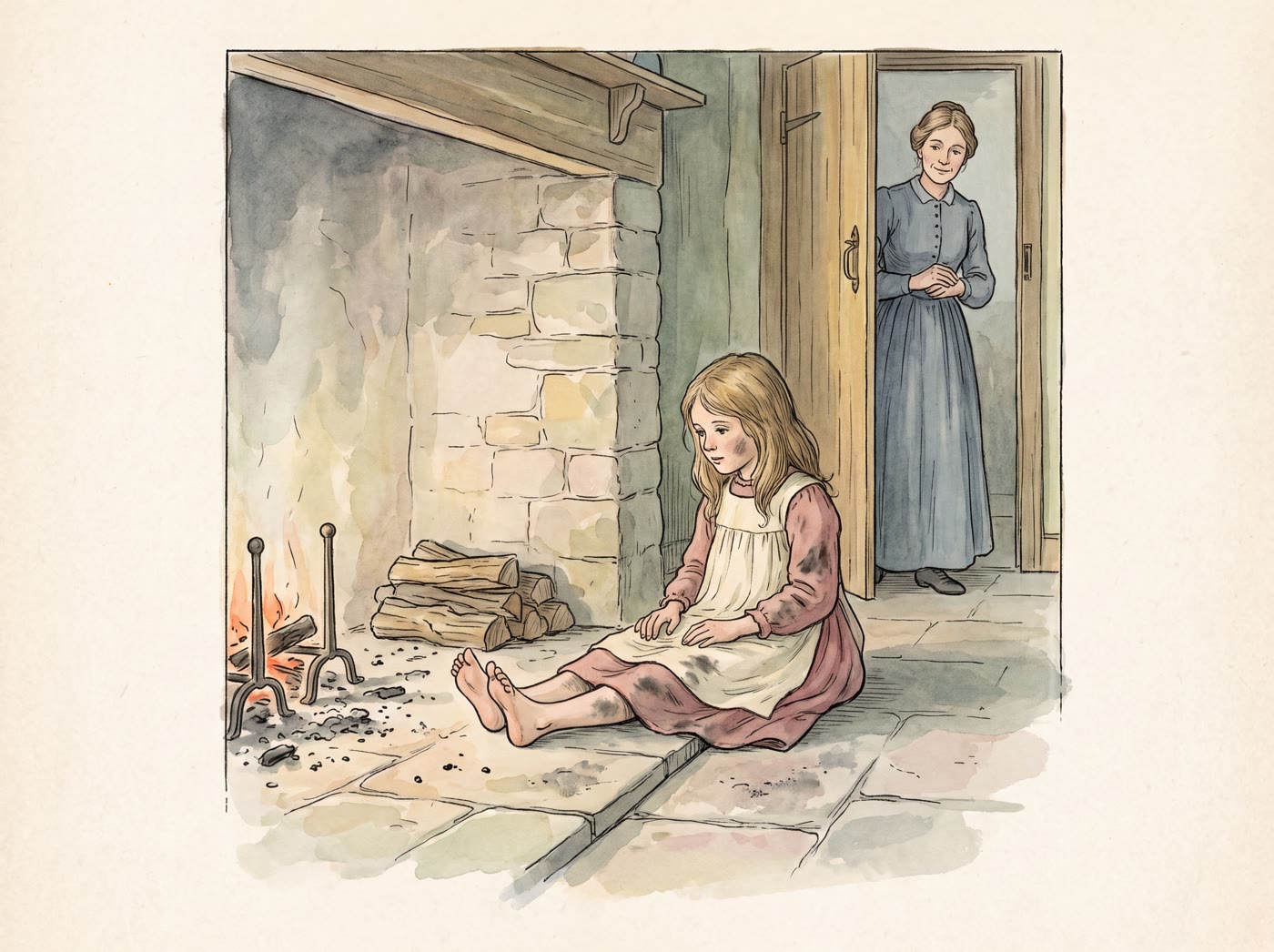
Little Polly Flinders
Sat among the cinders,
Warming her pretty little toes;
Her mother came and caught her,
And whipped her little daughter
For spoiling her nice new clothes.
Where the rhyme comes from
Little Polly Flinders is first recorded in the early nineteenth century. Beyond that, the history is quiet: no author has been identified, and no hidden meaning or real Polly has been established. Some modern websites name a particular early children’s book and year, but we have not been able to check that claim against a source, so we leave it out rather than repeat it.
One thing can be dated. Sabine Baring-Gould’s A Book of Nursery Songs and Rhymes (1895) prints the rhyme with a gentler fifth line — “And scolded her little daughter”. So the softer wording many families sing today is not simply a modern tidying-up; a Victorian collection was already printing it.
What does it mean?
The word “flinders”. A flinder is a splinter or fragment, and the plural is still used in the phrase “to fly into flinders”. The word is recorded in English from the fifteenth century and probably came from a Scandinavian source. It chimes neatly with “cinders”, but Flinders is also a surname, and nothing tells us whether the name was chosen for its sound, its meaning or neither. We would rather say so than invent a pun.
Why the clothes were spoiled. Cinders are the burnt remains of coal or wood left in a fireplace. A child sitting among them on an open hearth would come away grey with ash and soot, which is the whole of the rhyme’s complaint: her nice new clothes are ruined. The “moral” is simply what the last line says.
The whipping. The traditional text says “whipped”, and it reflects older attitudes to punishing children. Today the line is often softened or skipped. If you would rather not sing it, “scolded” has a pedigree of its own, as above.
Cinderella? Grown-ups may hear an echo of Cinderella in all that ash. There is no evidence that the two are connected, and no sourced reading of the rhyme beyond the little scene it describes: a child, a warm hearth, new clothes, a cross mother.
Sharing it with children
This is a natural toes rhyme. Sit the child on your lap, or beside you with bare feet, and wiggle their toes through the first three lines, saving the biggest wiggle for “pretty little toes”. Then make a cross-but-comic face for lines four to six; a pantomime tut goes down well with most children.
The rhyme also begs a conversation. Ask what Polly could have worn by the fire that would not matter if it got dirty, and let the child dress her in an old coat, an apron or a pair of woolly socks. For a talking point about fires, keep it light: Polly is very close to the fire, so where would be a safer, cosier place to sit? A fireguard, a rug, a cushion a good way back.
Rhythm helps too. The rhyme moves in short, bouncing lines with a clear pattern of sounds — Flinders and cinders, toes and clothes, caught her and daughter — so older children can listen for the pairs and clap on each rhyme. It can be chanted or sung to any simple tune you like.
Extra verses to sing
These verses aren’t traditional — they’re ours. They give Polly a kinder ending, and a better place to sit.
Little Polly Flinders
Brushed off all her cinders,
Hung up her pinafore to air;
Her mother laughed and found her
A rug to wrap around her,
And set her down in the old armchair.
Little Polly Flinders
Watched the sparks and embers,
Toasting her pretty little toes;
With a fireguard standing,
And a cushion landing,
Not a smudge on her best new clothes.