Mary, Mary, Quite Contrary
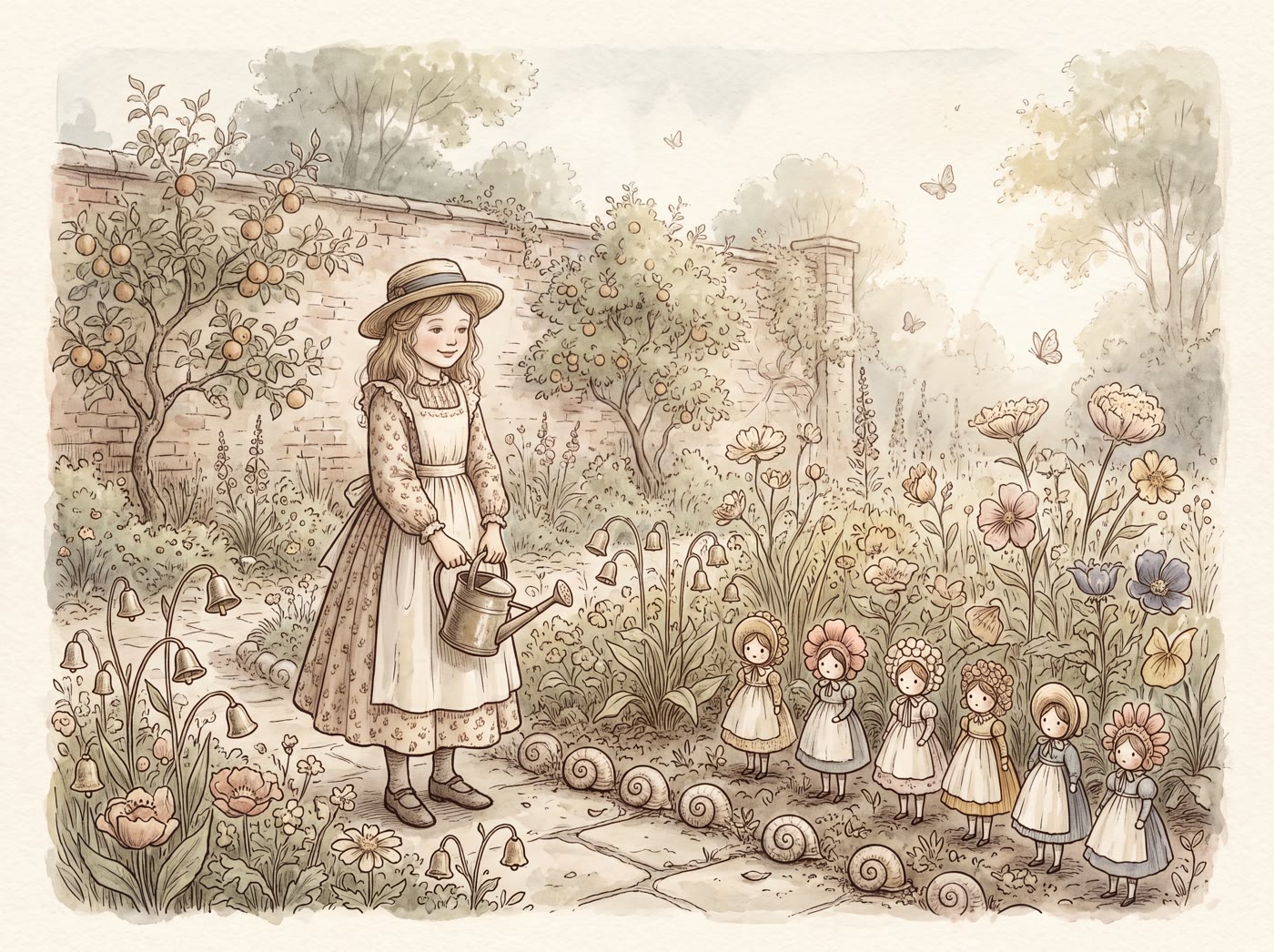
Mary, Mary, quite contrary,
How does your garden grow?
With silver bells and cockle shells,
And pretty maids all in a row.
Where the rhyme comes from
Mary, Mary, Quite Contrary first appeared in print in Tommy Thumb’s Pretty Song-Book, published in London around 1744 — the earliest surviving anthology of English nursery rhymes. There the opening line runs “Mistress Mary, quite contrary”, and the familiar “Mary, Mary” version settled into place through later collections of the 18th and 19th centuries.
The wording has always wandered a little. Some early printings give “cuckold shells” rather than “cockle shells”, and the closing line has appeared as “sing cuckolds all in a row” and “with lady bells all in a row”. What the rhyme meant to the people who first sang it was never written down, which is precisely why so many explanations have grown up around it since.
What does it mean?
Two historical readings are repeated everywhere, though neither has any contemporary evidence behind it:
Mary I of England. A popular theory holds that the rhyme mocks Mary Tudor, the Catholic daughter of Henry VIII who came to the throne in 1553 and set about reversing her father’s break with Rome — hence “quite contrary”, with the “garden” standing for England. In the darkest version of the tale, the silver bells and cockle shells are instruments of torture and the “maids” are the beheading engine known as the Maiden. It is a striking story, but it appears only in modern retellings, some two centuries after the rhyme was first printed, and historians treat it as folklore rather than fact.
Mary, Queen of Scots. Others connect the rhyme to Mary Stuart, suggesting the silver bells and cockle shells decorated a gown given to her by her first husband, the Dauphin of France, and that the pretty maids were her ladies-in-waiting, the famous four Marys. This reading is gentler, but equally unevidenced.
The quieter possibilities. Some writers have read the imagery as religious — sanctus bells, the cockle-shell badge worn by pilgrims to Santiago, and nuns in a row — while others take the simplest view of all: that it is a garden rhyme about a contrary girl, with silver bells and cockle shells as ordinary old names for flowers and shell edging along a path. Given how late the political stories arrive, the plain reading may well be the truest one.
Sharing it with children
This makes a lovely lap rhyme. Sit a child on your knees and sway gently through the first two lines, then walk your fingers up their arm for the “silver bells” and tickle down again at “cockle shells”. On the last line, help them hold up four fingers and stand them in a neat row, one for each pretty maid — a first bit of counting hidden inside the song.
It is also a wonderful excuse to go outside. Plant a few fast bulbs in a pot, edge a small patch with real shells from a seaside walk, and sing the rhyme each time you water. Ask your child what their garden would grow if they could choose anything at all — the answers are usually far better than silver bells.
Extra verses to sing
These verses aren’t traditional — they’re ours. Sing them if you’d like the garden to keep on growing.
Mary, Mary, quite contrary,
What will your garden bring?
With apple boughs and sleepy cows,
And blackbirds fit to sing.
Mary, Mary, not so contrary,
Sits where the tall bells chime;
With watering can and dusty hands,
She tends it rhyme by rhyme.