Monday’s Child
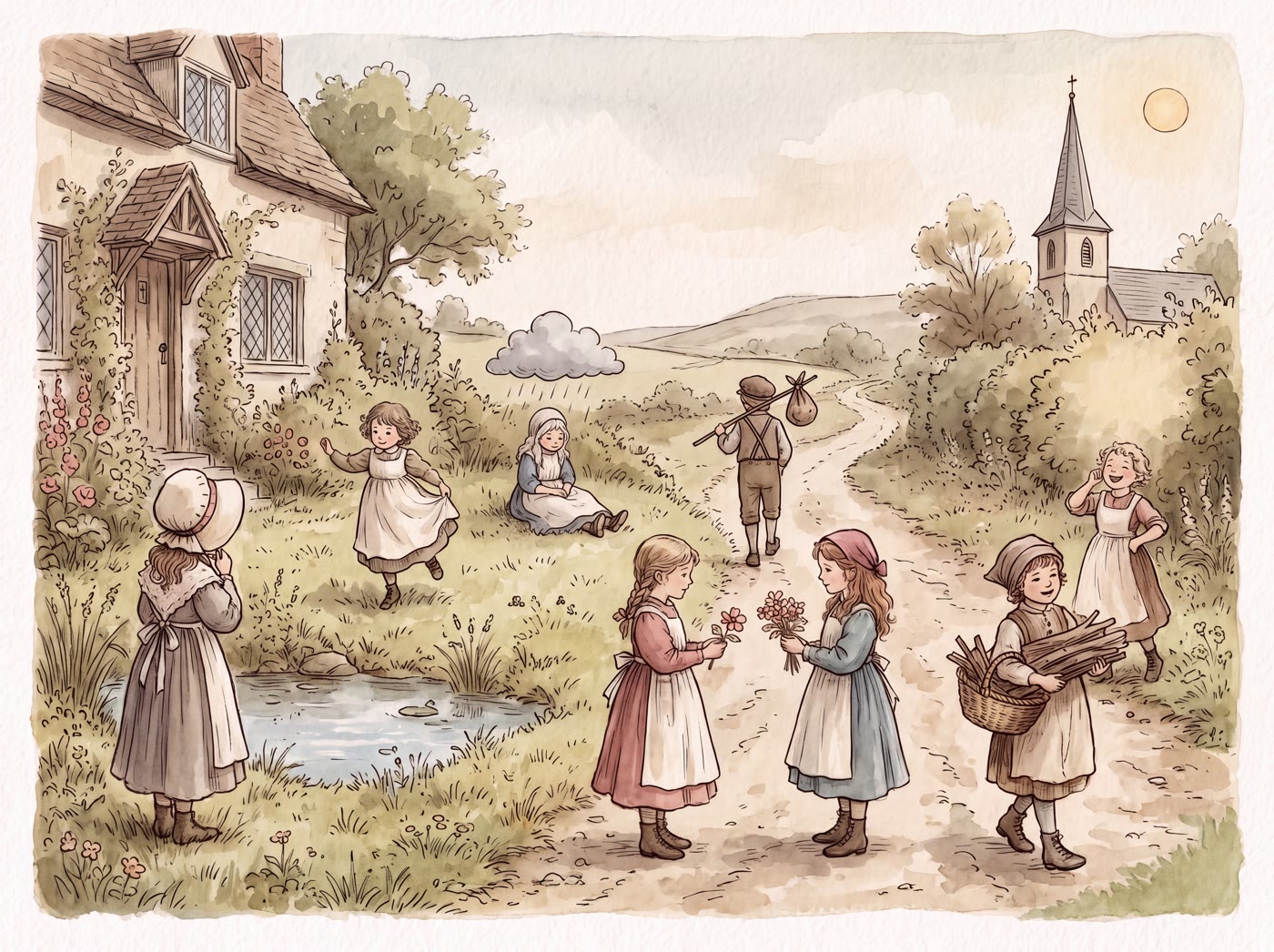
Monday’s child is fair of face,
Tuesday’s child is full of grace.
Wednesday’s child is full of woe,
Thursday’s child has far to go.
Friday’s child is loving and giving,
Saturday’s child works hard for a living.
But the child that is born on Sabbath day,
Is bonny and blithe, good and gay.
Where the rhyme comes from
Nobody knows who wrote Monday’s Child. It is a traditional fortune-telling rhyme, number 19526 in the Roud Folk Song Index, and the earliest printed record we know of comes from Devon in the 1830s, when Anna Eliza Bray included a version in her Traditions of Devonshire, a series of letters to the poet Robert Southey. Sources disagree over whether that volume appeared in 1836 or 1838, and until the title page settles it, the decade is as far as we will go.
James Orchard Halliwell printed the rhyme in Popular Rhymes and Nursery Tales (1849), with a festive ending of its own: “The child that’s born on Christmas Day / Is fair and wise, good and gay.” The words above are one common modern form; even modern sources differ over small things, such as “for a living” or “for his living”.
So what is the original? There isn’t one that we know of. Bray’s is simply the earliest record, and the versions differed from the start. One printed in Notes & Queries on 2 June 1877 shuffles the fortunes: “Born on Wednesday, sour and sad, / Born on Thursday, merry and glad,” ending “Born on Sunday, you will never know want.” G. F. Northall’s English Folk-rhymes (1892) starts the week on a Sunday: “Sunday’s child is full of grace, / Monday’s child is full in the face, / Tuesday’s child is solemn and sad, / Wednesday’s child is merry and glad.” Other regional traditions, written down in the 1890s, were far less cheerful.
The idea behind the rhyme is older than any of these texts. Thomas Nashe remembered the tales told to children in Suffolk in the 1570s, among them “what luck eurie one should have by the day of the weeke he was borne on”. That is no proof the rhyme itself is so old, only that telling a child’s fortune by the day of birth was.
What does it mean?
Each line gives a child a fortune for the day they were born on. Monday’s child is good-looking. Tuesday’s has grace: elegance of movement, and also a kind of inner goodness. Wednesday’s child is full of woe, which means unhappy. Thursday’s has far to go, a long road to travel or a lot of work ahead before getting where they need to be. Friday’s child is generous and caring, and Saturday’s is a hard worker. The Sunday child, born on the Sabbath, gets the best of everything. Bonny is the northern word for pretty and healthy, blithe means cheerful, and gay is used in its older sense of light-hearted and merry.
A superstition, not a prophecy. The rhyme, whose author is unknown, belongs to the old lore of birth days, and it predicts nothing. It is said to have helped children remember the days of the week in order, which is plausible, though no one can show that was its purpose. Some have suggested, as far back as the 1870s, that astrology played a part, since the days are named after gods and planets.
A word for Wednesday’s children. The woe is not fixed to Wednesday. In some versions Wednesday gets a happier line, as in Northall’s “merry and glad”, while in others the woe falls on Friday. An American version printed in Harper’s Weekly in 1887 makes Friday’s child the one “full of woe”, perhaps because Friday was long counted an unlucky day.
Sharing it with children
Start by finding the child’s own day. Look up their birthday on a calendar together and work out which day of the week it fell on, then find their line in the rhyme. Then go round the family: parents, grandparents, brothers and sisters, the baby — and let the child tell everyone their fortune.
The rhyme also acts out easily. Admire yourself in a pretend mirror for Monday, twirl for Tuesday, pull a long face for Wednesday, march on the spot for Thursday, give someone a hug for Friday, scrub and sweep for Saturday, and finish with a big, bouncing grin for Sunday. Once the actions are learnt, call out only the day names and let the child supply the action — a cheerful way to practise the days of the week in order, forwards and then backwards. If your child is a Wednesday child and minds, tell them about Northall’s merry Wednesday.
Extra verses to sing
These verses aren’t traditional — they’re ours. The old rhyme stops at Sunday’s child, so here is a verse for everyone at once, and one for the members of the family with paws.
Every child, whatever the day,
Is loved at home, at work or play.
Fair or far or full of grace,
Each one has a welcome place.
Puppy born on Saturday
Digs the garden half the day.
Kitten born on Sunday bright
Purrs and dozes half the night.