One Misty Moisty Morning
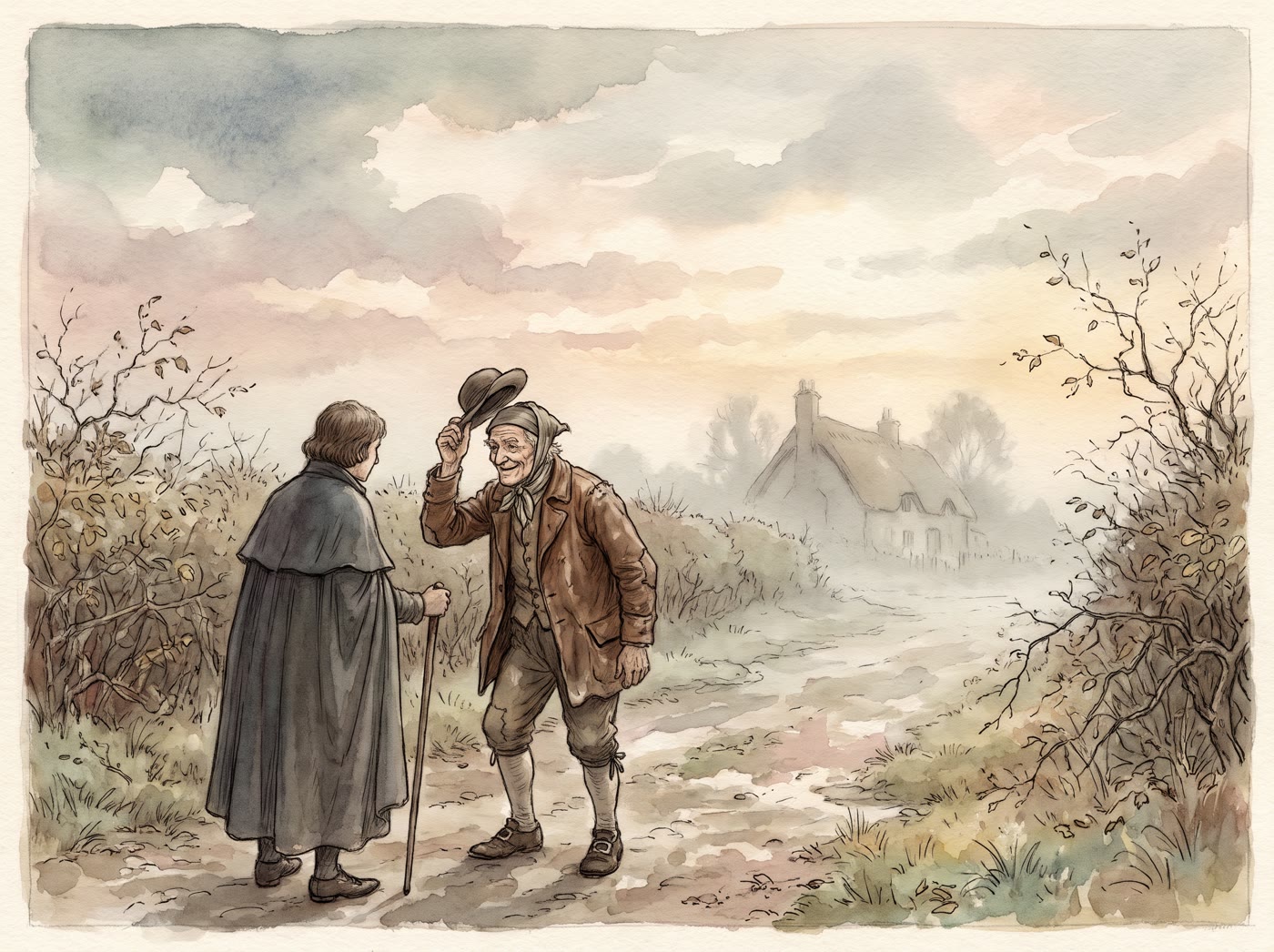
One misty moisty morning,
When cloudy was the weather,
I chanced to meet an old man,
Clothed all in leather.
He began to compliment
And I began to grin.
How do you do? And how do you do?
And how do you do again?
Where the rhyme comes from
The words above are the version in The Real Mother Goose, published in Chicago in 1916, and they match the way the rhyme is usually given today. The older printed texts differ a little. In James Orchard Halliwell’s The Nursery Rhymes of England — the 1886 edition prints it among the “Songs” — the old man is met with “There I met an old man”, the line “Clothed all in leather” is sung twice, and the cap sits “under his chin”. Halliwell adds a note that this is the version generally given in nursery collections, but that it is somewhat different in Pills to Purge Melancholy, the song collection associated with Thomas D’Urfey.
That note points to the rhyme’s real age. It was a song before it was a nursery rhyme. The Opies, the standard authorities on the subject, give a first appearance in Pills to Purge Melancholy at about 1700, and say that a broadside ballad called The Wiltshire Wedding was printed earlier, in the seventeenth century. We have not seen the broadside ourselves, so treat the dates with care: the Opies’ figures reach us second-hand, through a scholarly ballad index, and the printer and precise year are not something we can vouch for. The ballad, as the index summarises it, is a country courtship: a man called Daniel courts a dairymaid named Dolly, her parents agree, and the two are married in a hurry. The nursery rhyme is believed to be based on its opening lines, and the tune may be older still — the index cites the music historian Chappell, who found it in Playford’s The Dancing Master of 1650 under another name.
The rhyme lives on as a folk song, too. The English folk-rock band Steeleye Span recorded a version in the early 1970s, so many people know the words as a song as well as a rhyme. We do not reproduce that arrangement here.
What does it mean?
Very probably nothing hidden. It is a scene in a lane: a damp, grey morning, a chance meeting, a grin, and a round of politeness. Some websites name the leather-clad man as a particular character in the old ballad, but we could not find that in any reliable source, so we leave it out. The rhyme’s charm is in the sound — the soft, rolling “misty moisty”, and the greeting that keeps coming round again.
Who wrote it? Nobody can say. It is anonymous and traditional, and the earliest forms we know of are the ballad and the song collection above.
Sharing it with children
The last line is built for two voices. Say the first four lines yourself, then let the child answer with “How do you do?” and shake hands at every “how do you do”, getting a little more formal each time. Swap parts and let the child be the old man, tipping an imaginary cap — or a real one.
It is also a good rhyme for a grey day. Look out of the window together and decide whether the weather is misty, moist or cloudy; breathe on the glass to make your own mist and draw in it with a finger. Dressing up works well too: find a coat and a hat, and wear them for the walk along the lane. These are our suggestions, not tradition, but they suit the rhyme.
Extra verses to sing
These verses aren’t traditional — they’re ours. Sing them to the tune you know, or simply say them in the rhythm of the original.
One misty moisty morning,
When puddles filled the lane,
I chanced to meet an old man
Wet through with the rain.
He lifted up his bonnet
And I gave a little cheer.
How do you do? And how do you do?
And how do you do this year?
One bright and breezy morning,
When the mist had rolled away,
We shook hands in the sunshine
And wished each other good day.
How do you do? And how do you do?
And how do you do today?