The North Wind Doth Blow
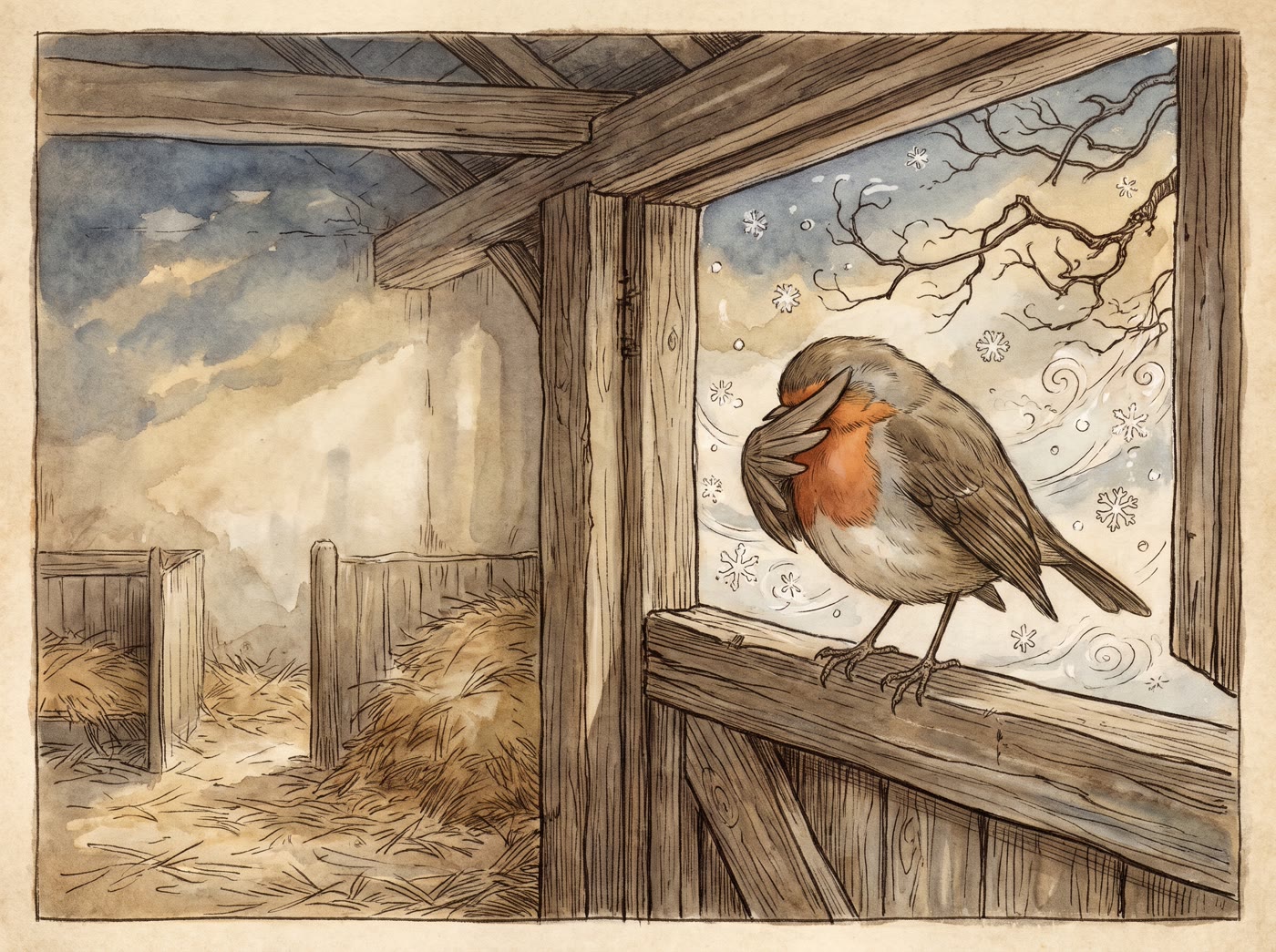
The north wind doth blow,
And we shall have snow,
And what will the robin do then,
Poor thing?
He’ll sit in a barn,
And keep himself warm,
And hide his head under his wing,
Poor thing!
The north wind doth blow,
And we shall have snow,
And what will the swallow do then,
Poor thing?
Oh, do you not know
That he’s off long ago,
To a country where he will find spring,
Poor thing!
The north wind doth blow,
And we shall have snow,
And what will the dormouse do then,
Poor thing?
Roll’d up like a ball
In his nest snug and small
He’ll sleep till warm weather comes in,
Poor thing!
The north wind doth blow,
And we shall have snow,
And what will the honey-bee do then,
Poor thing?
In his hive he will stay
Till the cold is away
And then he’ll come out in the spring,
Poor thing!
The north wind doth blow,
And we shall have snow,
And what will the children do then,
Poor things?
When lessons are done
They will skip, jump and run,
Until they have made themselves warm,
Poor things!
Where the rhyme comes from
The rhyme was first recorded in the early nineteenth century. The date usually given is 1805, in a collection called Songs for the Nursery, and later writers attribute that date to Iona and Peter Opie’s Oxford Dictionary of Nursery Rhymes — but we have not been able to check the book itself, so treat 1805 as the commonly given date rather than a settled one. The author is unknown.
What the early books printed was a single verse, about the robin alone. In the Opies’ text it reads “poor robin” rather than “the robin”, and the bird keeps his head “under his wing” rather than hiding it — small differences, and both wordings are legitimate. The swallow, dormouse, honey-bee and children came later: they are reported in print by the 1840s, in Maria and William Hutchins Callcott’s The Child’s Own Singing Book (London, 1843), under the title “Winter Song” and set to a traditional tune. The version above gives all five verses.
The rhyme had crossed the Atlantic by 1833, when it is reported in a Boston collection of Mother Goose verses. You may read elsewhere that it dates back to the sixteenth century. That is repeated by several rhyme sites, in one case because of the old-fashioned “doth”, but we have found no evidence for it — the earliest dating we can point to is the early nineteenth century. Do not confuse it with “Cold and raw the north wind doth blow”, a different rhyme that happens to share a line.
What does it mean?
As far as we know, nothing hidden. No allegorical reading is recorded in the sources we have found, and the rhyme does not seem to need one. It is a seasonal sympathy rhyme: a cold wind rises, a child is invited to worry about a small creature, and the answer to each “what will he do then?” is reassuring. Everyone gets through the winter, and the last verse turns the question back on the children, who can simply run about until they are warm.
The robin is a well-chosen hero. The RSPB notes that most British robins do not migrate: they stay all year, defend their territory through the winter and sing nearly all year round. So a robin is a bird you can still hope to spot in a snowy garden.
Sharing it with children
Begin with the wind. Blow gently across the child’s hair on “the north wind doth blow”, then wiggle your fingers downwards like falling snowflakes on “we shall have snow”. On the robin’s verse, tuck your head under your arm like a wing and hold it there for “poor thing”; some teachers use this as the closing action. For the dormouse, curl up into a ball; for the bee, stay very still in a hive made by your cupped hands. The last verse is made for movement — skip, jump and run until everyone is warm.
On a winter walk, look out for a robin on a fence post or a bare branch, and ask the rhyme’s question aloud: what will he do when it snows? Children can answer in their own words before you sing the verse.
Extra verses to sing
These verses aren’t traditional — they’re ours. Sing them after the five old ones if the children want more.
The north wind doth blow,
And we shall have snow,
And what will the kettle do then,
Poor thing?
It will sit on the stove
Where the warm breezes drove,
And sing us a song with its steam,
Poor thing!
The north wind doth blow,
And we shall have snow,
And what will the snowman do then,
Poor thing?
In his hat and his scarf
He will stand there and laugh,
Till the sun comes to melt him in spring,
Poor thing!