Tom, Tom, the Piper’s Son
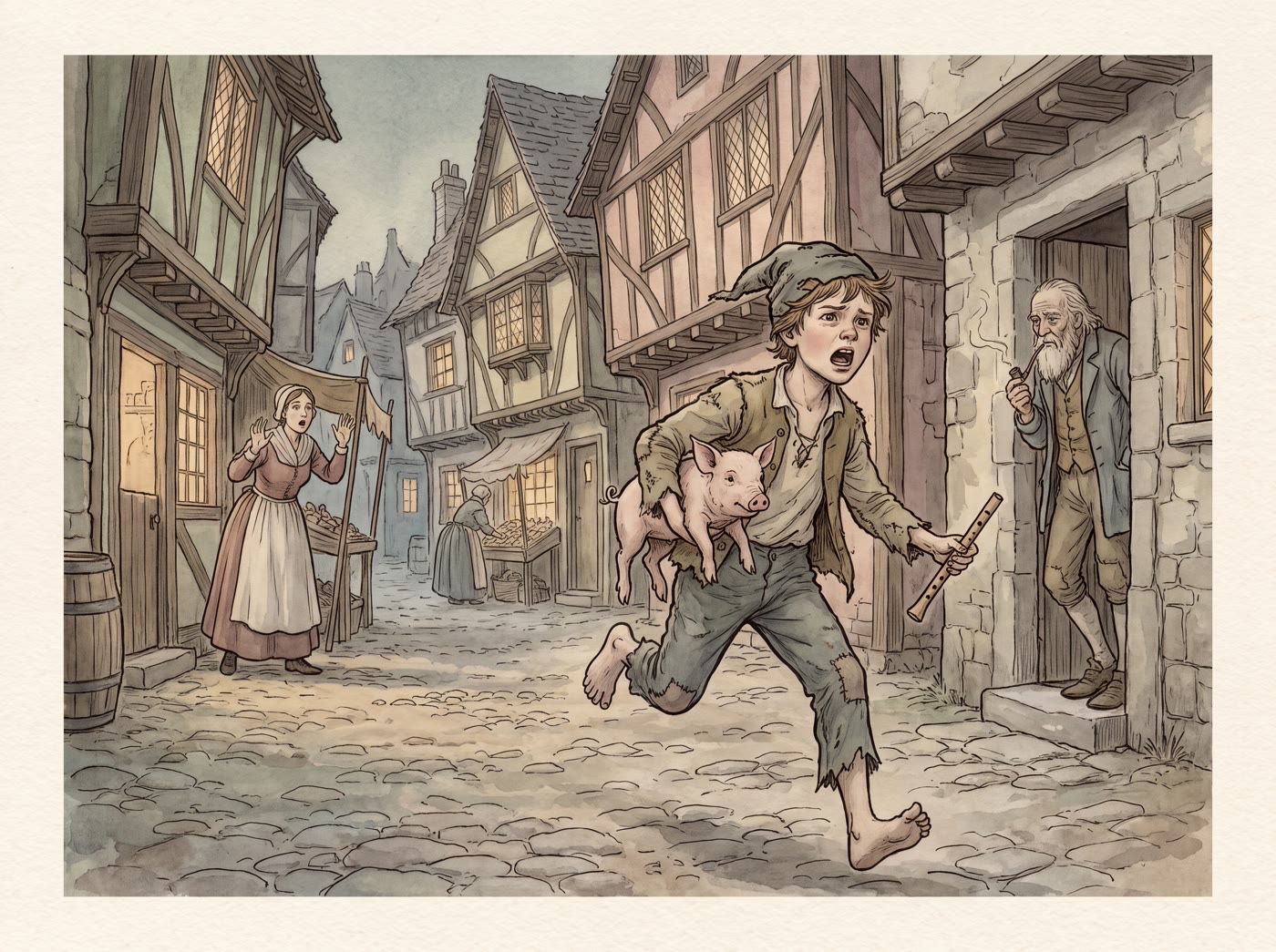
Tom, Tom, the piper’s son,
Stole a pig and away did run,
The pig was eat,
Tom was beat,
And Tom went roaring down the street.
Where the rhyme comes from
This little rhyme appeared in print in a chapbook of about 1795, and was circulating by word of mouth before that. Chapbooks — cheap, roughly printed booklets sold by pedlars — were how a great many nursery rhymes first reached paper, which is why so few of them can be dated precisely. From those pages Tom passed into the great Victorian collections of Mother Goose and has stayed in them ever since.
It is easily confused with a longer and quite separate song that begins “Tom, he was a piper’s son’” — the one in which Tom plays so sweetly that the pigs dance on their hind legs and Dolly’s cow upsets the milk pail. That song is older, with roots reaching back to a comedy of 1698, and Beatrix Potter has Pigling Bland sing a snatch of it. The two share a hero and a title, but they are different rhymes.
What does it mean?
The plain reading is the likeliest one: this is a small cautionary tale. Tom steals, Tom is caught, Tom is thrashed, and Tom goes howling home — a whole moral delivered in five short lines. Georgian nursery verse was often blunt in this way, and children have always rather enjoyed the drama of it.
The pastry pig. One frequently repeated suggestion is that the stolen “pig” was not a live animal at all but a pig-shaped pastry or sweetmeat of the sort sold at English fairs such as Bartholomew Fair. It is a neat idea, and it would explain how a boy could make off with a pig and have it eaten so quickly — but it is a theory rather than a documented fact, and the earliest printings say nothing to settle the question.
A piper’s son in particular. Some retellings claim the phrase “piper’s son” points to army or navy pipers and their camp-following children. There is no contemporary evidence for this; the words are just as easily read as a simple description of a travelling musician’s boy, which is how most folklorists take them.
Sharing it with children
Tom makes a splendid lap rhyme because it is all chase and consequence. Bounce a child on your knee through the first two lines, quickening on “away did run”; drop your voice for the two short lines in the middle, which land like little drumbeats; then let “roaring” be as loud and long as the room can bear. Older children love to act it out with a toy pig passed from hand to hand, and the short middle lines are perfect for clapping the beat. It is also a gentle way into a conversation about taking what isn’t yours — the rhyme raises the subject and the child usually supplies the moral unprompted.
Extra verses to sing
These verses aren’t traditional — they’re ours. Sing them if Tom deserves a second chance.
Tom, Tom, the piper’s son,
Sorry at last for the wrong he had done,
He swept the yard,
He worked so hard,
And paid for the pig with a farthing card.
Tom, Tom, the piper’s son,
Took up his pipe when the mending was done,
He played a tune,
Beneath the moon,
And all the town danced till afternoon.