Twinkle Twinkle Little Star
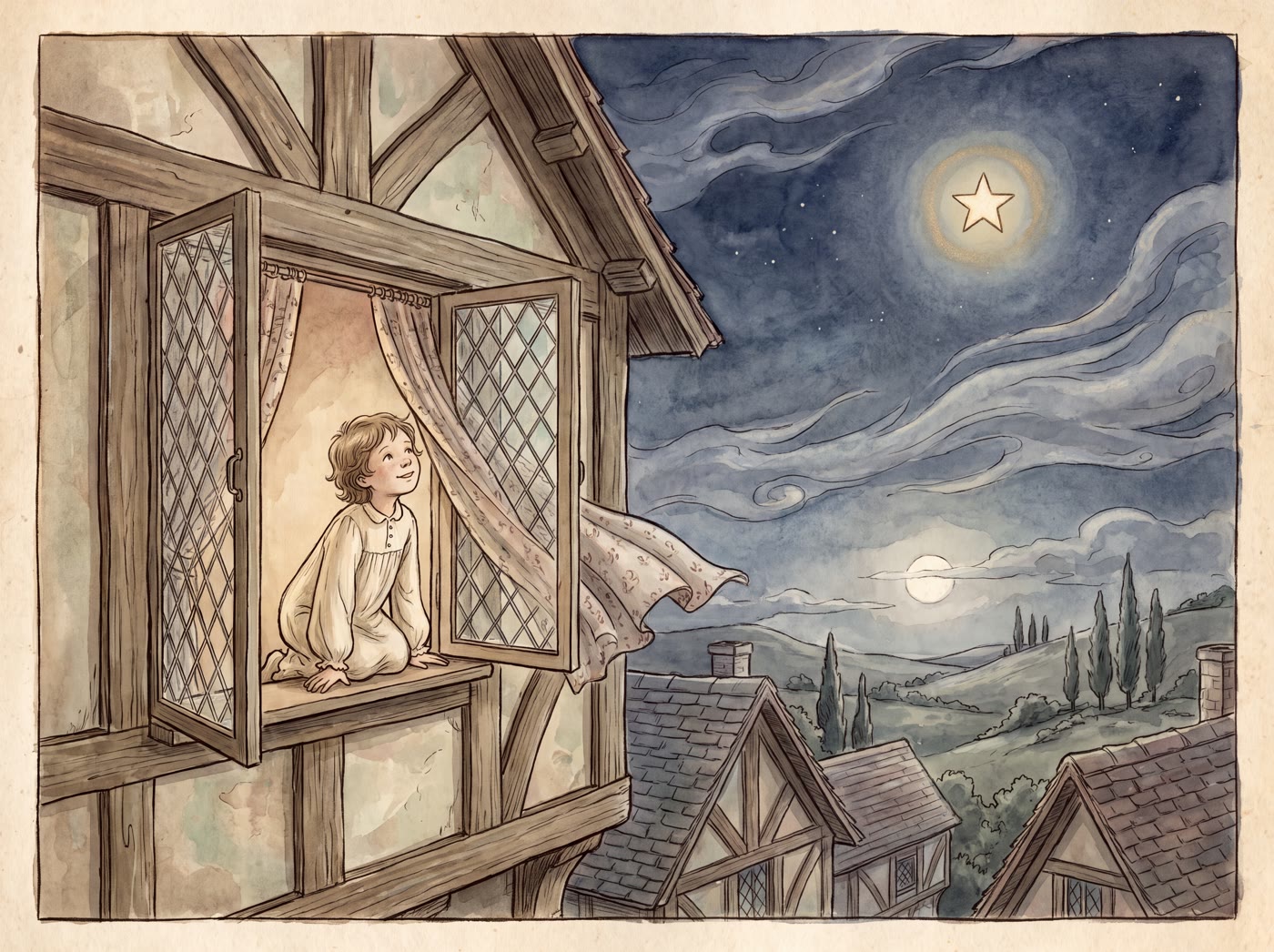
Twinkle, twinkle, little star,
How I wonder what you are,
Up above the world so high,
Like a diamond in the sky,
Twinkle, twinkle, little star,
How I wonder what you are.
Where the rhyme comes from
Unusually for a nursery rhyme, we know exactly who wrote the words and when. They began as a poem called “The Star”, written by the English poet Jane Taylor (1783–1824) and first published in 1806 in Rhymes for the Nursery, a collection she produced with her elder sister Ann. The Taylor sisters wrote from the family home in Colchester, Essex, and their gentle, child-centred verse helped shape the whole genre of poetry written for children rather than at them.
The tune is older still, and entirely separate. It comes from the French melody “Ah! vous dirai-je, maman”, first published in 1761, which Mozart later used for his Twelve Variations on “Ah vous dirai-je, Maman”. The same tune carries the alphabet song and Baa Baa Black Sheep — which is why all three feel oddly interchangeable when you sing them.
Taylor’s original poem runs to five stanzas. Only the first is usually sung, but every verse fits the melody, and the later ones follow the star through the night as it lights the traveller’s way and peeps through the curtains at a sleeping child.
What does it mean?
Because the author and date are documented, this rhyme carries none of the dark hidden-history baggage attached to older verses. It means what it says: a small child looking up at a star and wondering, honestly and without answer, what it actually is.
A poem of wonder. Read in the context of Taylor’s other work, the poem is about curiosity itself. The child does not learn what the star is; the pleasure is in the question. Written in an age of expanding astronomy, it invites a child to look up and think rather than simply be soothed.
Claims of hidden meaning. You will occasionally see suggestions that the star is a religious symbol, or that the poem encodes something about the Taylors’ Nonconformist faith. These are readings rather than evidence — interesting as interpretation, but there is nothing in the text or its history to establish them as fact.
Chipping Ongar. A local tradition holds that Jane Taylor wrote the poem at Chipping Ongar in Essex. Family accounts record that she first saw the name Ongar on a signpost in 1810 — four years after publication — so the story is best treated as fond local folklore.
Sharing it with children
This is the classic lap and bedtime rhyme. Sit a baby facing you and open and close your hands like slow flashing stars on each “twinkle”; hold your palms up in a questioning shrug on “how I wonder what you are”; stretch both arms high for “up above the world so high”, and touch fingertips into a diamond shape for “like a diamond in the sky”. Because the melody is so slow and repetitive, it is one of the first songs a toddler will manage to sing all the way through alone.
For older children, sing it once as a lullaby and once as fast as you can, then step outside on a clear night and let them pick their own star to sing to. It is also a lovely first science moment: stars twinkle because we see their light through the moving air of our atmosphere — the star itself is perfectly steady.
Extra verses to sing
These verses aren’t traditional — they’re ours. Sing them when one verse isn’t quite enough to get to sleep.
Twinkle, twinkle, little light,
Keeping watch above the night,
When the lamps are burning low
And the sleepy houses glow,
Twinkle, twinkle, little light,
Keeping watch till morning’s bright.
Twinkle, twinkle, far and small,
Tiniest of lamps of all,
Though I cannot climb so high,
Still I find you in the sky,
Twinkle, twinkle, far and small,
Goodnight, goodnight, from us all.