A Big Black Bug Bit a Big Black Bear
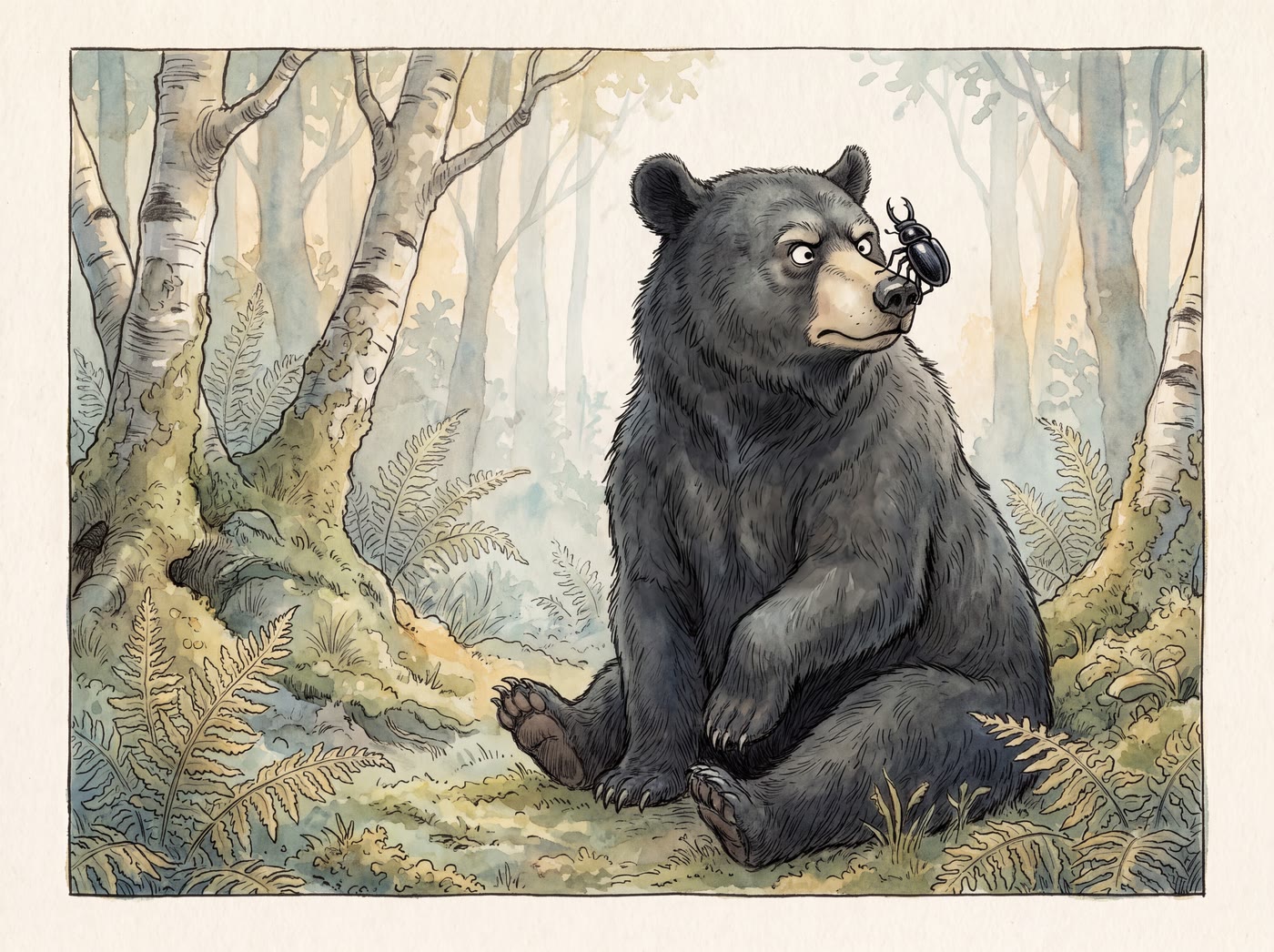
A big black bug bit a big black bear,
made the big black bear bleed blood.
The big black bug bit the big black bear,
but the big black bear bit the big black bug back!
Where the rhyme comes from
Both of the forms above are in common use, and neither is the correct one. The first, in which the bear comes off worst, is the one in the earliest dated printing we have found (see below) and on children’s activity sites today. The second is the revenge form, in which the bear gets its own back; it turns up on tongue-twister collections and on a school handout, a tongue-twister sheet from Gordon’s Children’s Academy, which ends it with an exclamation mark. We have found nothing to show that either came first, and the two are best thought of as cousins circulating side by side. A further line is sometimes tacked on — “Where’s the big black bear the big black bug bit?” — though we have found it in only one collection, so treat it as a circulating extension rather than part of the twister proper.
The family is looser still. The British Council’s LearnEnglish Kids site gives “A big black bug bit a big black dog on his big black nose”, with no bear in sight. Swapping the victim like this is just what you would expect of a piece passed around by ear: the bug, the bite and the alliteration are the fixed parts, and the animal is whatever comes to the speaker’s mind.
As for where it began, the honest answer is that nobody knows. None of the sources we found names an author, and none attaches an origin story to it. The earliest dated appearance we have found is surprisingly recent: a staff-written round-up in the Sarasota Herald-Tribune on 16 October 2002, headed “Tongue twisters: Can you say these three times fast?”, which prints the “bleed blood” form word for word. The paper presents it as a familiar challenge rather than a new one, which suggests it was already well known. It was very likely passing by word of mouth before 2002, but that earlier life is undocumented — our search did not reach the older newspaper archives where an earlier printing could be hiding, so 2002 is a floor, not a birth date.
What does it mean?
Nothing beyond the sound. There is no hidden story, no historical bear and no moral. It is a sentence built entirely to trip the tongue, and the bug and the bear are there because they begin with the right letter.
Why it trips you up. Every important word opens with b, a sound made by pressing the lips together and releasing them with the voice already running. That alone would be easy. The trouble is that the twister keeps switching between a plain b (big, bug, bit, bear) and the cluster bl (black), so the tongue has to decide, word by word, whether to add the l. At speed, sounds from the word just said or the word coming next creep in where they do not belong — the classic tongue-twister mechanism — and the big black bug becomes a “blig back blug”. The first form then saves its sharpest trap for last: “bleed blood” puts two bl words back to back, separated only by a change of vowel. In the revenge form, even the little word but joins the queue of bs, and “bug back” makes a final pair to stumble on.
Sharing it with children
Begin slowly. Say the first form one word at a time, tapping a beat for each, and let the child hear where the l goes and where it does not. Then climb a ladder: once slowly, once at talking pace, once quickly, and only then the traditional challenge of three times fast. A clean slow version is worth more than a gabbled fast one, and the stumbles are half the fun.
With two children, the revenge form makes a ready-made call-and-response. One is the bug and says the first line; the other is the bear and fires back the second. Swap parts each round and speed up until somebody’s bear bites the wrong animal.
Smaller children who are not yet racing can play “who bit whom?”. Say one form slowly, then ask: who did the biting? Say the other form and ask again. Working out that the answer changes — and that in the second version both of them were bitten — is a good listening game, and it slows everybody down enough to hear every word.
Extra verses to sing
These verses aren’t traditional — they’re ours. Try them once the bug and the bear come out cleanly three times in a row.
A big brown bee buzzed a big brown bear,
Made the big brown bear bound up into the air.
Then the big black bear and the big black bug
Both begged each other’s pardon, and shared a big hug.