A Canner Exceedingly Canny
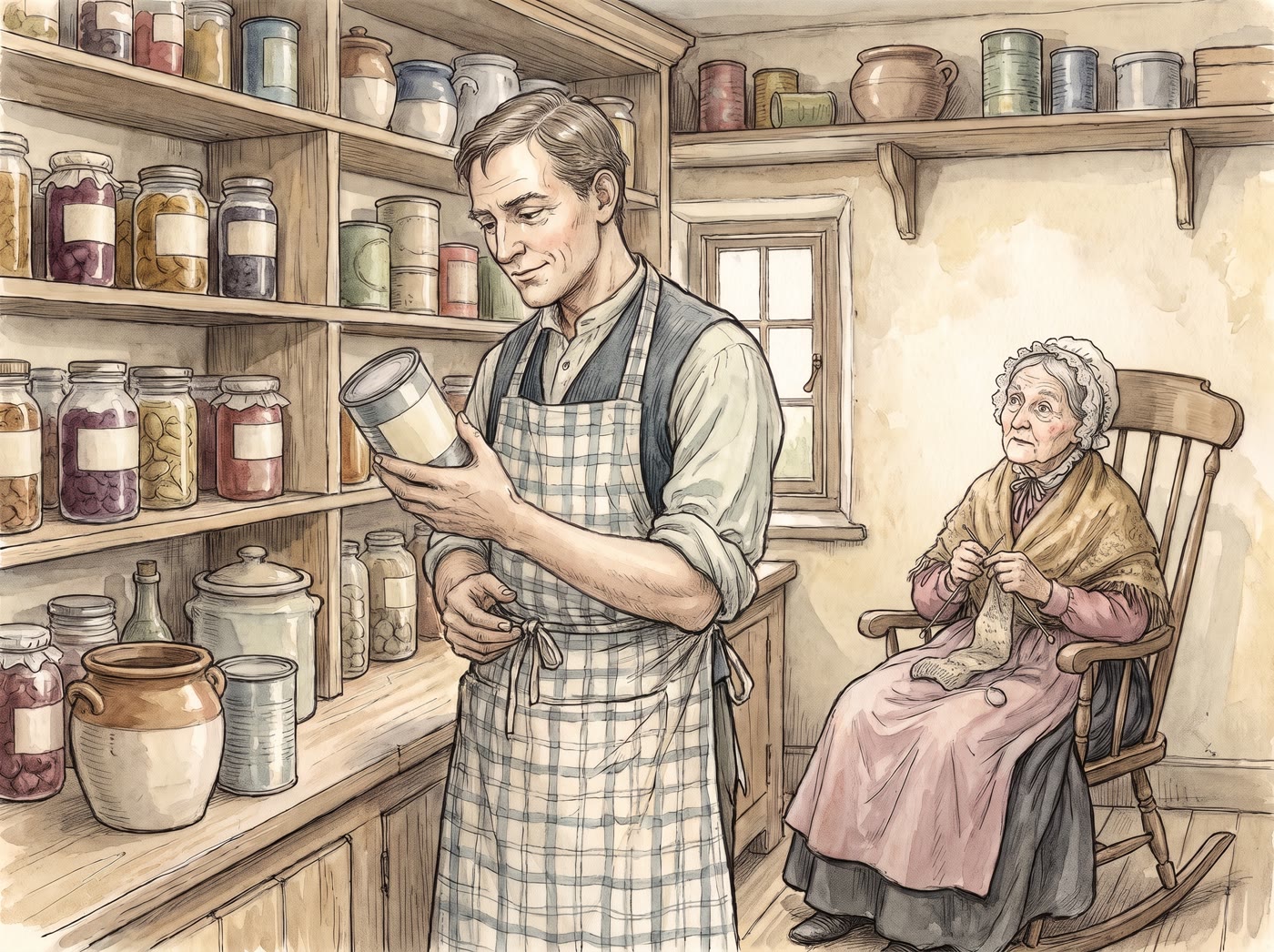
A canner exceedingly canny
One morning remarked to his granny,
“A canner can can
Anything that he can,
But a canner can’t can a can, can he?”
Where the rhyme comes from
This is not a folk rhyme. It is a limerick credited to the American writer Carolyn Wells (1862–1942), and it has drifted into the tongue-twister repertoire because it is such a satisfying thing to say quickly. The earliest printing we have found is in her book Folly for the Wise, published by Bobbs-Merrill in Indianapolis in 1904, where it appears in the limericks section under the title “A Word Can-Can”.
The same book prints her tutor limerick, under the title “The Tutor”, two pages earlier, among a run of similar word-play limericks. We say only that the verse appears in print in 1904: Wells also wrote for magazines, so earlier printings may exist, and we have not found one.
The wording above follows the 1904 book, which has no comma after “canny” and runs “Anything” together as one word. Modern versions vary a little in punctuation and spacing. Because the book is credited to Wells as a whole and does not sign each verse, we describe the limerick as credited to her rather than claiming more than the page shows. It is long out of copyright, so we can print the words in full.
What does it mean?
There is no hidden story. The whole joke rests on two meanings of one small word. Can, meaning “is able to”. This is the everyday helper verb, as in “I can swim”. Can, meaning “to preserve in a tin”. A canner is someone who does the preserving, and a can is the tin itself.
Put them together and the middle lines read: a canner is able to preserve anything that he is able to. That sounds like a boast, and a perfectly sensible one. Then the last line turns it into a puzzle: can a canner preserve the tin itself? The grandmother is left to work it out, and so is everyone who tries to say it aloud. “Canny”, incidentally, means shrewd, and it rhymes with “granny” and chimes with “canner” in the way the best nonsense verse does.
In shape it is a classic limerick: five lines rhyming AABBA, with “canny” and “granny” in the long lines, the short pair “can” and “can” in the middle, and a closing question that brings the first rhyme back round.
Sharing it with children
Begin by teaching the two senses of the word. Bring a clean, empty tin to the table and hold it up each time the verse says “can” as a noun, then tap your chest or flex an arm for “can” meaning “able to”. Children enjoy catching the grown-up out when the actions come in the wrong place, and the exercise makes the joke visible long before they can say the line at speed.
Then let someone play the granny. She sits in a chair, looks politely baffled, and reacts to each line: nodding at the boast, then raising an eyebrow at the final question. The reader should deliver the last line slowly the first time, so every “can” is clear.
For a speed round, say the last line alone, three times in a row, without a pause or a stumble; any muddle sends you back to the start. Or go round a circle with one line each, faster with every lap. The trick is to keep the vowel short and the “n” light, and to take a tiny breath before the closing “can he?”.
Extra verses to sing
These verses aren’t traditional — they’re ours. Wells wrote the verse above; this reply is a small addition for the granny.
Said the granny, serene and unfussed,
“Tinned or bottled, I’m sure that you must
Can whatever you can,
But my own little plan
Is to eat it, not can it, I trust.”