I Need Not Your Needles
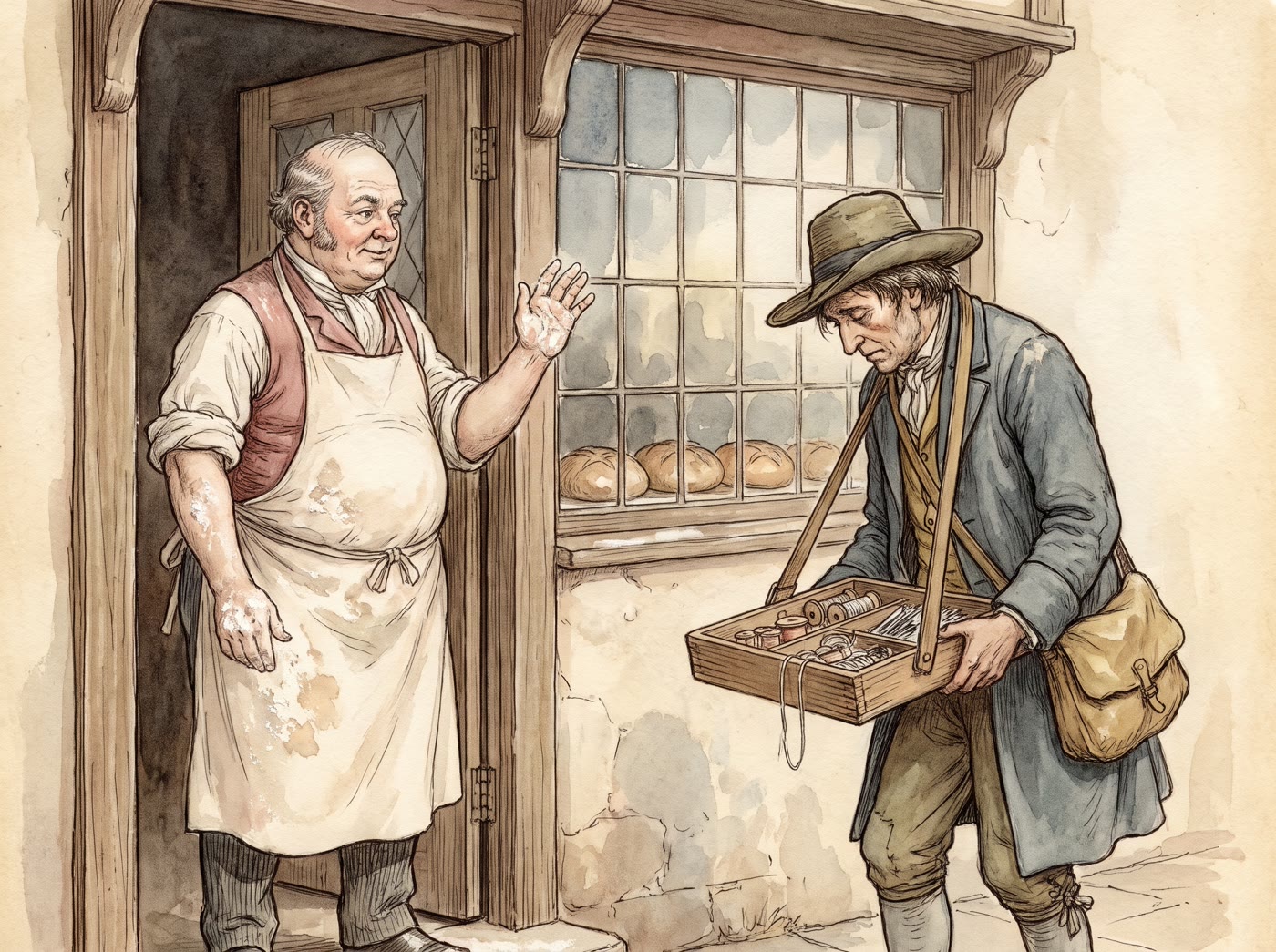
I need not your needles, they’re needless to me;
For kneading of needles were needless, you see;
But did my neat trousers but need to be kneed,
I then should have need of your needles indeed.
Where the rhyme comes from
Nobody knows who wrote it. The earliest printing we have found is from 1871, in Lewis Baxter Monroe’s Public and Parlor Readings, a volume of humorous pieces for reading clubs and social entertainment. There it has a title that most lyric sites leave out: The Baker’s Reply to the Needle-Pedler. The speaker, in other words, is a baker turning away a travelling needle-seller. An earlier printing may yet turn up; this is simply the earliest we have found.
The verse then turns up in other American books: The Buyers’ Manual and Business Guide (1872), a Pacific Coast business guide that also carried selections chiefly from California writers, and Galaxy of Wit and Wisdom (1875). None of the printings we have seen names an author, and a printing in America shows only where it was published, not where it was composed. By 1904 Edith Granger’s Index to Poetry and Recitations listed it as an anonymous item, and a 1926 speech-improvement booklet from the Detroit Board of Education used it as a consonant exercise. In the early books it is adult humour for reciting aloud — not a nursery rhyme, and nothing we have seen marks it as a song.
The wording above is the earliest we have found: “needles” in the second line and “trousers” in the third. Many websites, and at least one modern book, give a different version, with “kneading of noodles” and “neat knickers”. We can show that the earliest printings we found say “needles” and “trousers”, but we have found no source saying who changed the words, or when. The odd 1926 printing even has “worthless” for “needless” in the first line. Variant wordings are part of how a verse like this travels, and none is wrong.
What does it mean?
The whole joke is a chain of words that sound alike: need (to require), knead (to work dough, which is what a baker does all day), needle and needless. The baker says he has no use for needles, since kneading needles would be pointless.
The “kneed” reading. The last two lines turn on the odd word kneed. The natural reading is a jokey word coined for the pun: if his trousers needed to be “kneed” — that is, mended at the knees — he would then have need of the pedlar’s needles after all. That is our reading of the verse rather than a documented definition, but it is the one that makes the last line pay off.
Seen this way, the baker’s framing in the original title matters. With “noodles” in place of “needles”, the kneading loses its baker and becomes harder to follow.
Sharing it with children
Begin with the spelling. Write need, knead and kneed on a piece of paper, say them aloud, and ask which ones sound identical. Children enjoy spotting the silent k, and seeing the three words side by side makes the verse much easier to follow.
Then read it slowly, one line at a time, and gradually speed up. The tricky part is keeping needles, needless and kneading distinct when they come fast. Typical stumbles are “needless noodles” and “needed kneedles”.
For a bit of theatre, take the roles from the original title. One person is the baker, the other the pedlar. The baker mimes kneading dough on the table for the second line, and the pedlar mimes threading an imaginary needle for the last. Swap parts and go again, a little faster each time.
Extra verses to sing
These verses aren’t traditional — they’re ours. Try them once the first four lines come easily.
I need not your thimbles, they’re thimbles in vain;
For kneading in thimbles were knotty and plain;
But did my fine dough but need pricking to rise,
I then should have need of your pins, I surmise.
I need not your thread, it is threadbare to me;
For threading of bread-rolls were needless, you see;
But did my white apron but burst at a seam,
I’d then take your needle and thread, it would seem.