Sister Susie’s Sewing Shirts for Soldiers
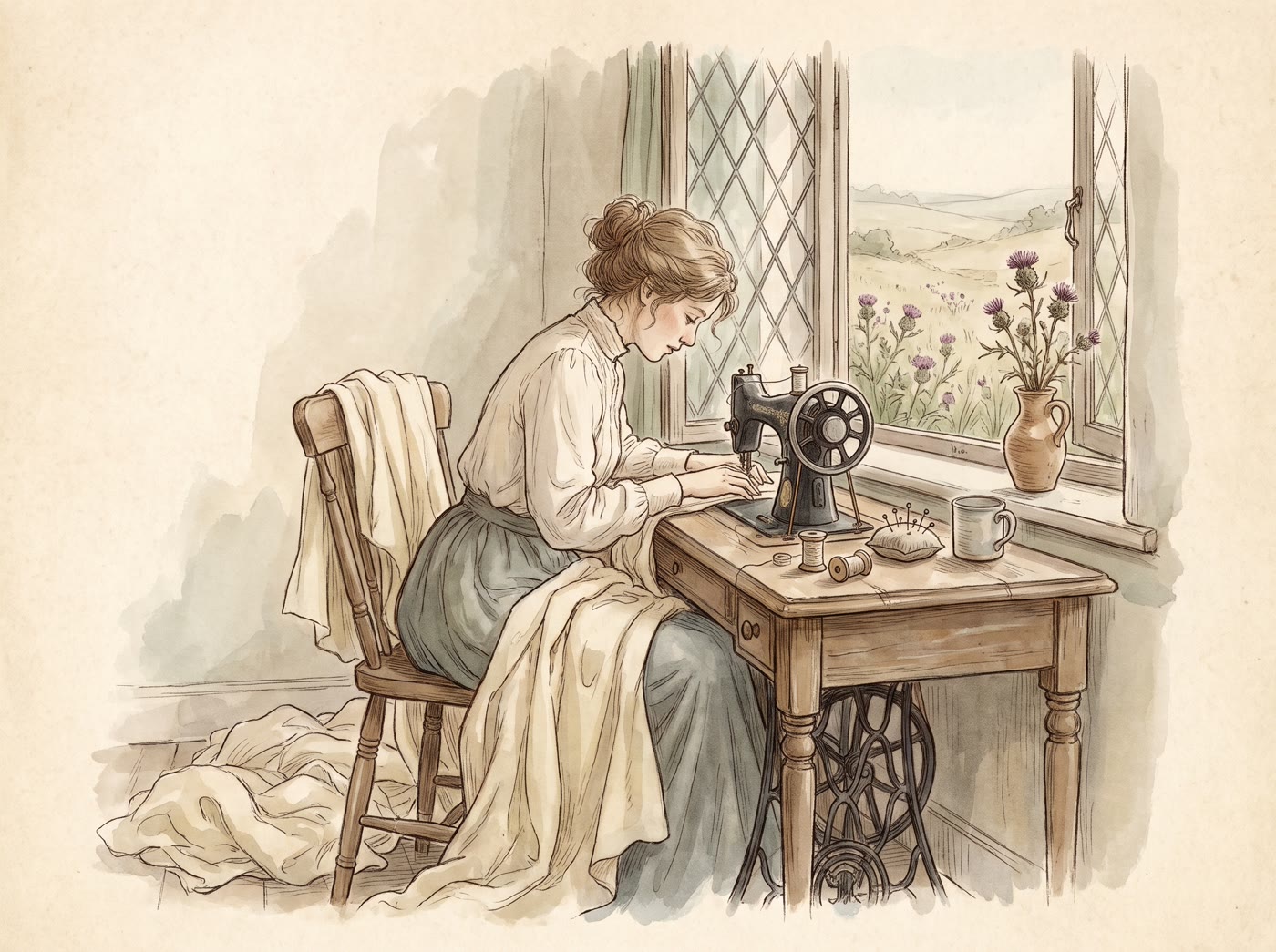
Sister Susie’s sewing shirts for soldiers,
Such skill at sewing shirts
Our shy young sister Susie shows!
Some soldiers send epistles,
Say they’d sooner sleep in thistles
Than the saucy, soft, short shirts for soldiers sister Susie sews.
Where the rhyme comes from
Unlike most tongue twisters, this one has a known author and a known date. Sister Susie’s Sewing Shirts for Soldiers was published in 1914, with words by R. P. Weston and music by Herman E. Darewski. The New York sheet music names two publishers, T. B. Harms and Francis, Day & Hunter. The second was a London firm.
Recordings followed quickly in America. Billy Murray recorded the song for Victor in Camden, New Jersey, on 16 October 1914, and Al Jolson recorded it for Columbia in New York on 3 December 1914. Some pages give 1915 or 1916 for these, but the Discography of American Historical Recordings gives the autumn of 1914. Further releases may have followed in 1915.
It was a First World War popular song, published in 1914, the first year of the war. The full song has verses that we have not reproduced here. They are set in a family kitchen, and the instruction printed with them is to sing faster each time. The chorus, with its crowd of s and sh sounds, is what survives as a tongue twister today. Weston died in 1936 and Darewski in 1947, so the song is in the public domain. A later song by Darewski, I Saw Six Short Soldiers Scrubbing Six Short Shirts (1916), opens by recalling Susie.
The wording varies a little. Some versions have “sleep on thistles” rather than “sleep in thistles”; both turn up, and either does the job. You will also see the name spelt “Sister Suzie”. It is not the same twister as “Sister Susie sitting in a shoe shine shop”, which is a different rhyme altogether.
What does it mean?
The meaning is the joke, and the joke is in the last three lines. Susie is sewing shirts for soldiers, and a few of them write to say they would sooner sleep in thistles than put on her “saucy, soft, short shirts”. It is gentle teasing at the expense of the home-made garment, and the chorus never says why the shirts are so unpopular. Nothing here needs decoding.
It is worth remembering the date. The song was published in the first year of a war that went on to cost millions of lives, and the comedy sits beside that fact. If you share it near Remembrance Day on 11 November, it can open a quiet conversation about what people at home did for those away.
Sharing it with children
The chorus drills the contrast between s and sh. Start slowly with the single words: sister, Susie’s, sewing, shirts, soldiers. Notice that s is a hiss with the tongue behind the teeth and sh is a rounder sound with the lips pushed forward. Then say one line at a time, exaggerating the difference.
A good game follows the original instruction to go faster: say the whole chorus four times, each round a little quicker than the last, and see who is still clear at the end. Or sort the words into two piles, s words (sister, sewing, some, say, sooner, sleep, soft, sews) and sh words (shirts, shy, shows, short), then clap on every sh. If there is a button box or a spool of thread to hand, pass it round the circle, one line each.
Extra verses to sing
These verses aren’t traditional — they’re ours. They borrow the chorus’s thistles and its rhythm, and are best tried once the original comes easily.
Sister Susie sorts her spools and stitches,
Six small silver pins,
Some soft scarves for sister’s friends.
Sewing slowly, sipping,
She stops to see the thistles,
Then sets her scissors safe and starts again.
Sister Susie sews a spotted sock,
So snug, so small, so smart,
She shows it to her sleepy cat.
Sister sighs and chuckles,
Stitches shining buttons,
And sings the song again, but speedier.