Walter Waddle Won a Walking Wager
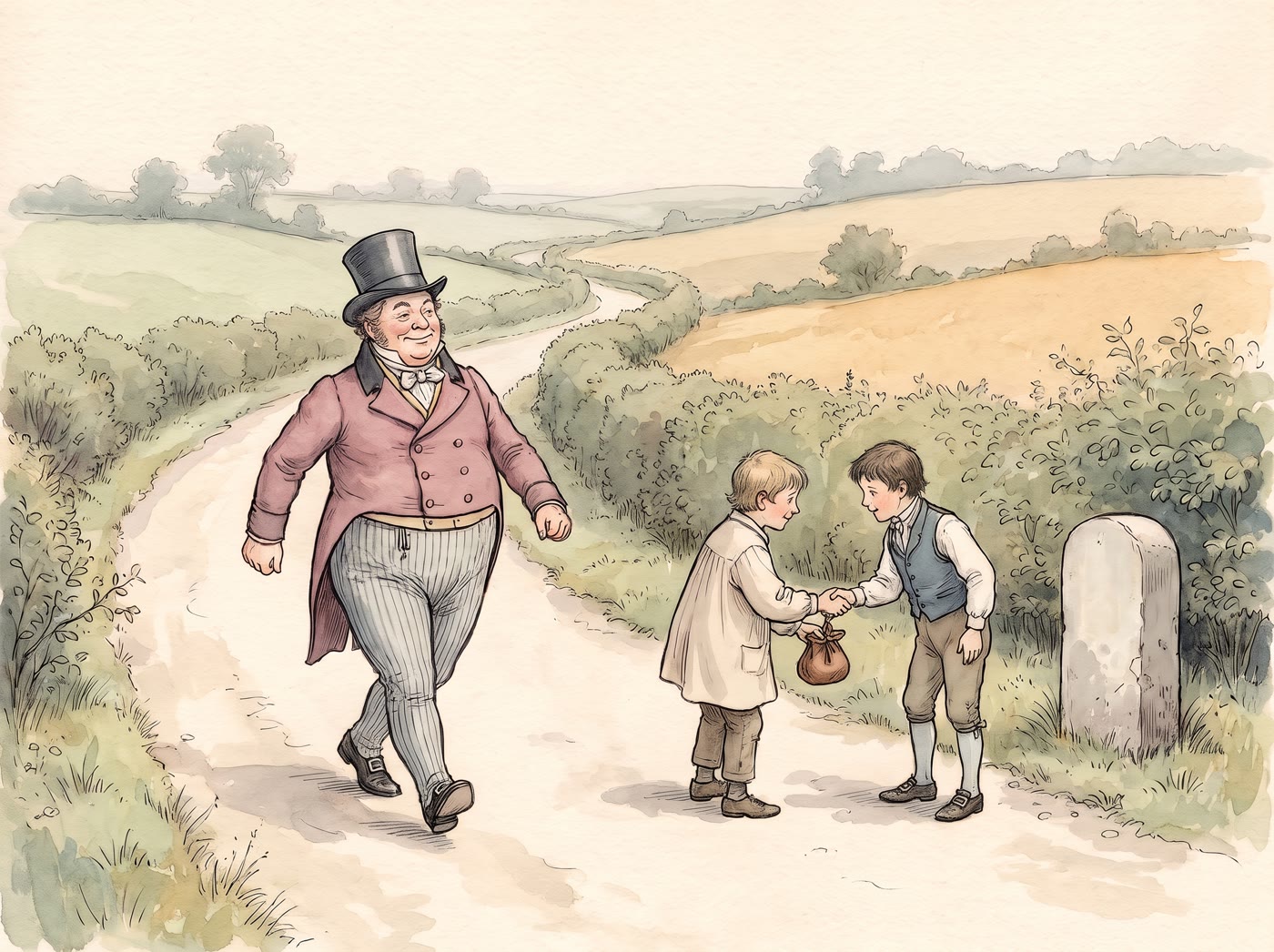
Walter Waddle won a Walking Wager:
Did Walter Waddle win a Walking Wager?
If Walter Waddle won a Walking Wager,
Where’s the Walking Wager Walter Waddle won?
Where the rhyme comes from
Walter Waddle is the W of an alphabet of tongue twisters, Peter Piper’s Practical Principles of Plain and Perfect Pronunciation, usually dated 1813 and credited to the London publisher John Harris. The book gives one alliterative verse to each letter. The title page of the American edition printed in Philadelphia by Willard Johnson in 1836 names no author, and we have found nothing that says who wrote it; Harris is named here as the publisher only. The best-known entry by far is Peter Piper and his peck of pickled peppers.
The words above are those of the 1836 Philadelphia edition. We have read them in a transcription of that edition rather than from images of its pages, though search previews of other transcriptions, which we could not open in full, show the same wording. We have not seen the London original, so we cannot say whether the W verse looked the same in 1813. The capitals and the colon at the end of the first line are as that transcription gives them. Modern lists often shorten the rhyme to its first line alone, so the full four lines are worth having.
Walter comes twenty-third in the alphabet. He follows Villiam Veedon, whose verse swaps its Vs and Ws, and he comes just before a closing verse shared between X, Y and Z. Like every entry in the book he is built the same way, as you can see in Kimbo Kemble and Lanky Lawrence: a statement, a doubting question, an “if” restatement, then a closing question beginning “where”. The preface announces the purpose with Peter Piper praying parents to purchase the book “Principally to Prevent the Pernicious Prevalence of Perverse Pronunciation”.
What does it mean?
Nothing that anyone can show. Nobody has shown who Walter Waddle was, or whether he was anyone at all, and the verse tells us only that he won a walking wager. It never says what the terms were, how far he walked, or what he won. We have found no scholarship on the question, and we are not going to invent a story to fill the gap.
The word “wager”. A wager is a bet: something, such as a sum of money, risked on an uncertain outcome. The word has been in English since the fourteenth century. A “walking wager” is therefore a bet about walking, and the closing question — where is the bet Walter won? — is, to our ear, the joke of the verse. It is a puzzle that goes round in a circle, much as the tongue does.
Sharing it with children
The sound being drilled is w. Make it with rounded lips and the back of the tongue lifted, then let it open straight into the vowel. The lower lip should not touch the teeth, which is what turns a w into a v. A child who says “valter” is making a very ordinary mistake, and a gentle “round your lips, like blowing a candle out” usually helps. This is play, not therapy; if a child finds the sound hard for long, ask a professional.
Then put the legs to work. Say one line for each step as you walk round the room, a slow, heel-to-toe “wager” pace at first. Try it as a waddling penguin walk, with feet apart and arms stiff, which suits the name. Run a speed round, in which three clean attempts without a stumble wins; the trap spots are “Walter Waddle won” and “Walking Wager Walter”. For a classroom, explain a wager as a promise to do something if you lose, and play for pretend stakes only: a sticker, a round of applause, or the right to choose the next game. No money changes hands.
Extra verses to sing
These verses aren’t traditional — they’re ours. Try them once the first four lines come easily.
Wendy Wiggins wobbled through a Winter Walk:
Did Wendy Wiggins wobble through a Winter Walk?
If Wendy Wiggins wobbled through a Winter Walk,
Where’s the wobbling Winter Walk that Wendy Wiggins walked?
Wilfred Wimple waddled where the Willows wave,
Wading, whistling, wondering what to wear,
Till Walter Waddle, winking, whispered “Wait!”
And won the Wager Wilfred Wimple wagered there.