I’m Not a Pheasant Plucker
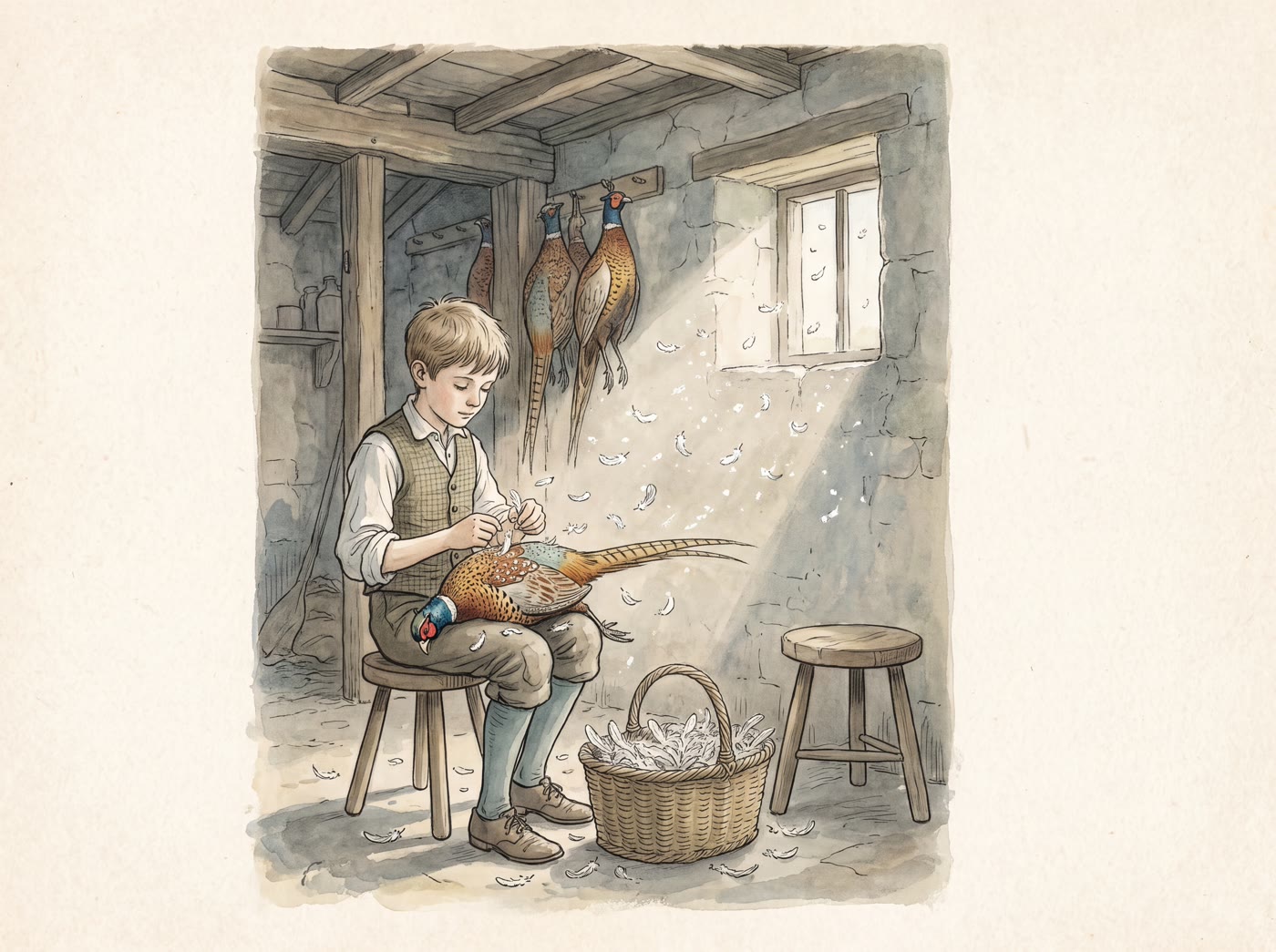
I’m not a pheasant plucker,
But a pheasant plucker’s son,
And I’ll sit here plucking pheasants
’Til the pheasant plucking’s done.
Where the rhyme comes from
This one belongs to the world of the English shooting estate. Plucking pheasants was a real job: on a big Victorian or Edwardian estate the gamekeeper and his family sat for hours in the game larder after a shoot, stripping birds by hand, and a keeper’s son would be put to the work as soon as he was old enough to hold a bird. The verse is spoken in that boy’s voice — he is not the pheasant plucker himself, only the plucker’s lad, filling in until the job is finished.
You will often read online that the rhyme was “first published in 1899”. We have not been able to trace that claim to any actual 1899 book or periodical, and it is repeated without a source wherever it appears — so it is best treated as unverified. What can be shown is that pheasant plucker was in circulation as a spoonerism in 20th-century British slang, and that people who grew up in Britain remember the tongue twister going round schools and pubs from the early 1970s onwards. Around the same period it grew into a comic folk song, “The Pheasant Plucker’s Son”, recorded by singers including Bill Maynard and later taken up by The Irish Rovers and The Wurzels; no original author has ever been established for it.
Wording varies from teller to teller, as it always does with oral rhymes. Many people know the line as “I’m only plucking pheasants ’til the pheasant plucker comes.” The version above is the one this site has always printed.
What does it mean?
On the surface, nothing more than it says: a boy is doing his father’s work and will keep at it until the last bird is done. There is no lost king, no plague and no secret history hiding in it.
A trap built out of two sounds. The real point is phonetic. English ph and pl sit very close together in the mouth, and the rhyme forces you to alternate them at speed — pheasant, plucker, plucking, pheasants — while the stress pattern hurries you along. The tongue anticipates the sound it is about to make and swaps the two openings over. That accidental swap is a spoonerism, named after the Oxford don William Archibald Spooner, who was famous (fairly or not) for producing them.
The grown-up joke. It is worth saying plainly, because it explains the rhyme’s popularity: the spoonerism this particular twister produces is a rude one, and the whole thing was built to make an adult trip into it. That is a piece of pub and music-hall humour rather than nursery tradition. The verse itself is perfectly innocent — the joke only lands if you already know the word it is steering you towards.
Stories about a real plucker. Tales occasionally circulate naming a particular village gamekeeper as the original “pheasant plucker”. There is no evidence for any of them, and they read like modern inventions; treat them as folklore and enjoy them as stories, not history.
Sharing it with children
A word of warning first, since the rhyme is famous precisely for going wrong: an older child who fumbles this at speed may well produce a rude word by accident. Plenty of families are entirely relaxed about that and it is part of the fun; if you would rather not risk it, keep this one for the grown-ups and try Peter Piper with younger children instead.
If you are going ahead, the method is the same as any speed challenge: start much slower than feels natural. Say one line at a time and have the child echo it back before you add the next. Land hard and deliberately on the opening of each word — PH-easant, PL-ucker — because the mistake happens when those beginnings blur. Only once the whole verse can be said cleanly at walking pace should you start the stopwatch.
Then make a game of it. Three clean runs in a row beats one lucky fast one. Try it whispered, then loudly; take alternate lines round a circle so anyone who tangles passes it on; or tap the beat on the table and let the rhythm carry you. The tangles are the whole point, so laugh at them — and if you have ever seen a bird plucked, or a feather-filled cushion, the boy in the picture is a good excuse to talk about where old country jobs went.
Extra verses to sing
These verses aren’t traditional — they’re ours. Add them once the first one comes out clean.
I’m not a pheasant plucker,
Nor a pheasant plucker’s mate,
But I’ll pluck the pheasants pleasantly
While the pheasant plucker’s late.
When the pheasant plucker’s finished
And the plucking’s put away,
I’ll be the proper pheasant plucker
And I’ll pluck them all my day.