Enoch Elkrig Ate an Empty Eggshell
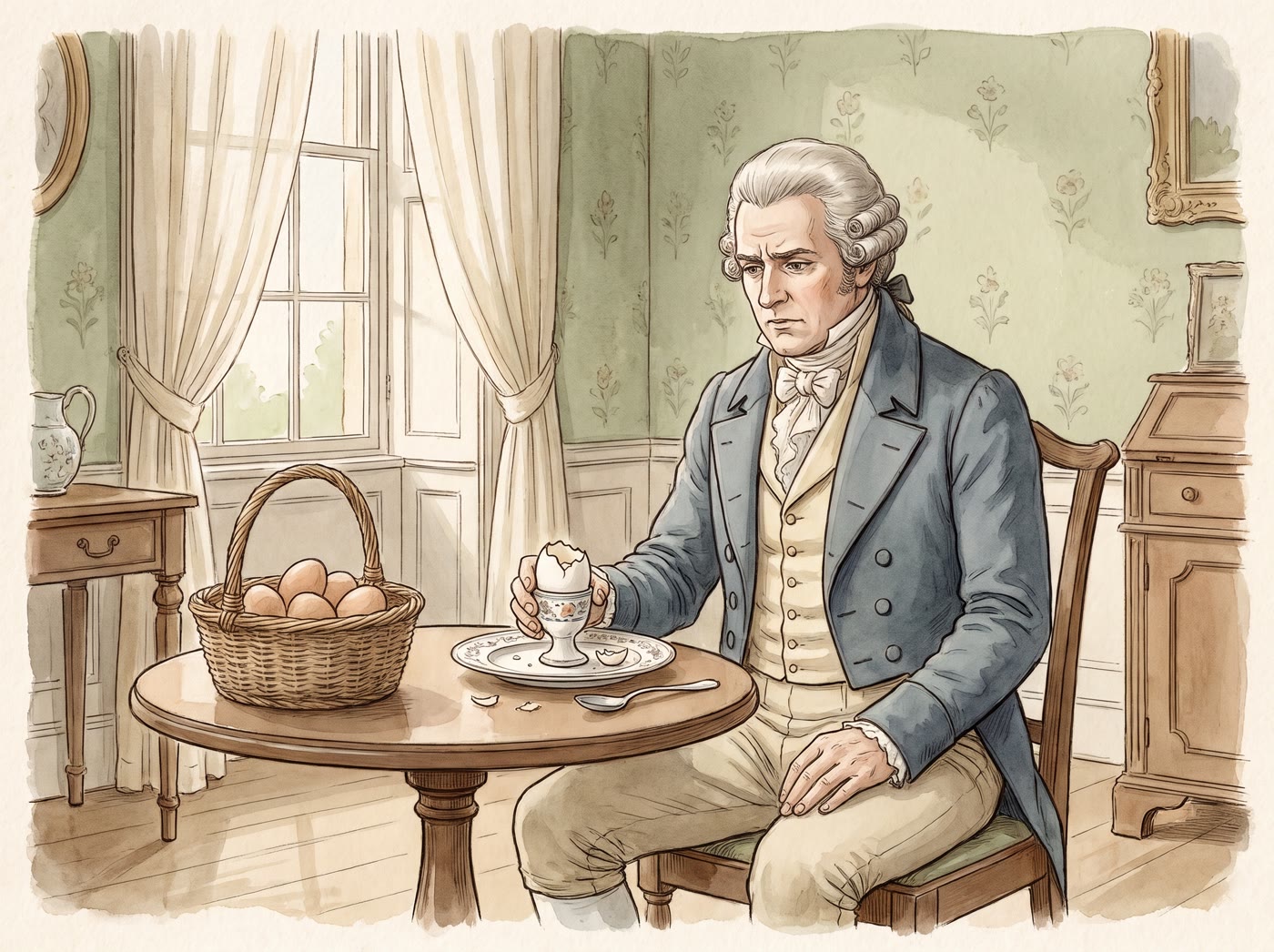
Enoch Elkrig ate an empty Eggshell:
Did Enoch Elkrig eat an empty Eggshell?
If Enoch Elkrig ate an empty Eggshell,
Where’s the empty eggshell Enoch Elkrig ate?
Where the rhyme comes from
Enoch Elkrig is the E of an alphabet of tongue twisters, Peter Piper’s Practical Principles of Plain and Perfect Pronunciation, usually dated 1813 and credited to the London publisher John Harris. The book gives one alliterative verse to each letter, and the best-known entry by far is Peter Piper and his peck of pickled peppers. The American edition printed in Philadelphia by Willard Johnson in 1836 names no author, and we have found nothing that says who wrote the book; Harris is named here as the publisher only.
The words above are those of the 1836 Philadelphia edition, capitals and punctuation included — note the capital in “Eggshell” in the first three lines and the lower-case “eggshell” in the last. We have read them in a transcription of that edition, not from images of its pages. We have not seen the London original, and the wording of the verse in 1813 is not known to us, so we cannot say whether it looked the same.
E is the fifth entry in the book. It follows Davy Dolldrum and comes just before Francis Fribble. Like every entry it is built the same way: a statement, a doubting question — note that Enoch “ate” in the first line becomes “eat” in the second — an “if” restatement, then a closing question beginning “where”. The preface, spoken in Peter Piper’s voice, ends by recommending the book “Principally to Prevent the Pernicious Prevalence of Perverse Pronunciation”.
What does it mean?
Nothing that anyone can show. Nobody knows who Enoch Elkrig was, or whether he was anyone at all, and nobody knows who wrote the book. We have found no scholarship on the name, and we are not going to invent an explanation to fill the gap.
Our own reading. The verse tells us only that Enoch ate an empty eggshell, and then asks where the shell has got to. An empty eggshell is a shell with the egg already gone, so eating it is an odd thing to do, and the closing question sends the tongue round in a circle: if he ate it, where is it? That is a reading, not a finding, and the verse itself does not say so.
Sharing it with children
The challenge here is different from most twisters. Look at the first line: Enoch, Elkrig, ate, an, empty, Eggshell — every word begins with a vowel, so the words run into one another with no consonant to hold them apart. Add the k and g in Elkrig and Eggshell and there is plenty to trip over. These are our own play suggestions rather than anything from the book: start with one line at half speed, leaving a tiny gap between the words, then close the gap as you speed up.
Then make a game of it. Pass the verse round a circle one line each, faster every lap. Keep a family stopwatch record for the first line alone, and award a point for three clean runs in a row. The trap is the switch from “ate” to “eat” in line two, so listen out for it. For something to do with the hands, set an empty eggshell in an egg cup on the table and let the child be Enoch, solemnly asking the other three questions of the shell. Over breakfast, you might even ask the child to find three more things that begin with e. If you want another verse of the same kind, Rory Rumpus follows the same four-line pattern.
Extra verses to sing
These verses aren’t traditional — they’re ours. Try them once the first four lines come easily.
Edna Everett edged an elderly Elephant:
Did Edna Everett edge an elderly Elephant?
If Edna Everett edged an elderly Elephant,
Where’s the elderly elephant Edna Everett edged?
Eli Eagle eyed an elegant Egg,
An enormous egg, each evening, every day,
Till an eager early Echo asked in answer,
“Eli, is the egg inside or empty?”