Sammy Smellie Smelt a Smell of Small Coal
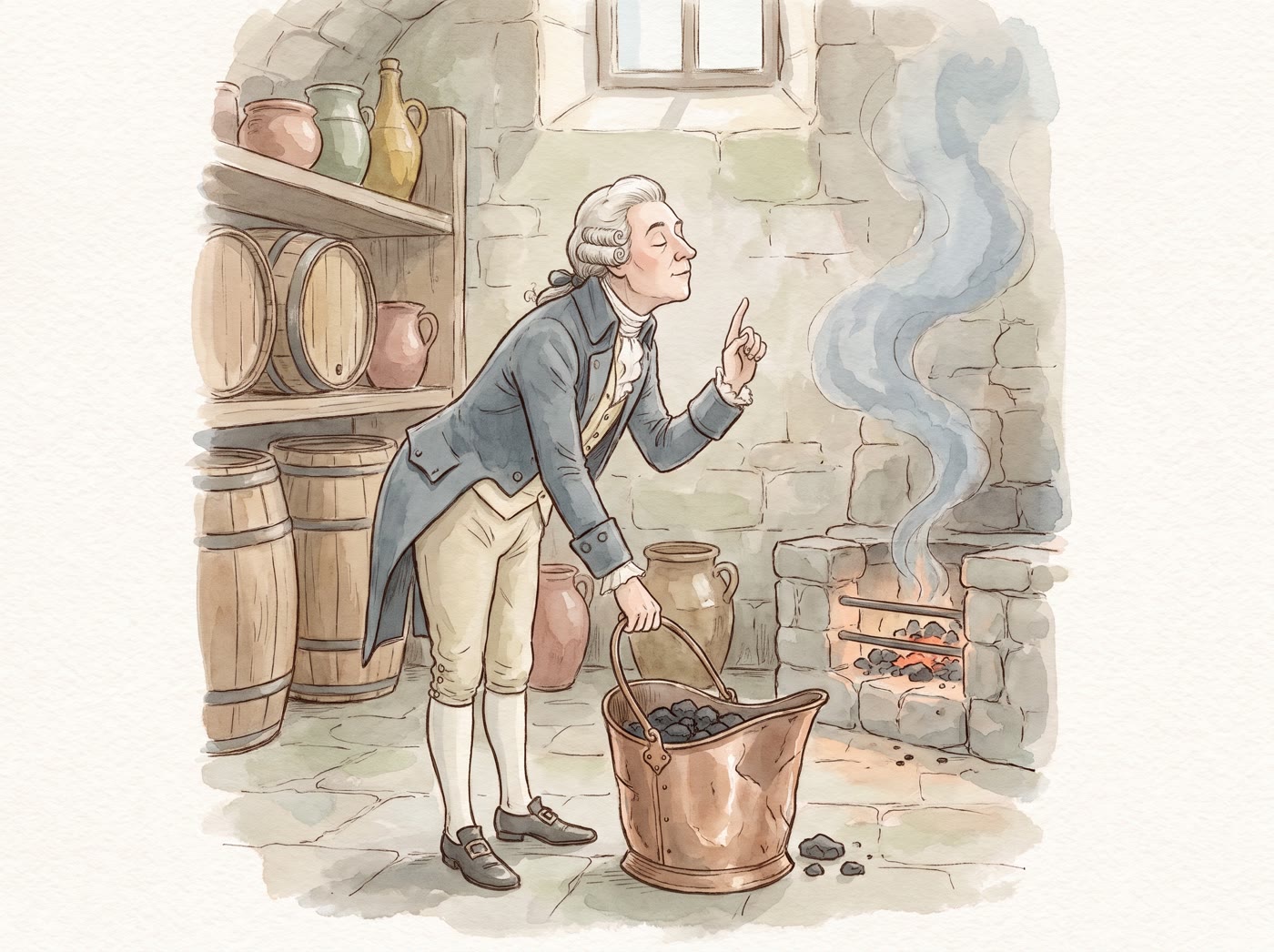
Sammy Smellie smelt a smell of Small-coal:
Did Sammy Smellie smell a smelt of Small-coal?
If Sammy Smellie smelt a smell of Small-coal,
Where’s the smell of Small-coal Sammy Smellie smelt?
Where the rhyme comes from
Sammy Smellie is the S of an alphabet of tongue twisters, Peter Piper’s Practical Principles of Plain and Perfect Pronunciation, usually dated 1813 and credited to the London publisher John Harris. The book gives one alliterative verse to each letter; the best-known by far is Peter Piper and his pickled peppers. Harris is named here as publisher only: the 1836 Philadelphia edition names no author, and we have found nothing that says who wrote the book.
The words above are those the 1836 Philadelphia reprint (Willard Johnson) gives, capitals and hyphen included. We read them in a transcription of that edition, not from the London original, so we cannot say whether the 1813 wording was the same. Note line two: the 1836 text reads “smell a smelt of Small-coal”, with the two words swapped. Many modern copies print “smell a smell” instead, which is a tidying-up, not what the 1836 page says.
Every verse in the book is built the same way: a statement, a doubting question, an “if” restatement and a closing question beginning “where”. The preface, in Peter Piper’s voice, says the book was meant to put children on “a Peculiarly Pleasant and Profitable Path to Proper, Plain and Precise Pronunciation” — in other words, it was a pronunciation drill dressed up as a joke. Sister verses on this site include Enoch Elkrig, Walter Waddle and Rory Rumpus.
What does it mean?
What is small coal? Dictionaries give two senses. The older one, now obsolete, is charcoal: Wiktionary illustrates it with Thomas Browne, who in 1646 lists “Small-coal” alongside saltpetre and brimstone as an ingredient of gunpowder. The other is coal in small pieces, the fragments known as slack. Which one the author of the book had in mind, no source we have read says, so we are not going to choose for them.
Who was Sammy Smellie? Nobody knows. We have found no evidence that he was a real person, and nothing that explains the name. The verse says only that he smelt something, and then asks, in a circle, where the smell went. The joke is in the sounds — smell, smelt (a past tense of smell) and small are close cousins on the tongue — and that is as far as we can honestly take it.
Sharing it with children
These are our own suggestions, not anything from the book. The first line has five words that begin with s or sm — Sammy, Smellie, smelt, smell, Small-coal — and the tongue must keep hopping between a hissing s and a closed-lip m. Start with that line alone at half speed, humming the m a moment longer than feels natural, then speed up.
Build the verse one line at a time, adding a line each round. Pass it round a circle, a line each, faster every lap. Play “spot the swap”: one person reads line two as the 1836 book has it (“smell a smelt”) or the modern way (“smell a smell”), and the others guess which. Try a whisper-to-shout ladder, with a sniff before each line, which is the only action it needs. If a child asks what small coal is, a lump of real coal or a piece of charcoal, handled by grown-ups, is a good talking point. For more of the same hissing sound, try Swan Swam Over the Sea.
Extra verses to sing
These verses aren’t traditional — they’re ours. Try them once the first four lines come easily.
Sally Sootby swept a sooty Chimney:
Did Sally Sootby sweep a sooty Chimney?
If Sally Sootby swept a sooty Chimney,
Where’s the soot from the chimney Sally Sootby swept?
Simon Snuffle sniffed a smoky Scuttle,
A small, smudgy scuttle, softly smouldering,
Till a squeaky squirrel said, “Simon, sneeze!”
So Simon sneezed, and the smoke went somewhere.